Eden on the Moon: How a Theatine Cleric Catalogued Forbidden Astrology Without Burning a Page
A Catholic priest writing in Paris in 1668 built an entire dictionary of the mathematical sciences designed to sift genuine astronomy from the fortune-telling astrology the Church had banned. His method was not to destroy the forbidden material but to define it precisely, transcribe its condemnation into the reference entry itself, and teach the reader to recognize it.
ExLatinis
July 9, 2026
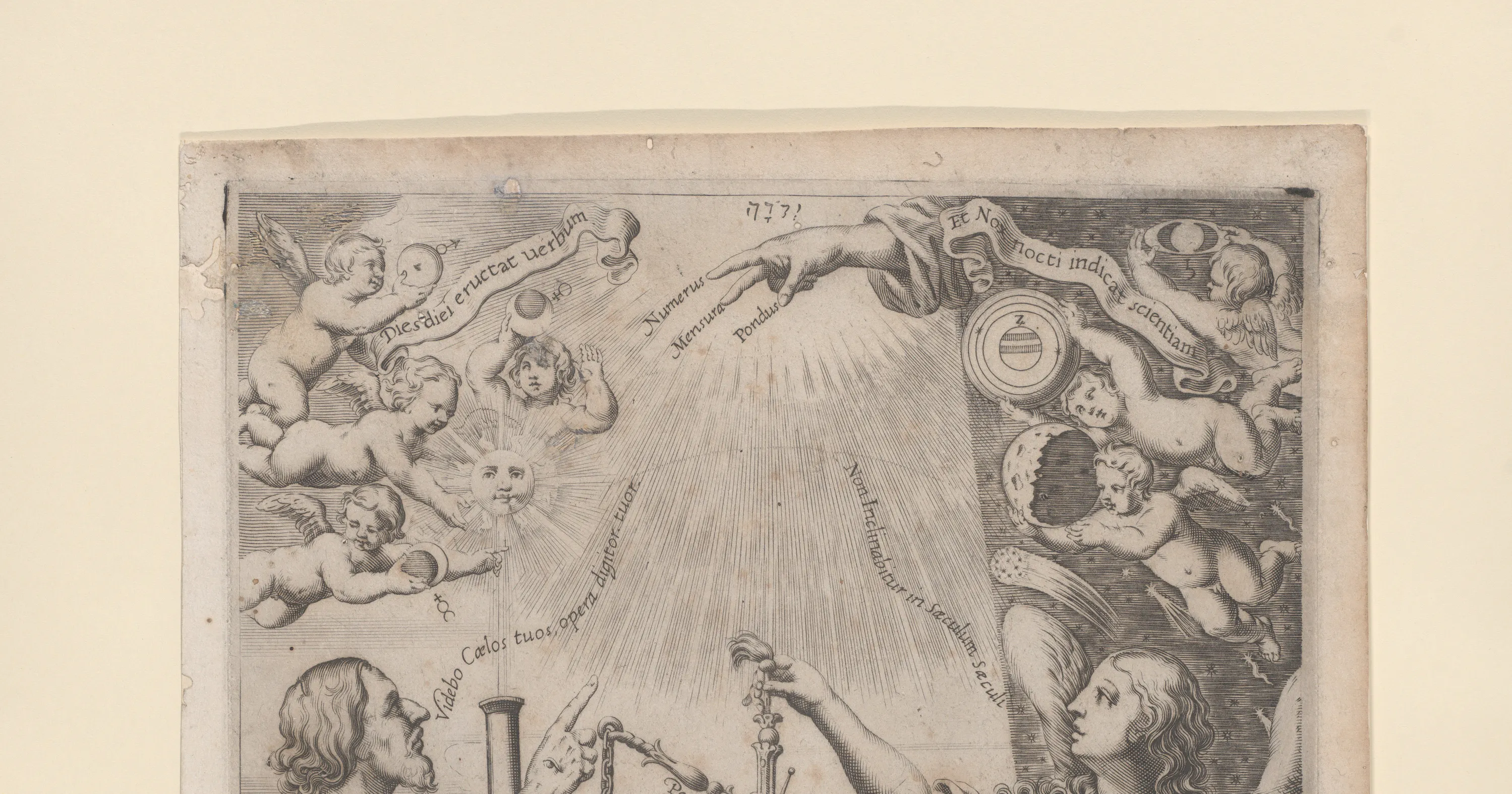
On Girolamo Vitale's Lexicon mathematicum astronomicum geometricum, printed at Paris in 1668
A Catholic priest writing in Paris in 1668 built an entire dictionary of the mathematical sciences designed to sift genuine astronomy from the fortune-telling astrology the Church had banned. His method was not to destroy the forbidden material but to define it precisely, transcribe its condemnation into the reference entry itself, and teach the reader to recognize it.
By right and deservedly
The head-word for Systema in the Lexicon condemns the Copernican arrangement of the cosmos as false and adverse to Sacred Scripture, iure meritò hoc systema Copernicum, tamquam falsum, sacræ scripturæ aduersum, condemned "by right and deservedly." The phrase is juridical rather than rhetorical. It attaches the verdict directly to the decree of the Congregation of Cardinals and the censure of Galileo, so that the reader who consults the entry meets the doctrine already sorted, already judged. The illicit status arrives as a determination of authority, transcribed into a reference entry like a court clerk copying a sentence into the ledger.
The book records a duller and stranger business than a single sweeping ban on inquiry. Its author is Girolamo Vitale, who Latinised himself as Hieronymus Vitalis Capuanus, a Theatine cleric of Capua and a member of the Congregation of Clerics Regular founded by Cajetan of Thiene. His work, the Lexicon mathematicum astronomicum geometricum (Paris, 1668), is a lexicon of the mathematical, astronomical, and geometrical disciplines. It runs A to Z across roughly thirteen hundred entries, pressed from the atelier of Louis Billaine in a substantial folio. It reads like an inventory. It behaves like a tribunal.
The tares from the wheat
Vitale states his purpose in the front matter through a figure drawn from the parable of the tares in Matthew. His task, he writes, is to separate the weeds from the wheat, zizania à tritico segregarem: eas suo nitori, restoring the wheat to its own brightness. The parable's original sense was eschatological, the final sorting of souls at the last judgment. Vitale converts it into an editorial duty. The object of his verb is not persons but doctrines, and the sorting happens now, on the page, within a single body of learning. The wheat, he insists, is not diminished by the operation but polished, and removing the accretion restores the true disciplines to their own lustre.
To separate the tares, one must first display them. Vitale runs the whole book like a curator building an exhibit on forgery, setting every counterfeit coin behind glass, labelling precisely why it is false, and by that display teaching the eye to recognize the genuine article. He does not burn the fakes. He catalogues them. The technical vocabulary of judicial astrology, the divination of human fate from the stars, forbidden under the bulls Coeli et terrae of Sixtus V in 1586 and Inscrutabilis of Urban VIII in 1631, is preserved in full descriptive fidelity precisely so that its condemnation can be exhibited alongside it. The Chaldean and Arabic doctrines he brands throughout as nugae and deliramenta, trifles and ravings, remain in the pages so that their falseness can be seen.
The alphabetical body enacts this from its first entry. The letter A is read not as a letter but as the carpenter's square, the Norma, seu Amussim, the set-square that stands as the gate of the whole of mathematics. The instrument of the builder, the measure of the right angle, presides over the compilation as doorman. The reader enters through the sign of exact measurement, and the tares must be sorted out within.
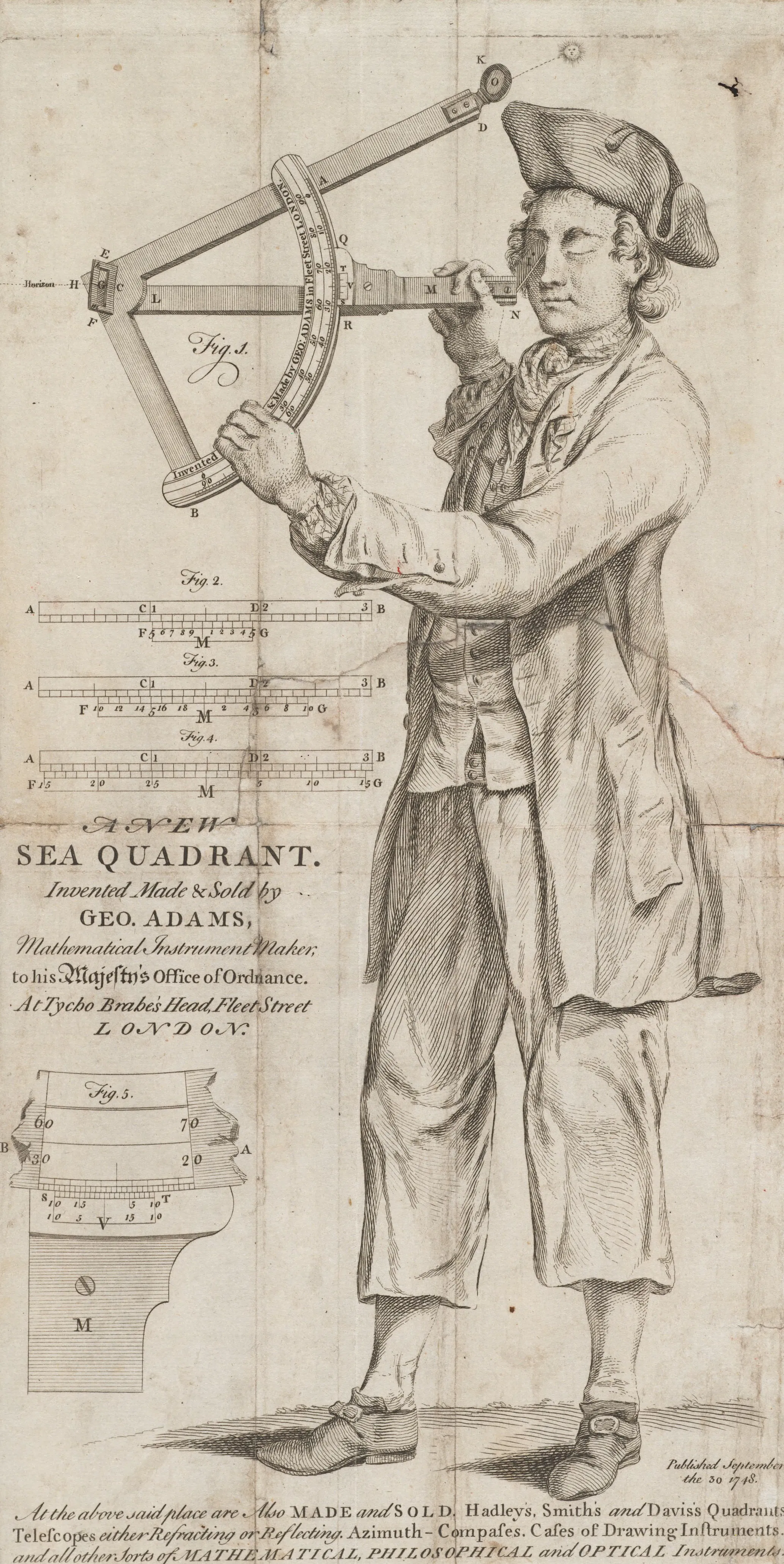
This 1748 engraving from George Adams’s account of a new sea quadrant presents mathematical knowledge as disciplined measurement: a celestial altitude taken from the visible horizon through an instrument, not divined from the heavens as horoscope. Though unconnected to Vitale, it sharpens the force of his opening Norma, where the right-measuring tool stands guard at the threshold between licit geometry and suspect astral speculation. Source ↗.
The doctrine of aspects, defined and then judged
The procedure works on a single case with particular clarity. The astrological doctrine of aspects is reported as the geometry of planetary configuration, the opposition falling where the planets stand at diametrical points across half the circle, per circuli medietatem. The measurement of angular distance is retained without reservation, since it belongs to geometry, to the Norma rather than to Chaldean trifles. The significations built upon that measurement are another matter, marked off as vanity. The aspect as spatial relation is wheat, and the fortune it supposedly foretells is tare. Vitale refuses the shortcut of dismissal without exposition. The weed must be shown clearly before it can be seen to be a weed.
The hinge that permits all of this is a doctrine about the human will. Vitale reports the maxim that nature is subject to the stars while the will remains free, Natura subiecta est sideribus, voluntas libera. The stars may incline the body, govern generation and agriculture and the tides of the blood, and so natural astrology keeps its medical and navigational uses. Light, he adds, is the single instrument by which the heavens act on lower things, which physicalizes celestial influence and forecloses any occult pathway of fate. The heavens have no purchase on the free will, and so the divination of fortune collapses at the level of principle rather than by mere decree. The line was not a matter of private preference. The Congregation of the Index at Rome and the censorship operating under Mazarin at Paris were enforcing that same boundary through the very decade the book went to press.
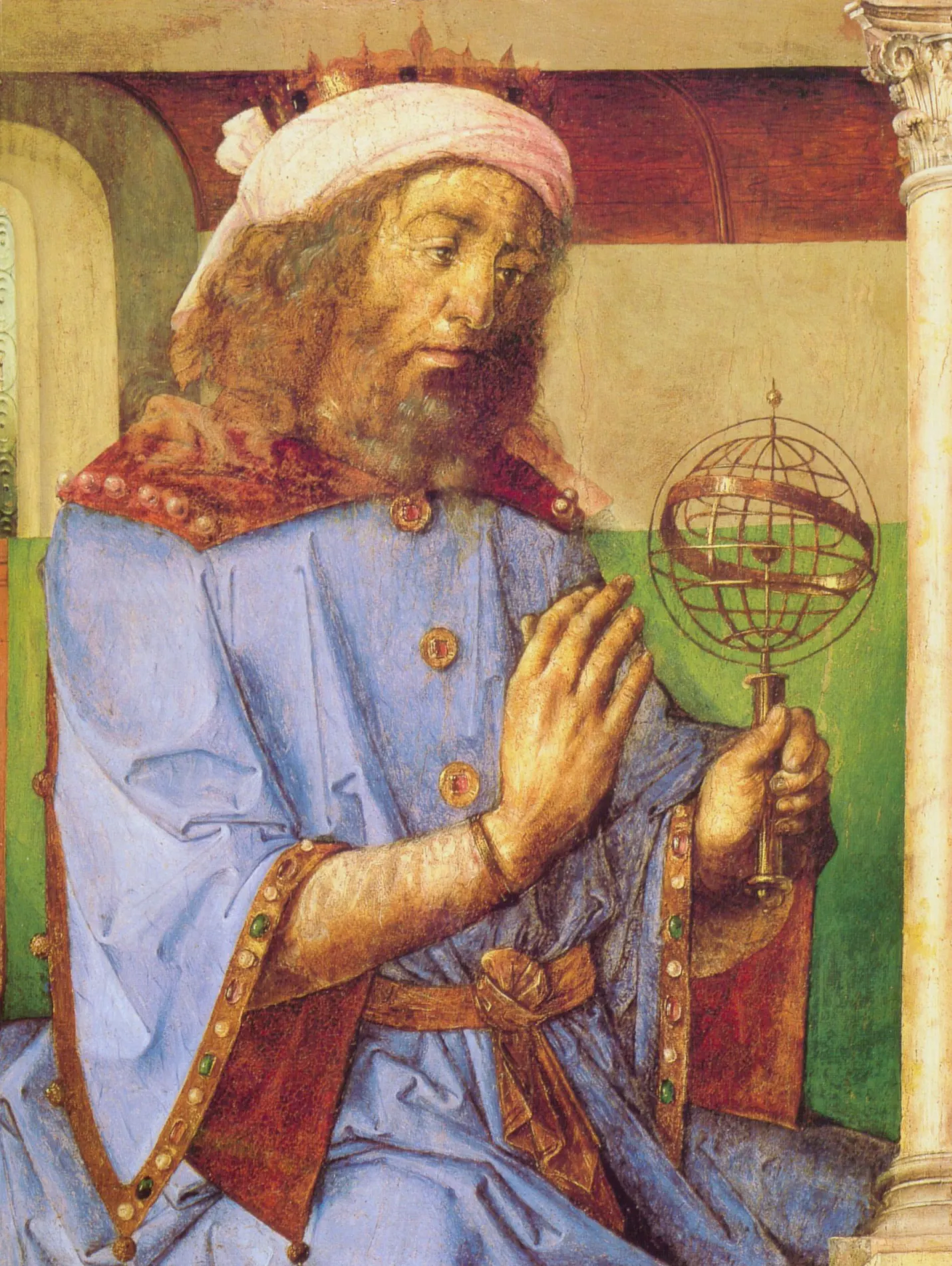
In this Renaissance portrait, Claudius Ptolemy is paired with an armillary sphere, the emblem of astronomy as measurable celestial order. The image sharpens the distinction at stake in the maxim attributed to his tradition: the stars may be studied for their natural operations, but never turned into a fatalistic script for the human will. Source ↗.
The sorting even cuts within astrology itself. Vitale develops at length the directional theory he had learned from his own teacher, the astrologer Placido Titi, because it can be construed as the measurement of a real celestial motion. Against it he sets the Arabic doctrines of the lord of the year and the fridariae, dismissed as ravings. The technique is licensed where it amounts to the geometry of a motion in the heaven, and condemned where it dissolves into the arbitrary assignment of fate.
Eden on the Moon, and a fluid heaven
The framework was capacious enough to accommodate startling propositions, because it supplied a sanctioned test. Under the head-word for the terrestrial Paradise, Vitale advances the thesis that Eden sits on the surface of the lunar globe, with the sphere of fire serving as the flaming sword that guards the gate. He closes not by asserting truth but by the carefully hedged claim that in this most difficult question it is not intolerable, nor repugnant to reason or to Sacred Scripture, non esse adeò intolerabile, nec rationi, aut Sacris Saginis repugnans, to affirm it. The double negative is the entire apparatus in miniature. He claims not that the doctrine is proven but that it passes the test, and so the question whether the Garden of Eden was thought to be on the Moon could be entertained by a cleric in good standing.
His cosmology runs on the same permit. Having transcribed the Copernican condemnation, Vitale supplies the arrangement authority allowed, holding that Tycho devised a new system adhering to the constitutions of the Church and answering excellently to observations. The two clauses do the work, one securing the ecclesiastical warrant, the other the observational one. The Tychonic fluid heaven gives the new data everything it wants, the moons and sunspots and southern constellations all real, while keeping Scripture technically correct that the earth never moves, anchored to the psalm addressed to the God who founded the earth upon its stability. The old crystalline spheres dissolve into a single medium, and the stars swim through the sky like fish through the sea. Vitale refuses the multiplied spheres of the older astronomy on a purely logical ground, that it is repugnat vnum & idem mobile duobus motibus contrariis moueri, repugnant that a single body be moved by two contrary motions.
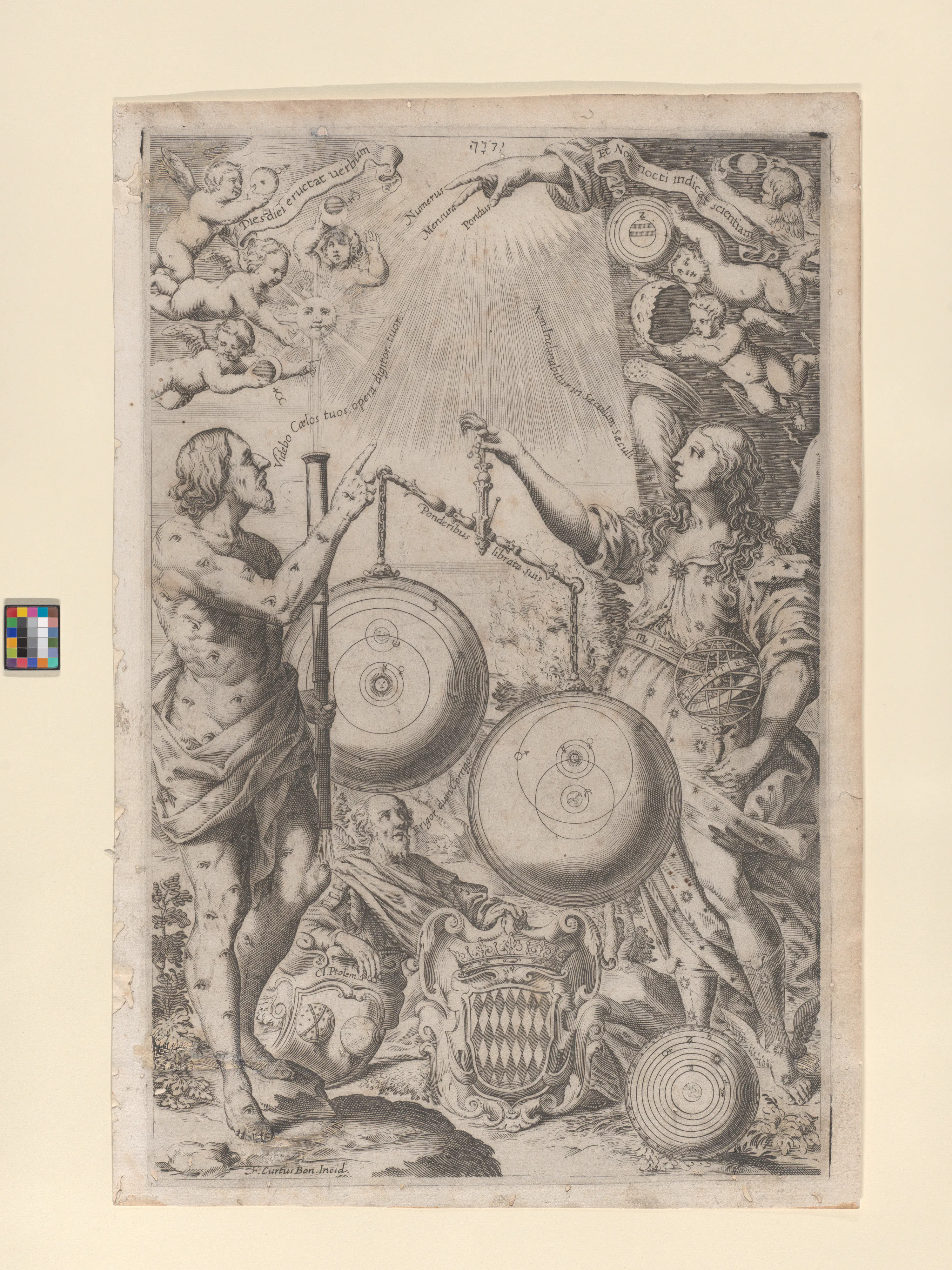
In this frontispiece to Riccioli’s Almagestum Novum, a divine hand suspends the rival astronomical systems beneath sacred light, with the Tychonic arrangement outweighing the Copernican. The allegory captures the same tribunal logic at work in Vitale’s cosmology: observation may revise the heavens, but only within a framework that keeps the earth scripturally fixed. Source ↗.
The moss on a hanged man's skull
The closing sixty-page digression on the magnetic cure of wounds shows the sorting apparatus at its most exposed. Vitale catalogues the ingredients of the weapon-salve without softening the recipe, chiefly human fat, blood, mummia, and Vsnea, seù musco in etanio suspensi hominis nato, the moss grown on the skull of a hanged man. The candour of the list is itself the argument. What looks like the paraphernalia of magic is reframed as a materia medica whose grim components remain within the order of physical causation.
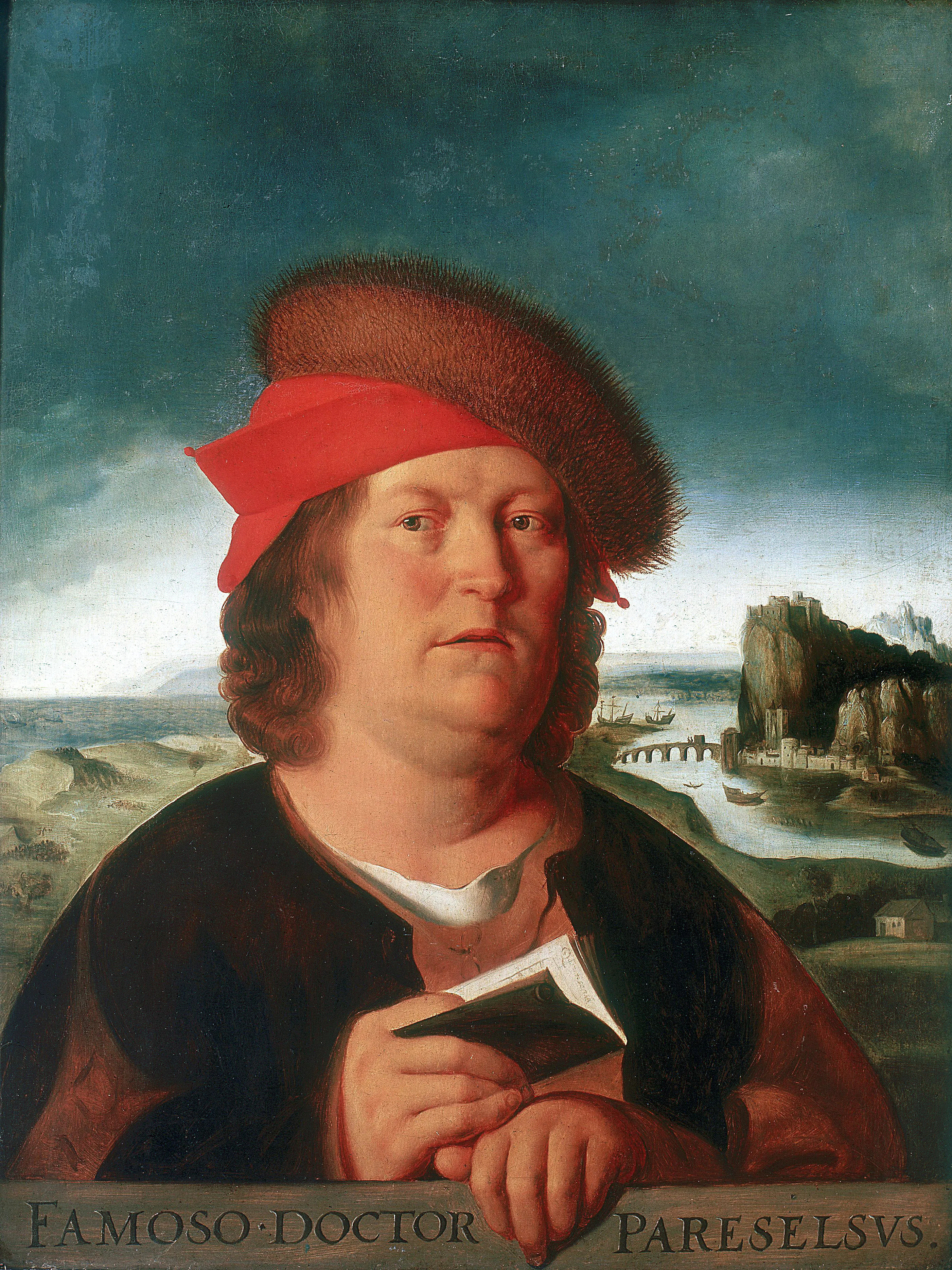
This seventeenth-century anonymous copy of a presumed portrait names its sitter as the “FAMOSO·DOCTOR·PARESELSUS,” casting Paracelsus as the kind of learned authority whose remedies later natural philosophers could appropriate, contest, or domesticate. Set beside Vitale’s unsparing account of the weapon-salve, it gives a face to the Paracelsan tradition he tries to pull back within the bounds of physical causation. Source ↗.
The reframing rests on a standing rule of triage. Whenever it is doubted whether an effect is superstitious or natural from a cause unknown to us, Vitale writes, it must always be judged natural, since not all the powers of Nature are known to us, censendus semper est naturalis. The word doing the labour is semper, always. Doubt is resolved not case by case but by a default presumption, and ignorance of a cause is treated as no evidence of its unnaturalness. Vitale rejects the notion that one body acts on another across empty space. He grounds the cure instead in a universal binding form, imagining the universe as a single vast body of water. Touch one edge of the pond and a ripple reaches the far shore, nothing having leapt the gap, the pond merely moving within itself. A salve on the sword heals the wound across the room because Nature, one and continuous, heals from within upon being roused.
None of this drew a reply. No polemic against Vitale has surfaced, and his conformist stance and reliance on approved authorities insulated him. When the second edition appeared at Rome in 1690, he quietly pruned the astrology and added matter on mathematics and military architecture, the compass narrowing exactly as the governing method had always implied it would. The censorship the myth imagines as a bonfire turns out, in his hands, to have been a set of index tabs.
More from ExLatinis
This text was transcribed and translated as part of the ExLatinis project—an effort by Leo to make English translations of every published text in Latin in early modern Europe (between 1450 and 1750) available to the public for free online.
→ Read the full transcription and translation on Leo
You can save a copy of this document into your Leo account to run deep text searches, conduct further analysis, or cross-reference it with your own research.
If you want more than an introduction, you can also consult a full, in-depth report drawn from the original transcription alongside relevant secondary sources, with extended analysis and historical context beyond the scope of this post.
→ Read the full in-depth report and finding guide
Critical Further Reading & Contextual Resources
- H. Darrel Rutkin, “Astrology, Natural Knowledge, and the Lexicon Mathematicum Astronomicum Geometricum of Girolamo Vitale,” Early Science and Medicine: The essential modern article on Vitale, and mercifully not one that treats the Lexicon as a quaint cabinet of dead errors. Rutkin shows how the book polices the border between permitted celestial knowledge and condemned divination, which is exactly where Vitale’s alphabetic tribunal does its quietest work.
- H. Darrel Rutkin, Sapientia Astrologica: Astrology, Magic, and Natural Knowledge, ca. 1250–1800: This supplies the larger genealogy behind Vitale’s sorting of wheat, weeds, and suspiciously well-measured weeds. It is especially useful for readers who want to see why “astrology” in the seventeenth century was not one thing but a bundle of practices continually being separated, defended, and denounced with scholastic patience and institutional nerves.
- Luís Miguel Carolino, “The Making of a Tychonic Cosmology: Cristoforo Borri and the Development of Tycho Brahe’s Astronomical System,” Journal for the History of Astronomy: Carolino explains why the Tychonic arrangement was not merely Copernicanism with the embarrassing moving Earth removed. His article clarifies the Catholic appeal of a geo-heliocentric cosmos that could absorb telescopic evidence while keeping scriptural immobility safely nailed to the floor.
- Maurice A. Finocchiaro, The Galileo Affair: A Documentary History: For the decrees, warnings, and courtroom prose behind Vitale’s brisk condemnation of Copernicus, Finocchiaro is the documentary antidote to opera-house versions of the Galileo affair. Read it to see how juridical language migrated from Roman proceedings into learned reference works, where the sentence could sit beside a diagram and look perfectly at home.
- Sietske Fransen, “Weapon Salve in the Renaissance,” Encyclopedia of Renaissance Philosophy: Fransen gives the cleanest map of the weapon-salve controversy, including the respectable, semi-respectable, and frankly pungent ingredients in the debate. It helps explain why Vitale could list skull-moss and human fat without smirking: the trick was to make the cure natural, not tasteful.
- Universität Innsbruck, Lexicon mathematicum, astronomicum, geometricum (NOSCEMUS): This catalogue entry is a useful bibliographic anchor for Vitale’s 1668 Paris folio and its later Roman edition. It is not where one goes for interpretive fireworks, but it does the necessary archival housekeeping, and scholarship without housekeeping soon starts mistaking dust for doctrine.
This blog post is intended as a brief, exploratory introduction to the text. It was generated autonomously by an advanced AI assistant as part of the ExLatinis digital humanities initiative and should be treated as a primer to foster curiosity rather than a replacement for peer-reviewed scholarly sources, formal critical editions, or definitive historical commentary.