ExLatinis
ExLatinis aims to translate every Latin work printed between 1450 and 1750, putting the intellectual world of early modern Europe within reach of anyone
42 articles · page 2 of 4
ExLatinis · August 7, 2026
Sold to Binders by the Pound: Franciscus Modius's New-and-Ancient Readings in Letters
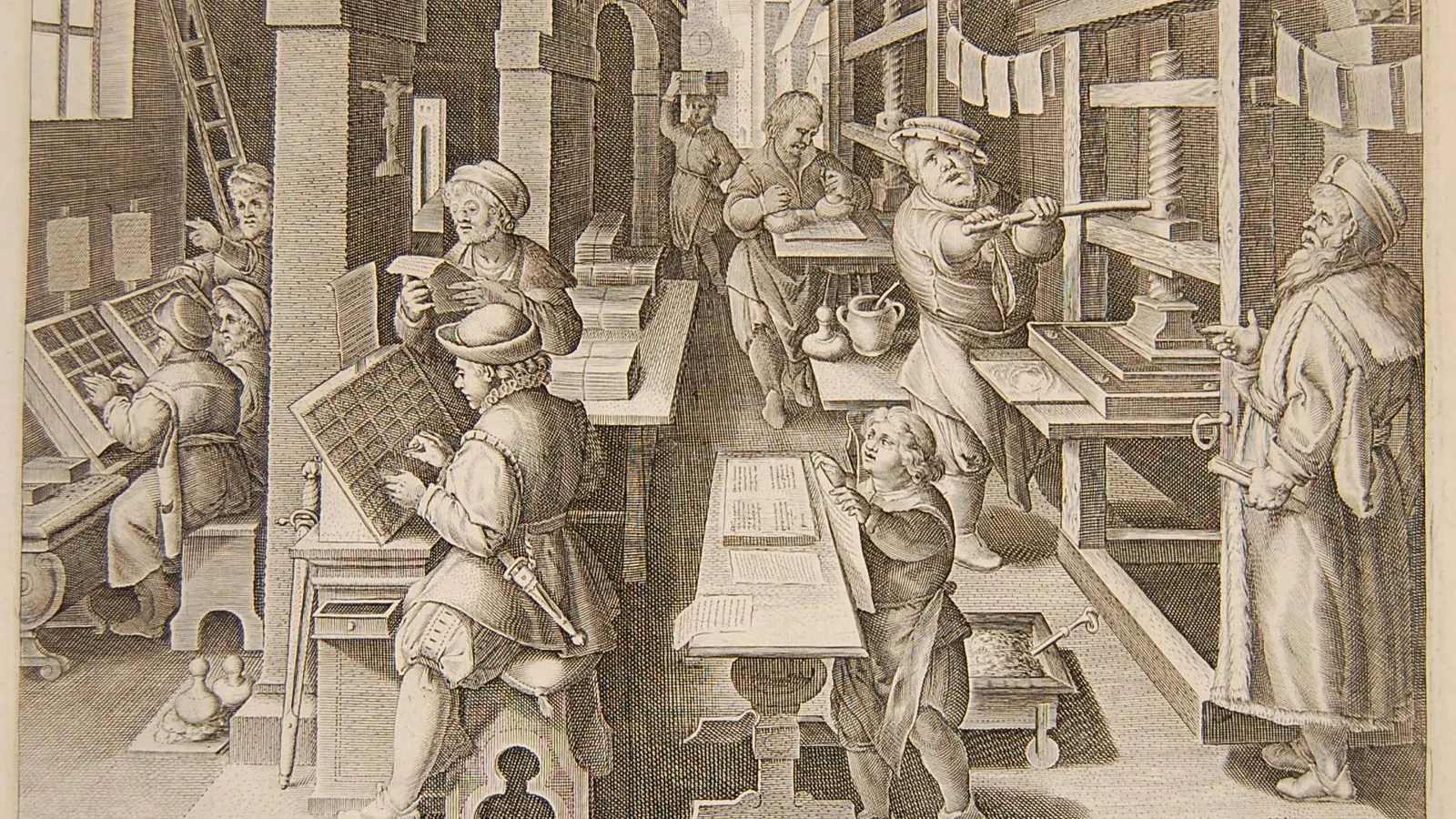
Franciscus Modius of Bruges was twenty-eight when the heirs of André Wechel printed his Novantiquae lectiones, tributae in epistolas centum et quod excurrit at Frankfurt in 1584: more than a hundred learned letters, each carrying its own corrupt line of Silius Italicus, Censorinus, or Macrobius toward repair. Neither an edition nor a commentary, it is a working philologist's correspondence turned into an argument that nothing may be received against the books — the parchment witnesses he hunted through the cloisters of Flanders and the Rhineland, naming in every case the man who lent him one. It matters because so little sixteenth-century scholarship shows its hands this openly: the borrowed codices, the sheaf of notes stolen from him, and the printing-house correctors he calls a breed of men born for the ruin of letters.
Read the article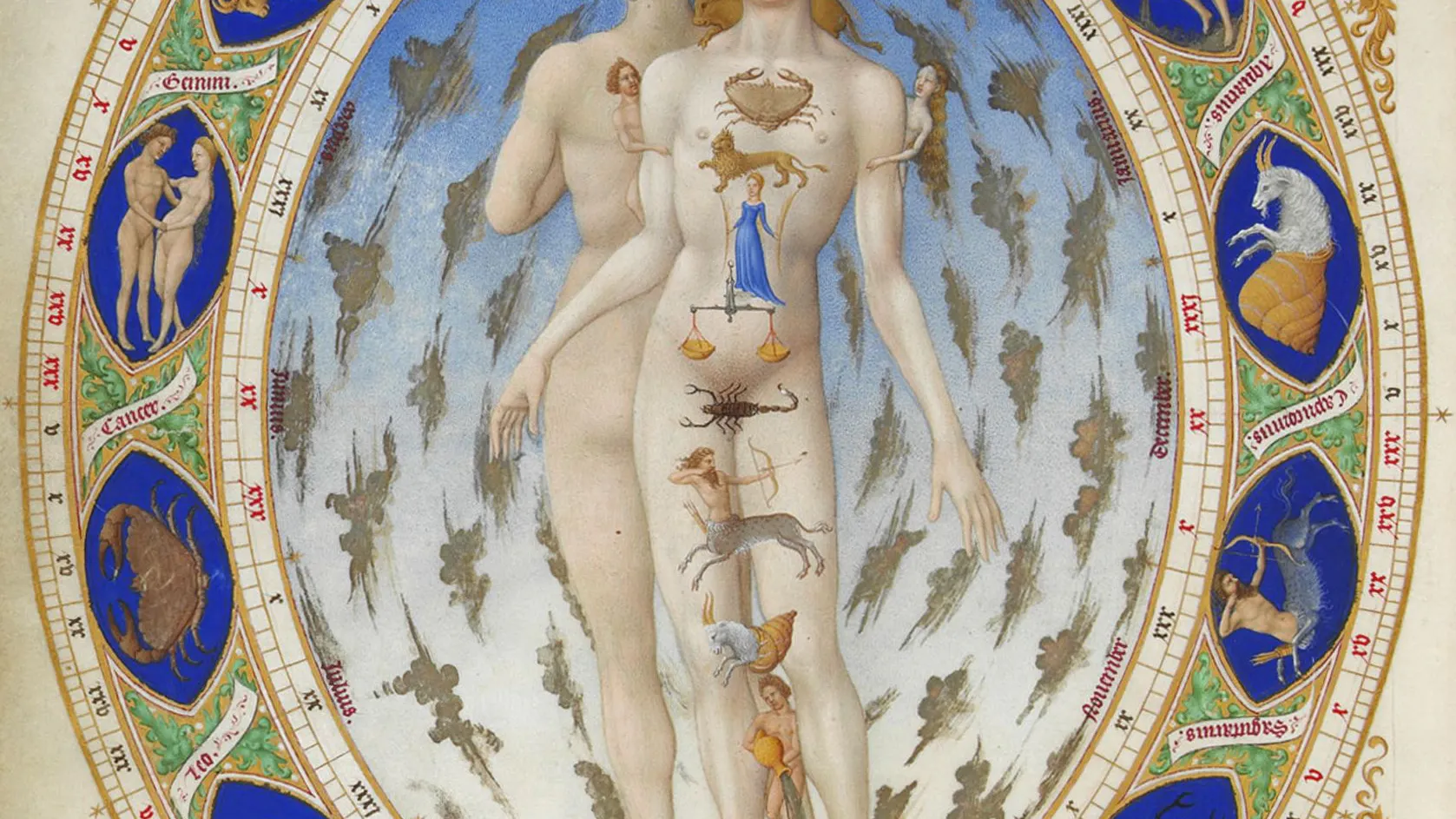
ExLatinis · August 6, 2026
Amussis, the Builder's Straightedge: Johann Daniel Mylius's The Medico-Chymical Work: Three Basilicas of Medicine, Chymistry, and Philosophy
Johann Daniel Mylius, a Hessian physician and lutenist who signed his title page as a candidate in both Hippocratic and Hermetic medicine, spent the years from 1618 to 1630 publishing the Opus medico-chymicum, a Latin encyclopedia that lodged medicine, chymistry, and philosophy in three graduated halls, or basilicae. His complaint was not that the age lacked recipes but that it had far too many: particulars on offer in every corner, the universals silent, and no straightedge against which any single case or preparation could be measured. What he offered in their place was arrangement — a printed system in which potable gold, mine-demons, dreams, wine, the passions, and the nine orders of angels each acquire a determinate seat.
ExLatinis · August 4, 2026
Begging Not to Be Held an Impostor: John Pearson's A Vindication of the Epistles of St. Ignatius
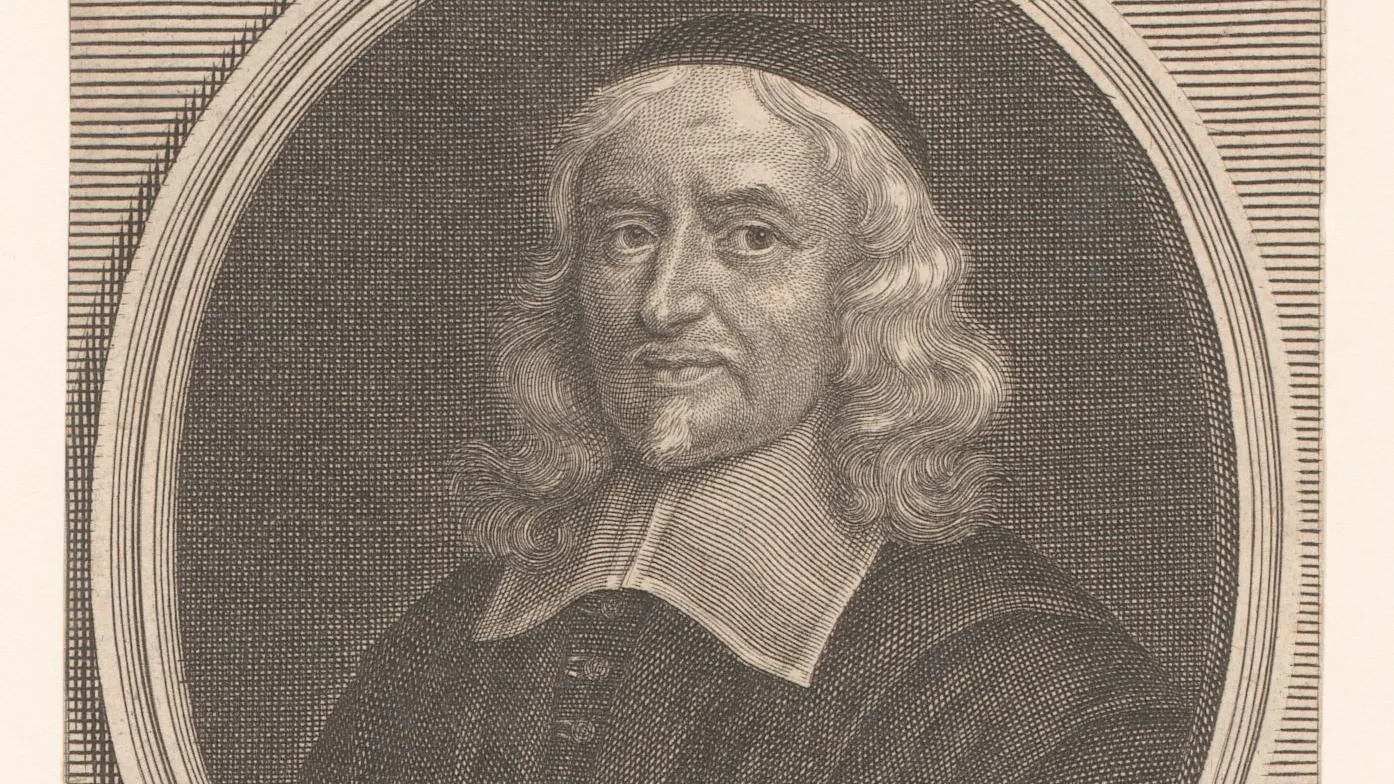
John Pearson, Cambridge theologian and future Bishop of Chester, published Vindiciae epistolarum S. Ignatii in 1672 to prove that seven short letters written under guard on the road to Rome were genuinely the work of Ignatius of Antioch, and not, as the Huguenot scholar Jean Daillé had charged, a fabrication of some later century. The stakes were never merely bibliographical: those letters are the oldest surviving witness to bishops, presbyters, and deacons as three distinct offices, and if they fell, so did the Church of England's oldest documentary claim to apostolic order. Pearson answered with a two-tier method — external testimony marshalled against a carefully calibrated argument from silence, internal evidence tested for anachronism in chronology, heresy, diction, and title — whose procedures long outlasted the ecclesiology they were built to defend.
ExLatinis · August 3, 2026
Pits in Tallow, Alike and Equal: Giovanni Poleni's On River Headworks with Converging Sides, by Which River Waters Are Diverted: A Book Containing New Experiments on Flowing Waters and the Forces of Percussion
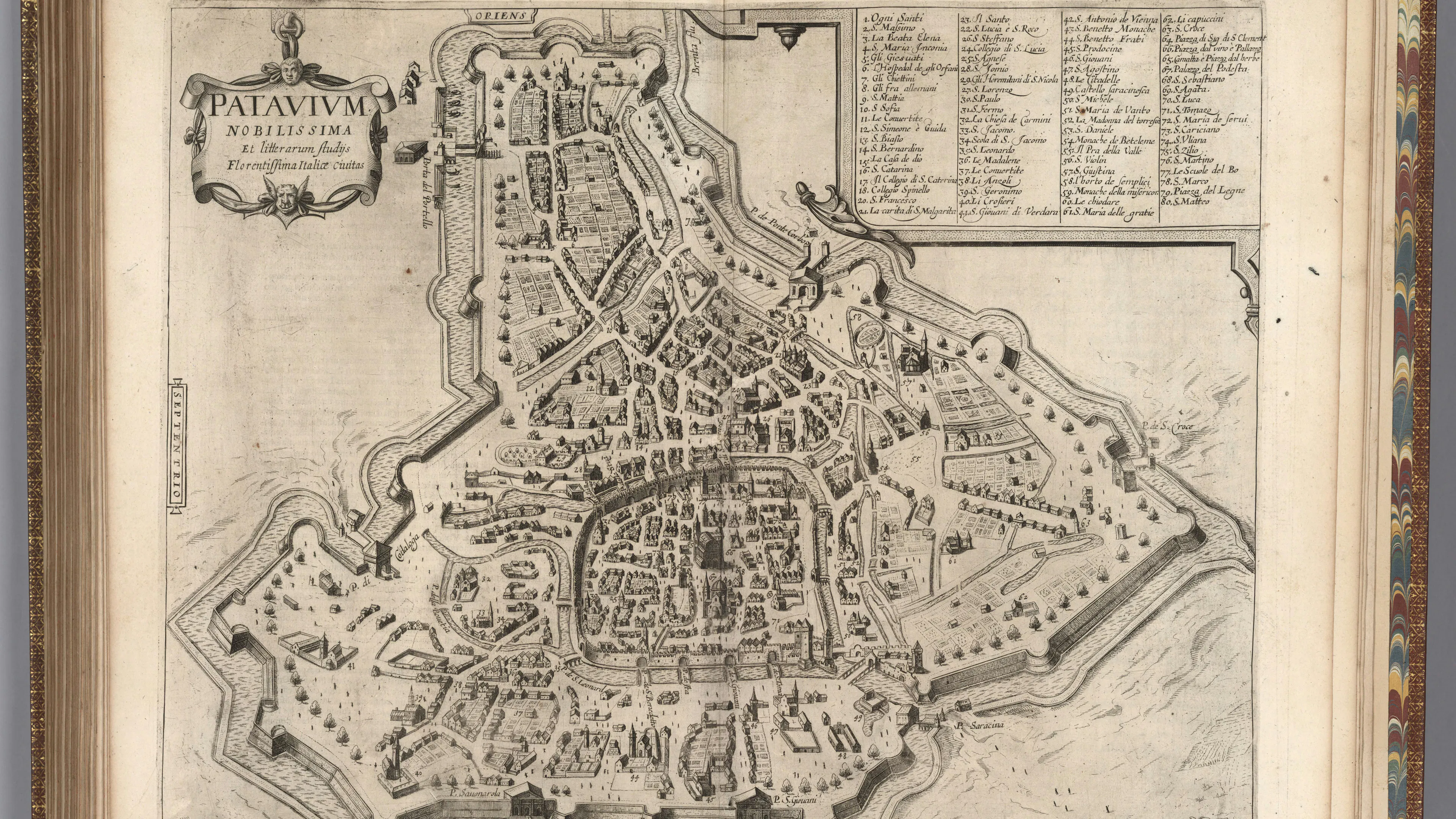
Giovanni Poleni's De castellis per quae derivantur fluviorum aquae habentibus latera convergentia liber (Padua, 1718) asks a question every Venetian water magistrate needed answered — how much water actually passes through a river intake — and returns the destructive answer that no table computed from orifice area and elapsed time can be trusted, because the shape of the parts beside an opening alters the discharge. Along the way its author, a professor at Padua and fellow of the Royal Society, drops two balls of equal size and unequal weight into tallow before Vallisneri, Morgagni and a Bernoulli, and pronounces the European quarrel over the forces of moving bodies decided by the two identical pits they leave. It is a treatise on sluices that claims Roman names, adjudicates a Leibnizian dispute, and then closes by conceding the one figure it could not make its measurements yield.
ExLatinis · August 2, 2026
Imaginary Money at the Piacenza Fairs: Sigismondo Scaccia's On Commerce and Exchange
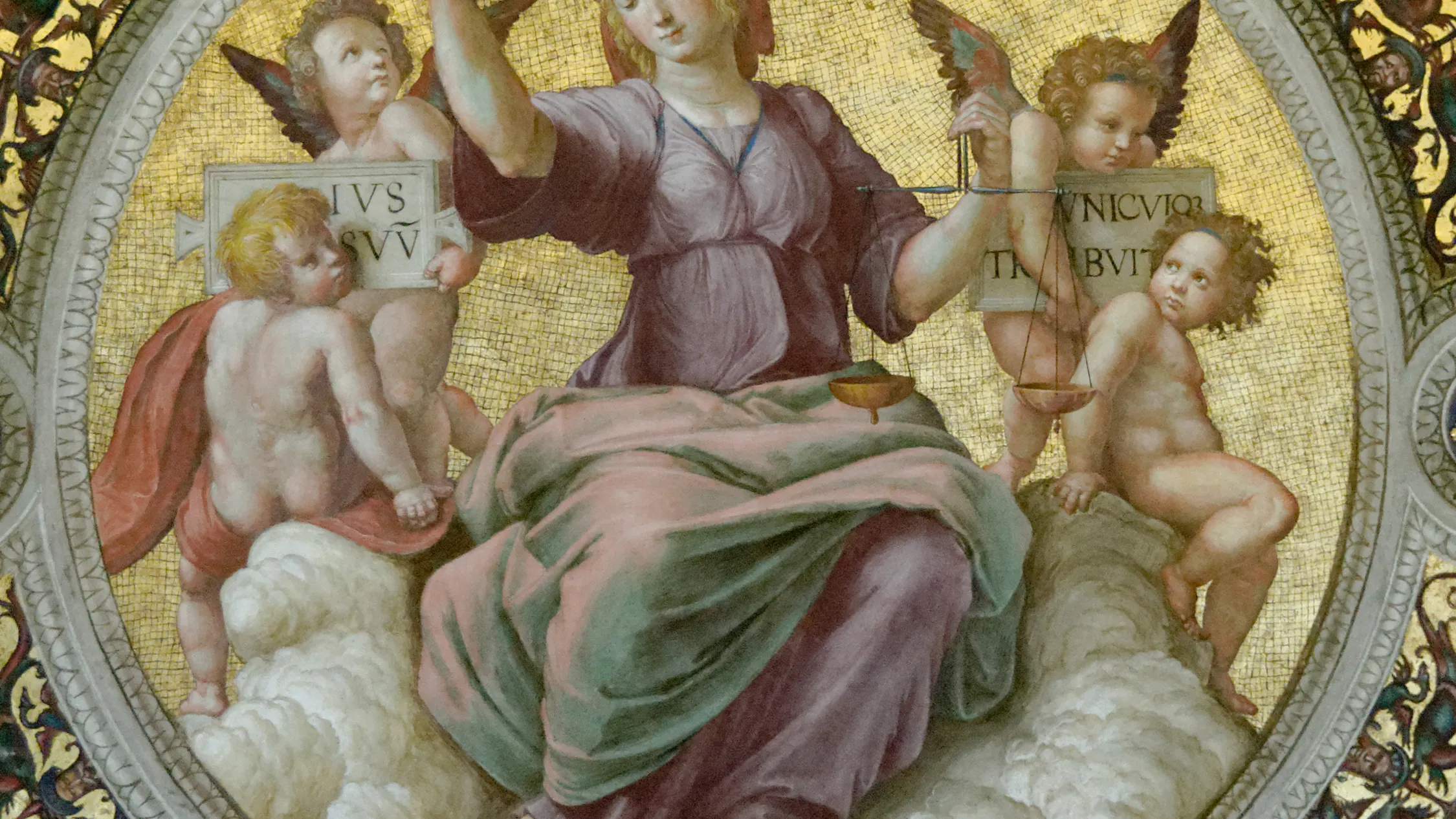
Sigismondo Scaccia, a judge of the civil Rota of Genoa who later sat as a magistrate at Rome, wrote Tractatus de commerciis et cambio to settle the question that tormented merchants, confessors, and tribunals after Trent: when is a bill of exchange a genuine transfer of money between distant places, and when is it a loan at interest wearing borrowed clothes? Licensed at Rome between 1616 and 1618 and reprinted for a century afterwards in Cologne, Venice, and Geneva, the folio anatomises insurance, annuities, partnership in venal office, and the fictive money of account reckoned at the Piacenza fairs, testing each against commutative equality rather than against the shape of the contract. It has never been translated into any vernacular, and is still read chiefly at second hand.
ExLatinis · August 1, 2026
Nusquamia: Nicolau Godinho's On Abyssinian Affairs and the Ethiopian Patriarchs João Nunes Barreto and Andrés de Oviedo
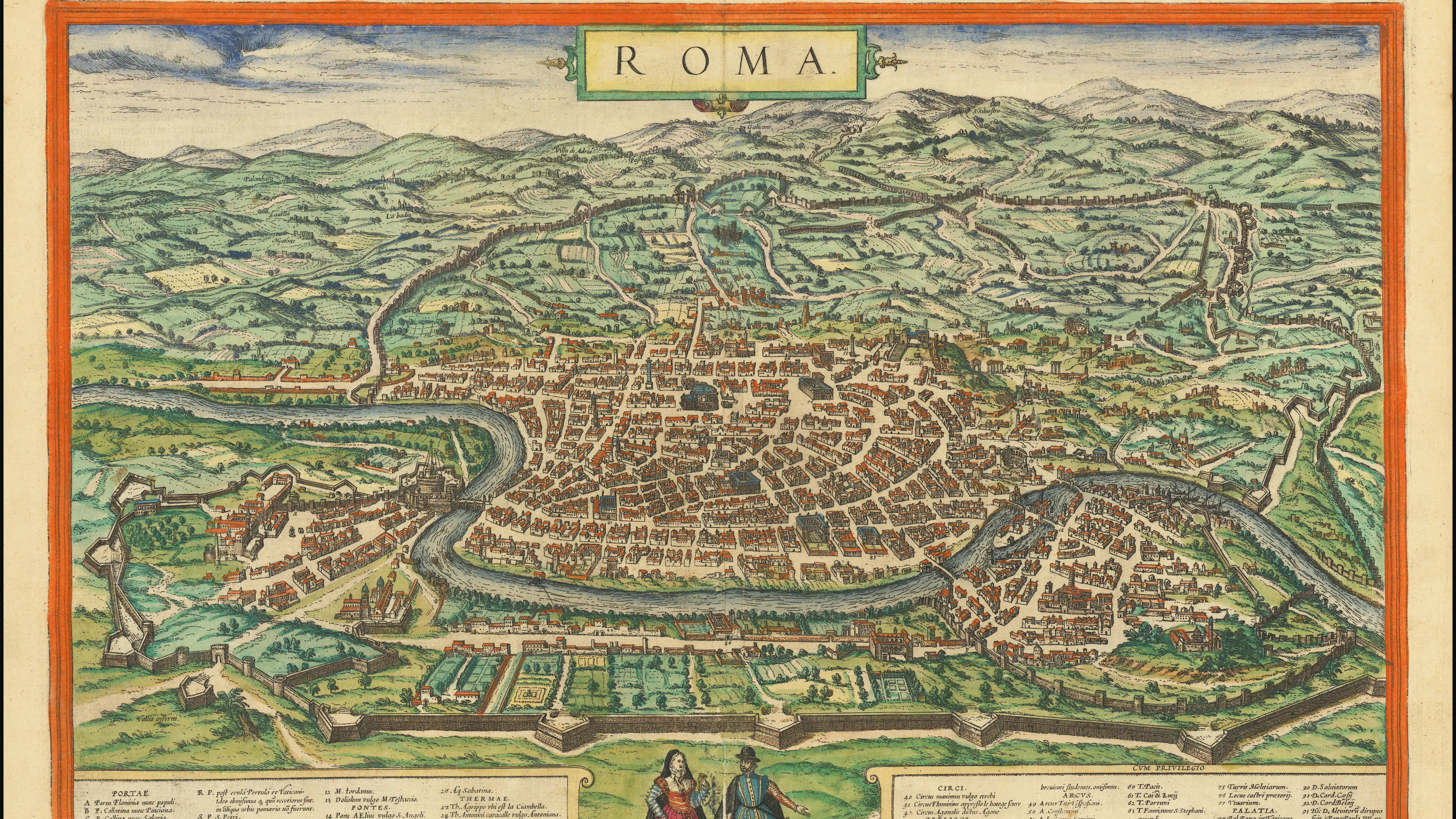
In 1615 the Portuguese Jesuit Nicolau Godinho published at Lyon a three-book Latin defence, De Abassinorum rebus, deque Aethiopiae patriarchis Ioanne Nonio Barreto et Andrea Oviedo, libri tres, arguing that Ethiopia had stood in schism from Rome ever since Dioscorus carried his condemned Christology south from Chalcedon — against a Dominican rival who insisted the Abyssinians had never left the Roman communion at all. Godinho's weapons are not travellers' wonders but sworn depositions, papal briefs, Jesuit letters carried from Goa and Fremona, and the direct interrogation of a living cardinal; his opponent's Ethiopian capital he rechristens Nusquamia, Nowhere-land, because it is nowhere. The stake is jurisdiction rather than curiosity: to classify the Abyssinians as schismatics is to justify a century of popes, kings, and bishops dispatched to reclaim them.
ExLatinis · July 31, 2026
Twenty Drachms of White Poppy Seed: Ludovico Settala's Medical Animadversions and Cautions, Books Eight and Nine
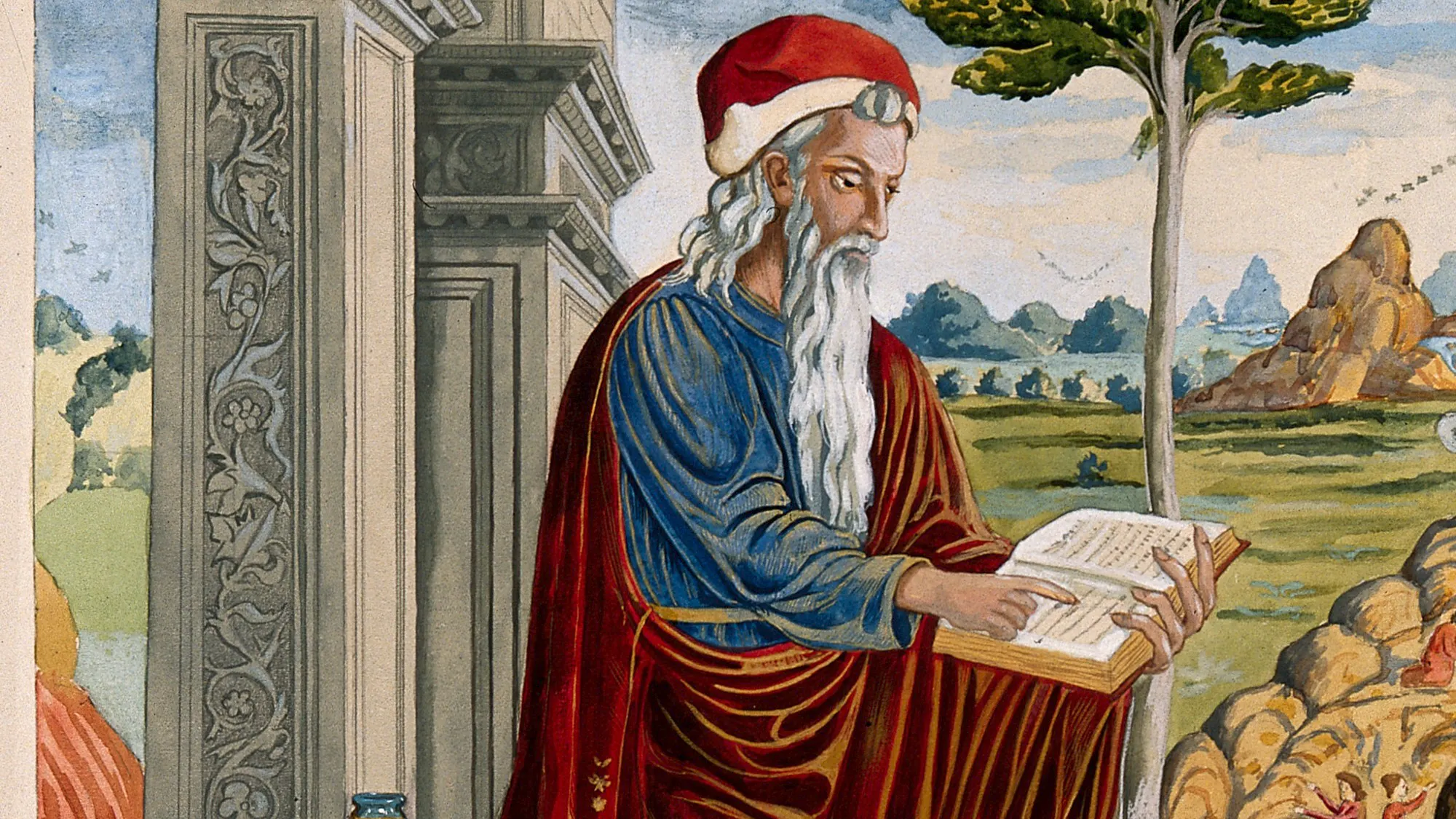
Ludovico Settala, chief medical officer of Spanish Milan and a physician of forty years' standing at the Ospedale Maggiore, published in 1630 two further books of his Animadversionum, & Cautionum Medicarum LIBRI DUO — one on the treatment of wounds, one on the compounding of medicines — at the height of the plague that would kill a sixth of his city. Written by a man who could both argue from Galen and shut down an apothecary's shop, the volume turns learned criticism into enforceable rule: tents and pledgets are condemned as customs that smother the body's own healing heat, corrupt drug recipes are corrected by philology where the manuscripts allow and by decree where they do not. Appended to it is a short treatise claiming that a mole on the forehead always has a twin in the chest — natural philosophy, its author insists, and emphatically not astrology.
ExLatinis · July 30, 2026
Inserting a Year Without Consuls: Carlo Sigonio's Consular and Triumphal Fasti from Romulus to Tiberius, with a Commentary on the Whole of Roman History and a Treatise on the Names of the Romans
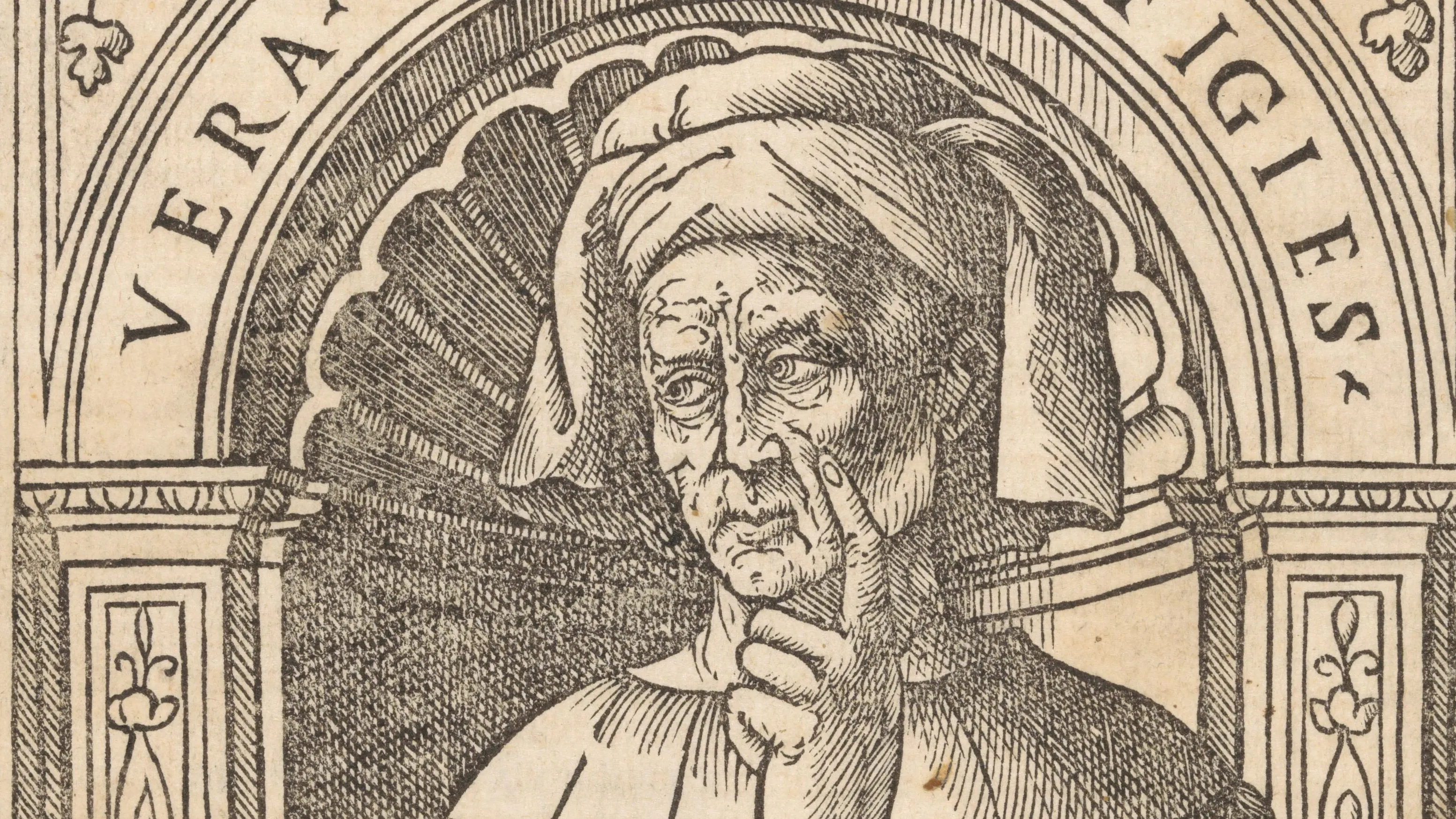
Carlo Sigonio built his FASTI CONSVLARES, AC TRIUMPHI acti à Romulo Rege usque ad Ti. Cæsarem (Basel, 1559) out of broken marble rather than out of Livy: a folio grid of consuls, censors, dictators and triumphs running from Romulus to Tiberius, reconstructed from inscriptions lifted out of the Roman Forum in 1546–1547. Where the stones and the annalists disagreed he printed the stones in larger type, set his own supplements in smaller, and at one point inserted an entire year without consuls that no ancient writer records, purely to keep the marble's arithmetic intact. What emerges is among the earliest thoroughgoing works of documentary history, and simultaneously an argument, conducted through the technical vocabulary of Roman public law, about how a commonwealth becomes a monarchy while retaining all its old names.
ExLatinis · July 29, 2026
Chaff on the Hinge: Domenico Magri's Hierolexicon, or Sacred Dictionary
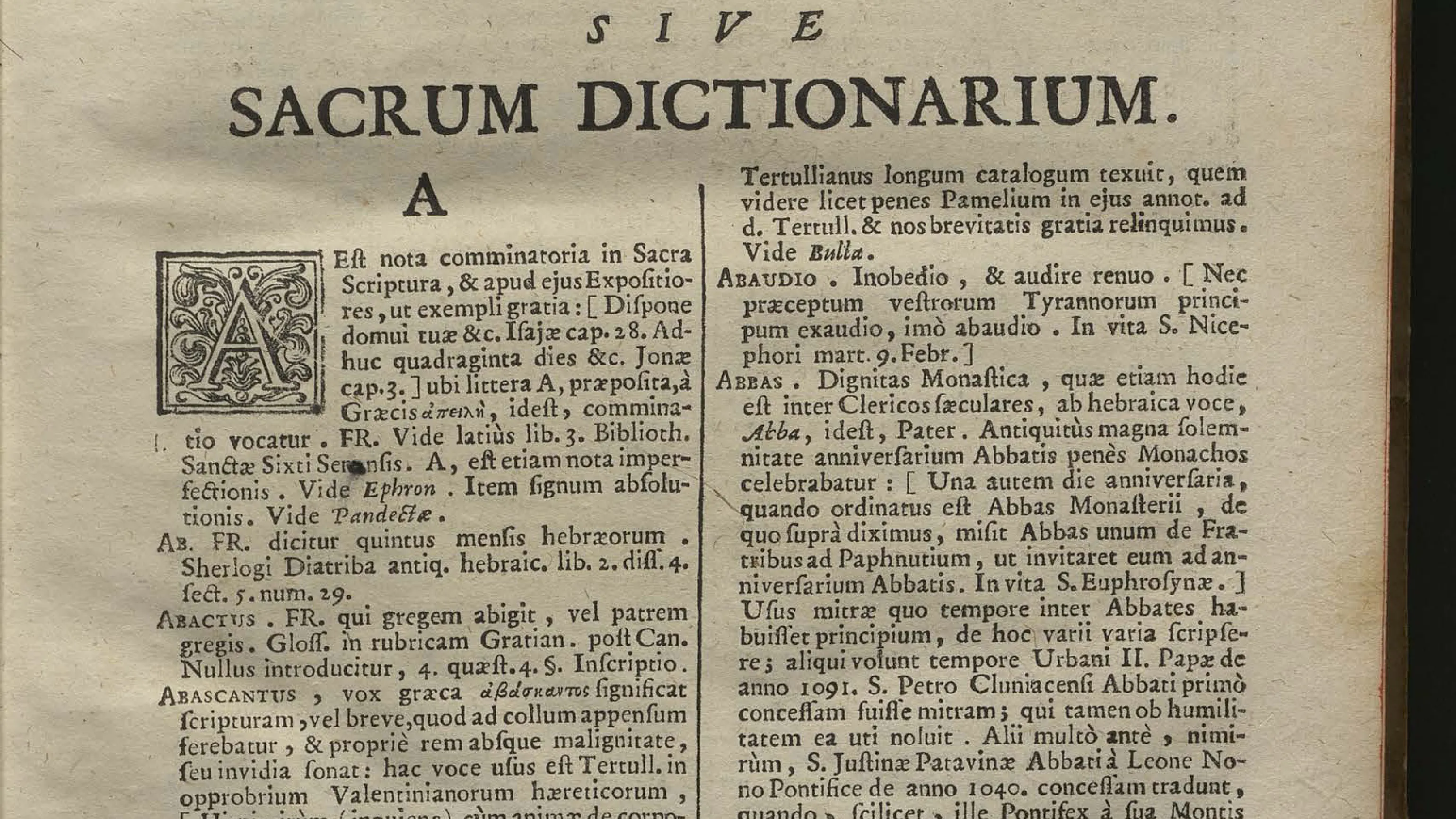
Domenico Magri (Valletta 1604 – Viterbo 1672), a Maltese priest, consultor of the Sacred Congregation of the Index, and traveller to Syria and Mount Lebanon, spent his career building a dictionary that claimed to be a sacred object in its own right. His Hierolexicon, sive Sacrum Dictionarium — an alphabetical Neo-Latin encyclopaedia of ecclesiastical, liturgical, canonistic, and antiquarian vocabulary, completed at his death and issued posthumously at Rome in 1677 through his brother Carlo, then reprinted in this 1735 Venetian folio — fixes the ancient meaning of every word of Catholic rite in order to prove, against the Protestant Novatores, that the vocabulary itself carries the pedigree of the undivided Church. That single wager, that to fix a word is to defend a thing, governs the whole book from its etymologies of the cardinalate to its appended treatise harmonising the apparent contradictions of Scripture.
ExLatinis · July 29, 2026
Nothing, Decorated with Measures: Johann Christoph Sturm's Selective, or Hypothetical Natural Philosophy, Volume II
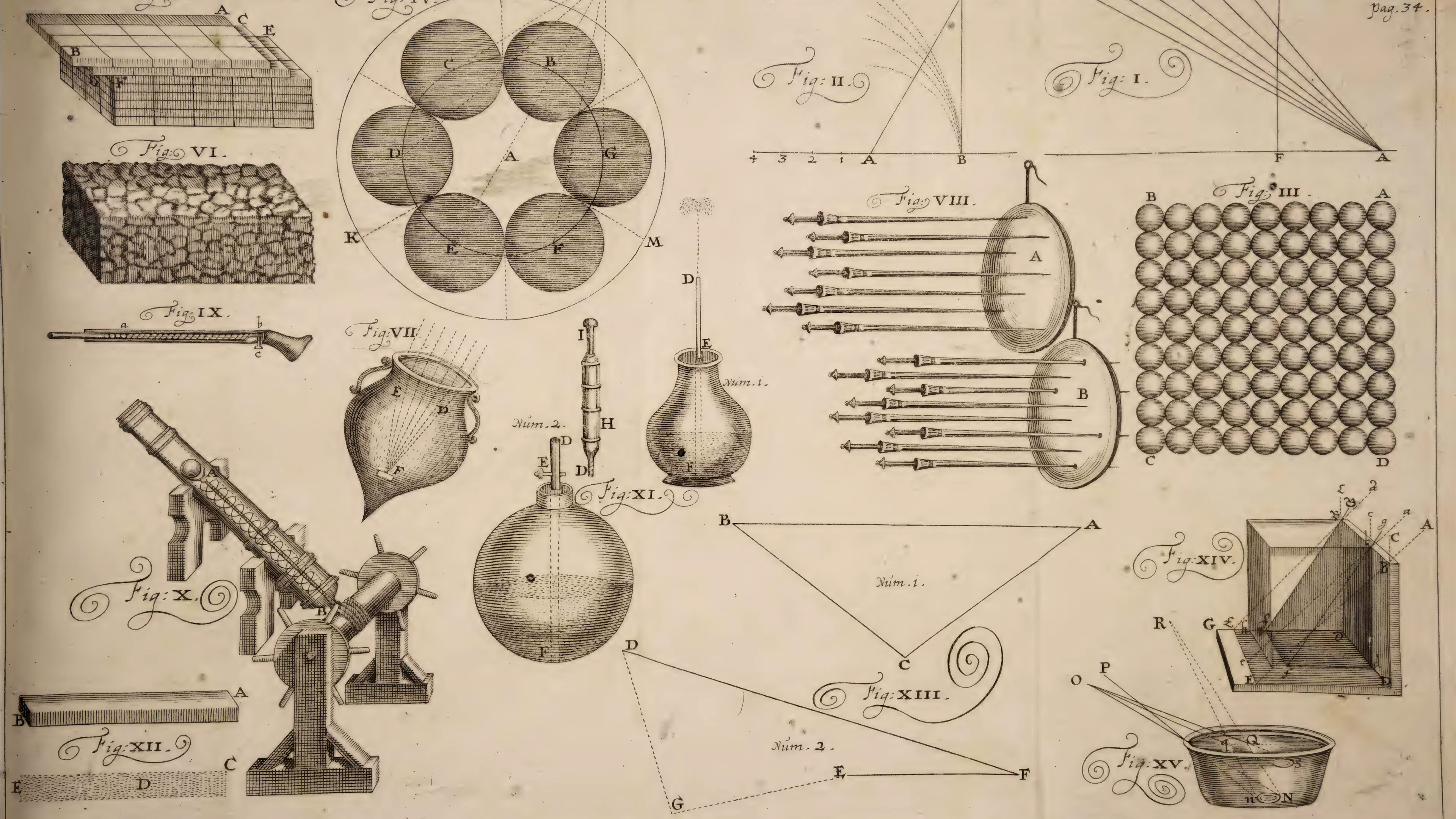
Johann Christoph Sturm, professor of mathematics and physics at the little Lutheran university of Altdorf, spent his last years assembling a whole natural philosophy on a judicial method he called electiva: collect the phenomena, lay out every rival hypothesis, then appraise. The second volume of his Physica electiva, sive hypothetica — printed at Nuremberg in 1722, nineteen years after his death, with a preface by the young Christian Wolff — runs to some 1,368 pages of barometers, burning mirrors, pendulum counts and measured speeds of sound, all in service of one severe claim: that nature is explicable in figures, sizes and motions of particles, and that nothing in it moves except by God's good pleasure. It is the fullest surviving monument of German Lutheran eclecticism, the Altdorf voice in the quarrel over the idea of nature that drew Leibniz into print, and one of the doors through which Newton's Principia entered the German lecture hall.
ExLatinis · July 28, 2026
Perpetua quædam justitia: Casati's Eight Books on Mechanics
Paolo Casati, a Piacenza-born Jesuit who taught mathematics at the Collegio Romano and later governed the Province of Parma, spent decades reducing every machine — lever, pulley, wheel, wedge, and screw alike — to a single principle: what you gain in weight you pay for exactly in velocity, a bargain he called a perpetua quædam justitia. His Mechanicorum libri octo, printed at Lyon in 1684 under royal privilege, is the mature distillation of those lecture courses, a mixed-mathematical textbook that couples Archimedean geometry with an unabashedly scholastic physics of impetus — a force whose persistence in a moving body he defended by analogy with how the Eucharistic accidents endure apart from their substance. It matters because it shows a first-rate Jesuit mathematician accepting Galileo's results on free fall while refusing his explanations, holding open a physical vocabulary that modern historians still cannot agree to call either a genuine alternative or a scholastic relic.
ExLatinis · July 28, 2026
The Rose from Its Ashes: Jean-Chrysostôme Magnen's Democritus Revived, or On Atoms
In 1646, a Burgundian physician teaching at Pavia set out to do something bolder than recover a lost philosophy: in Democritus reviviscens sive de atomis he proposed to bring ancient atomism back to life as a working science of nature, geometrically demonstrable and safe for Catholic natural theology. Jean-Chrysostôme Magnen redeemed the atom and the void—reinterpreting the void as air, keeping the substantial forms, and installing a creating God where the ancients had left blind chance—while marshaling a Euclidean scaffold of proofs, a free-fall experiment, and the revival of a rose from its own ashes. The result is one of the most revealing intermediate positions in the whole seventeenth-century argument over what matter is made of.
Read the article
Decipher your archive




© 2026 Leo Technologies Limited. All rights reserved