ExLatinis
ExLatinis aims to translate every Latin work printed between 1450 and 1750, putting the intellectual world of early modern Europe within reach of anyone
42 articles · page 3 of 4
ExLatinis · July 27, 2026
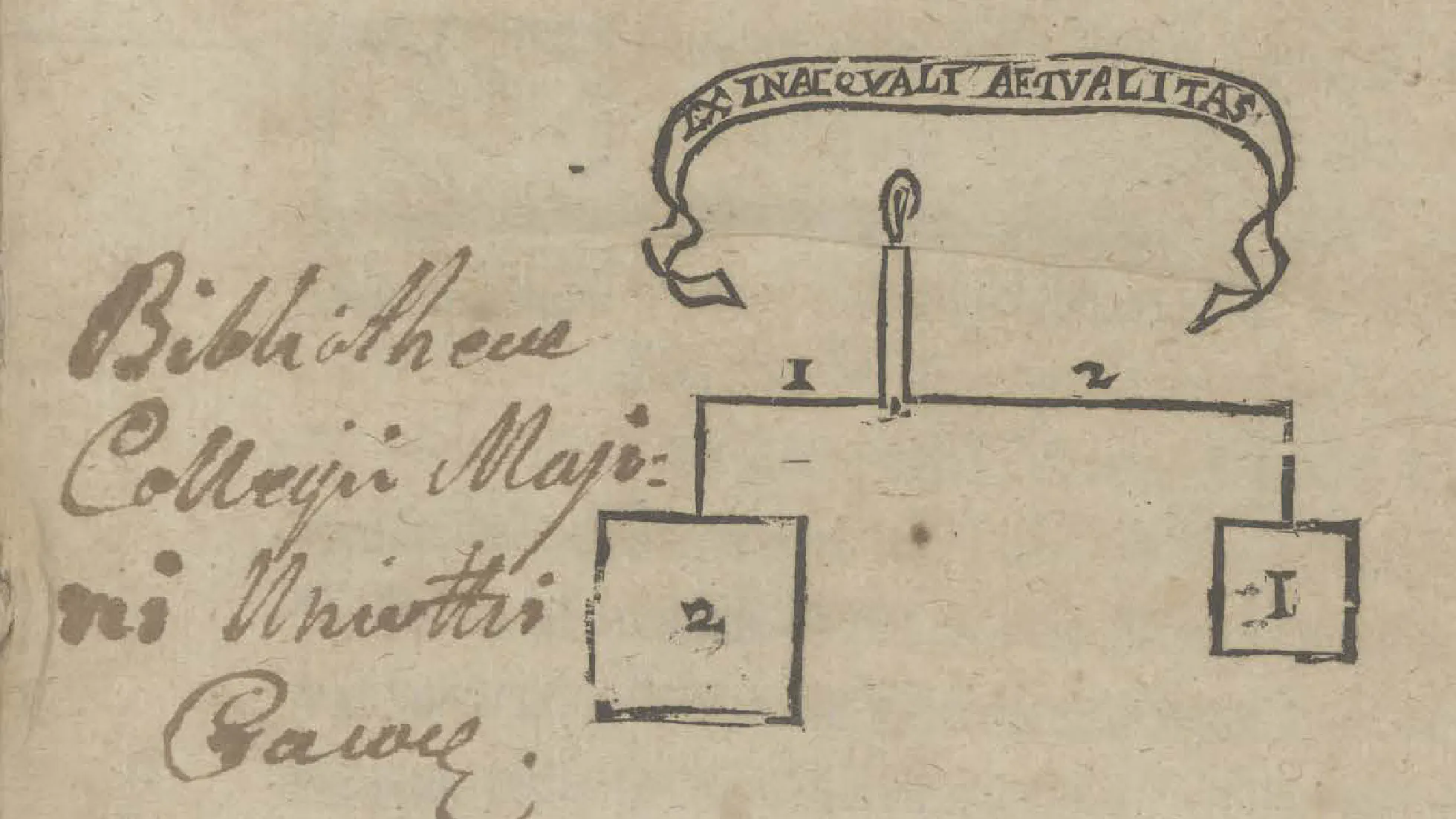
The Roundness of the Balance: Bernardino Baldi's Exercises on the Mechanical Problems attributed to Aristotle
A late-Renaissance mathematician's demolition and repair of an ancient text, Bernardino Baldi's Bernardini Baldi Vrbinatis Guastallæ abbatis In mechanica Aristotelis problemata exercitationes (Mainz, 1621) reworks the pseudo-Aristotelian Mechanica question by question, refusing to let the authority of a revered name stand in for demonstration. Baldi — mathematician, hellenist, poet, and Abbot of Guastalla, trained in the Urbino school of Commandino and Guidobaldo del Monte — argues that Aristotle's causal footing failed because he lacked the Archimedean science of the centre of gravity, and re-founds every mechanical marvel on the lever and the balance. It is a work in which humanist learning and mathematical rigour discipline one another, memorable for the boldness with which its author fights "with reasons and truth against authority."
Read the article
ExLatinis · July 27, 2026
The Tiny Commonwealth of the Roman Household: Lorenzo Pignoria's Commentary on Slaves and Their Offices among the Ancients
A Paduan antiquarian and a Frisian jurist, bound between the same covers by an Amsterdam reprinter in 1672, set out to reconstruct the entire servile labor force of the ancient Roman household office by office and rank by rank. Lorenzo Pignoria's De servis, et eorum apud veteres ministeriis, commentarius, paired with Titus Popma's treatise on the labors slaves owed, treats the domus as a pusilla respublica — a miniature commonwealth whose every function could be defined by law and documented from inscriptions, coins, poems, and the Church Fathers. For anyone curious about how slaves actually lived, worked, and were classified in Rome, this is one of the foundational catalogues on which modern scholarship still rests.
ExLatinis · July 27, 2026
The Handmaid Worthy of the Whip: Lorenz Scholz von Rosenau's A Volume of Philosophical, Medical, and Chymical Letters by the Foremost Philosophers and Physicians of Our Age
Late-sixteenth-century learned medicine argued with itself in Latin letters, and Lorenz Scholz von Rosenau gathered the best of that argument into a single folio. His Epistolarum philosophicarum, medicinalium ac chymicarum volumen (Frankfurt 1598; Hanau 1610) collects the correspondence of Crato, Erastus, Mercuriale, Zwinger, and their peers and arranges each exchange as a disputed question — above all the question of whether the new chymical art could be admitted to medicine without dethroning Galen. The correspondents' answer, memorably put, was that chemistry deserved honour as medicine's handmaid but the whip should she presume to set herself before her mistress.
ExLatinis · July 26, 2026
Moths, Worms, and the Commonwealth of the Dead: Pieter Burman the Elder's The Letters of Marquard Gude and of the Eminent Scholars Who Wrote to Him; with Letters, Augmented from the Same Source, of Claude Sarrau
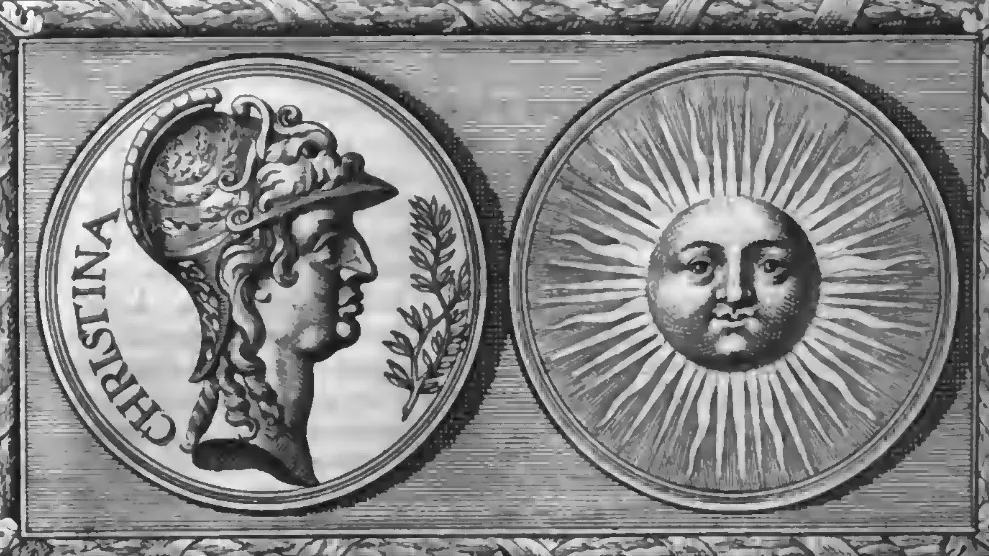
A folio of dead men's letters, printed at Utrecht in 1697 as the Marquardi Gudii et Doctorum Virorum ad eum Epistolae, makes an argument that would unsettle any historian: that the private letter tells the truth about a man more faithfully than any annal composed to burnish a reputation. Assembled by the philologist Pieter Burman the Elder from the scattered papers of the Holstein antiquary Marquard Gude (1635–1689) — a manuscript-hunter who wrestled decaying codices from moths and worms — and swelled by an appendix of the letters of the Parisian councillor Claude Sarrau (d. 1651) dedicated to Queen Christina of Sweden, the volume treats correspondence as both the evidence of learned labour and the labour itself. It is, in the end, an attempt to reconstitute a dispersed library as a printed commonwealth, and to install its editor as that commonwealth's presiding magistrate.
ExLatinis · July 26, 2026
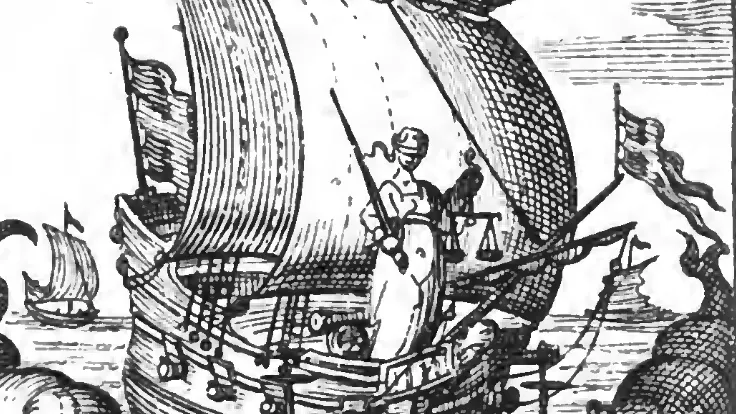
The Bee Among the Flowers: Johannes Loccenius's Three Books on the Law of the Sea and of Shipping
In 1651, from the Stockholm press of Johannes Janssonius the Younger, the German-born Uppsala jurist Johannes Loccenius issued De iure maritimo et navali libri tres, a systematic Latin treatise that set out to prove that the Nordic world possessed its own maritime jurist and its own canonical sources — chief among them the medieval Laws of Wisby, which he ranked beside the ancient Rhodian Sea Law. Written amid the Grotius–Selden quarrel over whether the ocean could be owned or closed, and in the decade when the Swedish crown dominated the Baltic, it argues that the law of the sea is public law, resting on natural equity and answerable to the wealth of commonwealths. Loccenius gathers Roman nautical law, northern statute, and confessional casuistry the way a bee sips flowers of every kind, drawing off the best of each and measuring the result against the fourfold standard of natural, gentile, divine, and civil law.
ExLatinis · July 26, 2026
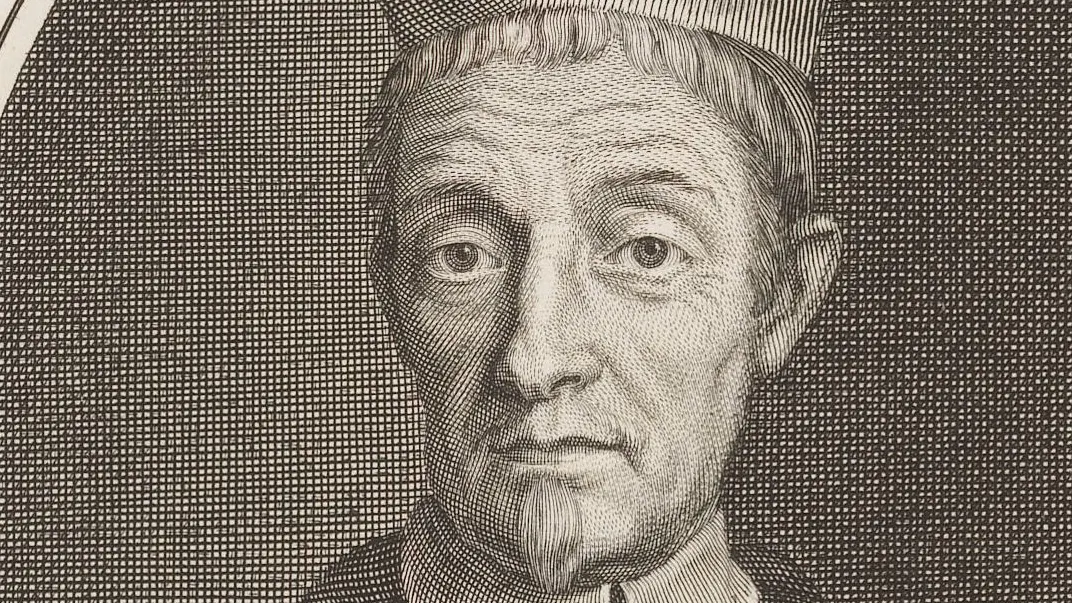
The Five Articles Against a Cardinal: Enrico Noris's Information Concerning the Book of Father Henry Noris
In the winter of 1673 a twenty-four-page memorandum began to circulate that would help drag one of the age's most learned Augustinians into a doctrinal trial lasting decades. Written anonymously by "a theologian of Paris" and titled Informatio de libro r. p. f. Henrici De Noris, Augustiniani, &c. cui titulus est Historia Pelagiana, dissertatio historica de synodo quinta, vindiciæ Augustinianæ. Ad censores libri hujus nuper à summo pontefice delectos. Ab uno theologo Parisiensi, it accused the friar Enrico Noris of smuggling the condemned theology of Cornelius Jansen into scholarship dressed as history — an indictment built article by article to leave its target, the future Cardinal of Sant'Agostino, no place to stand.
ExLatinis · July 24, 2026
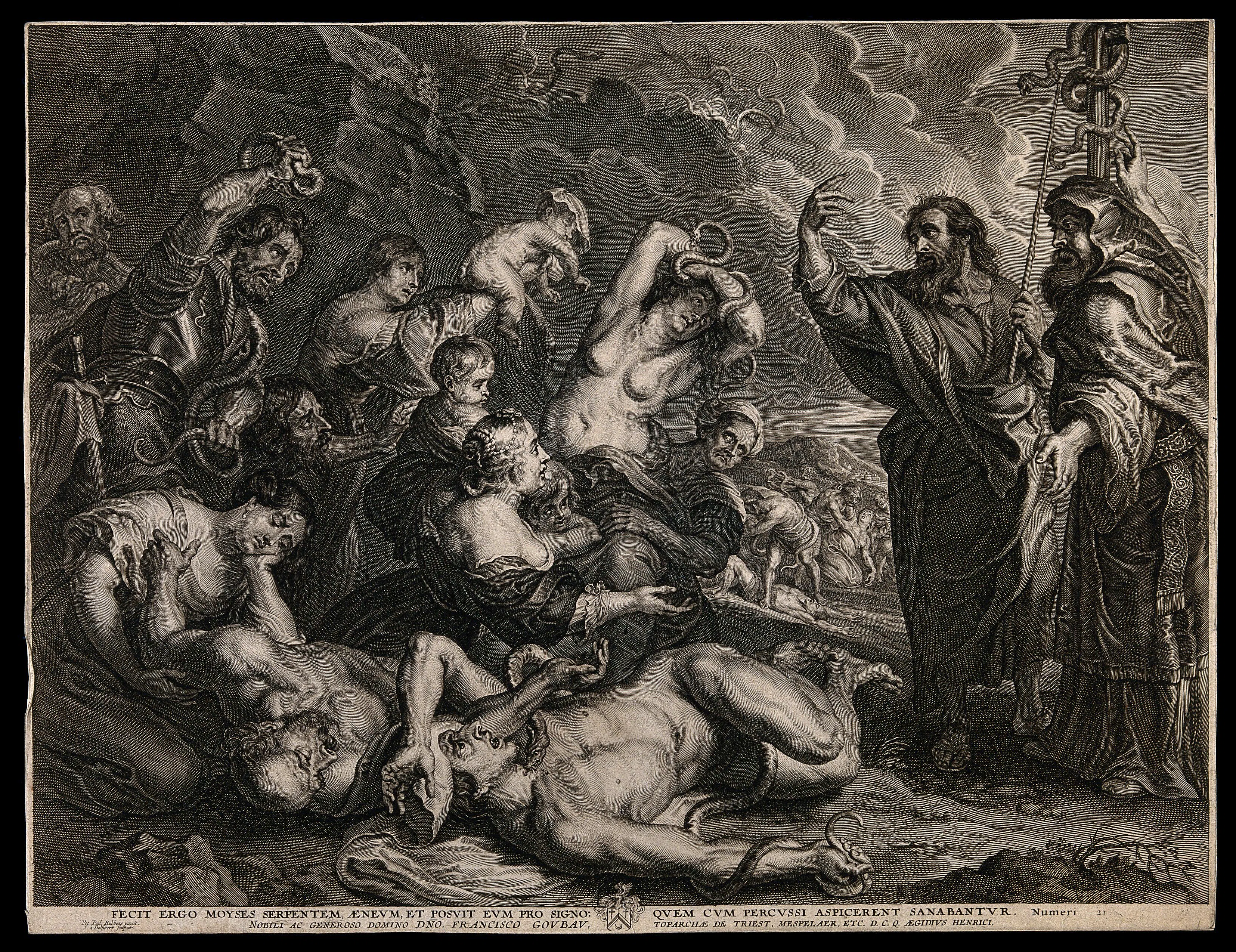
The Asparagus and the Rapture: Thomas Bartholin's On Diseases in the Bible: A Medical Miscellany
A Danish physician trained in Galen and Hippocrates opens the Old and New Testaments and reads Job's boils, Nebuchadnezzar's beastliness, and the "fiery serpents" of the wilderness as clinical cases — this is De morbis biblicis miscellanea medica, printed at Copenhagen in 1672 by Thomas Bartholin (1616–1680), among the most celebrated anatomists of the age. Bartholin assigns each scriptural affliction a natural pathological name while reserving for divine action whatever medicine cannot explain, staking out contested ground between the faculties of medicine and theology in Lutheran Copenhagen. For historians of medicine, of biblical reception, and of the confessional culture of the north, it is the most ambitious surviving expression of medicina biblica — and the first written from within a Lutheran setting.
ExLatinis · July 24, 2026
The Face of Proteus: Berger and Vater's On True Plague
In the summer of 1710, as plague from the Great Northern War pressed toward the Baltic, a young Wittenberg licentiate named Abraham Vater stood before his examiners to defend a set of medical theses drafted by the senior physician Johann Gottfried Berger. The result, printed that same year as De pestilentia vera — "On True Plague" — is a compact quarto disputation that stakes an uncompromising claim: that plague properly so called has one cause and one only, contagion, a septic seed-bed of fine particles carried body to body, with the corrupted air, the stars, and dietary excess demoted to mere disposing conditions. For any reader curious how early modern medicine argued its way toward a theory of transmission — decades before germs could be seen — this forty-eight-page exercise offers the contagionist case laid out thesis by thesis, from the coinage of its central category to a candid admission that the true cure still lies hidden in the bosom of nature.
ExLatinis · July 24, 2026
The File and the Furnace: Josse Clichtove's An Ecclesiastical Elucidation of the Matters Pertaining to the Office of the Church, in Four Books
In late 1515 or early 1516, Henri Estienne's Paris press issued the Elucidatorium ecclesiasticum, the Flemish theologian Josse Clichtove's four-book manual for the whole Divine Office and the Mass, built on a single conviction: that the Church sings its daily hymns, canticles, and prayers without understanding them. Against corrupted texts and forgotten authors Clichtove trained the full apparatus of Christian humanism — textual emendation, metrical scansion, and Hebrew-Greek-Latin philology — always in the service of a sharper orthodoxy. It is the principal liturgical monument of the circle around Jacques Lefèvre d'Étaples, and the constructive programme whose arguments Clichtove would later turn against Luther.
ExLatinis · July 24, 2026
The Debunker of Saints and the Ointment-Bearer of Ephesus: Jean de Launoy's An Inquiry into the Inquiry Concerning Mary Magdalene as a Newcomer to Marseille
In 1643 the Sorbonne doctor Jean de Launoy — the Norman critic contemporaries nicknamed le dénicheur de saints, "the debunker of saints" — published the Disquisitio disquisitionis de Magdalena Massiliensi advena, a page-by-page demolition of the Jesuit case that Mary Magdalene had sailed to Provence, evangelized Marseille, and died in the grotto of La Sainte-Baume. Working from a single controlling axiom — that the earliest witness wins and recent testimony without ancient warrant deserves contempt — Launoy convicts the Provençal cult of resting on forged chronicles and pious wishful thinking, and marshals Greek and Byzantine sources for a rival burial at Ephesus. The result is one of the founding documents of critical hagiography, a forensic instrument in the long quarrel over how historical truth is to be weighed against sanctified tradition.
ExLatinis · July 24, 2026
The Set Square at the Gate: Girolamo Vitale's Lexicon Mathematicum Astronomicum Geometricum
A Theatine cleric of Capua named Girolamo Vitale spent years compiling a single alphabetical dictionary, the Lexicon Mathematicum Astronomicum Geometricum (Paris, 1668), meant to hold the entire technical vocabulary of the seventeenth-century mathematical arts — arithmetic, geometry, optics, astronomy, and all their kin — within one Catholic reference apparatus. His governing aim was neither purely scholarly nor purely devotional: to prove that the whole of mathesis could be transmitted intact, without hazard to faith or morals, provided every term was admitted, glossed, and, where dangerous, quarantined one entry at a time. The result is an unusually clear record of how a sophisticated cleric-mathematician drew the boundary between licit astronomy and condemned judicial astrology, between natural sympathy and forbidden magic, in the deliberately undramatic medium of the lexical definition.

ExLatinis · July 24, 2026
The Sacred Anchor and Charon's Skiff: Georg Wolfgang Wedel's Opiologia, or A Treatise on Opium Drawn Up According to the Mind of the Academia Naturae Curiosorum
Georg Wolfgang Wedel, a Jena physician writing in 1674, confronted the paradox at the heart of learned medicine's dealings with opium: the drug was at once the most potent remedy in the physician's store and a substance the schools had long feared as a poison. His Opiologia ad mentem Academiae Naturae Curiosorum refuses to dissolve that paradox and instead disciplines it, asking how a physician might rightly know, prepare, and administer a drug whose power and whose danger are one and the same. Grounded in a tally of more than four hundred cured dysenteries, the interrogation of opium at the chemical furnace, and a signature doctrine that the drug can act only when the blood holds a proportioned serum, the book captures a discipline mid-transition, holding Galenic and chymical frameworks together under the pressure of a single consequential simple.
Read the article
Decipher your archive




© 2026 Leo Technologies Limited. All rights reserved