ExLatinis
ExLatinis aims to translate every Latin work printed between 1450 and 1750, putting the intellectual world of early modern Europe within reach of anyone
79 articles · page 4 of 7

ExLatinis · August 25, 2026
Meras Tenebras: Seth Calvisius's Chronological Work, Continued to the Year 1685
Seth Calvisius, cantor of the Leipzig Thomaskirche, spent the hours left over from choir duty rebuilding the whole of universal history on the motions of the heavens. His Sethi Calvisii Opus chronologicum, ad annum 1685 continuatum, cui praemissa est Isagoge chronologica, et subjuncta appendix Epistolarum et Judiciorum de hoc opere pairs a technical manual on the reckoning of time with a year-by-year chronicle from Creation to the Reformation, testing every received date against computed eclipses, weekdays, and consular lists — and correcting Joseph Scaliger, the Jewish calendar, forged antiquities, and the papal annals wherever the arithmetic refused to agree.
Read the article
ExLatinis · August 24, 2026
Ill-Occupied Craftsmen: Jean Daillé's On the Writings Circulated under the Names of Dionysius the Areopagite and Ignatius of Antioch
In 1666 the Genevan press of Jean-Antoine and Samuel de Tournes printed De scriptis, quæ sub Dionysii Areopagitæ et Ignatii Antiocheni nominibus circumferuntur, in which the Huguenot minister Jean Daillé set out to prove that two of Christianity's most venerable bodies of writing were manufactured centuries after the martyrs whose names they carry. His method was forensic rather than doctrinal: track who failed to cite a book when duty required it, then search the text for words, rites and offices that belong to a later century than its title claims. The governing principle was borrowed from Roman law — against the truth of things there is no prescription — and no length of pious possession could convert a false title into a good one.
ExLatinis · August 23, 2026
Forty Firs in a Turpentine Retort: William Davisson's Pyrotechnic Philosophy, or a Chymiatric Course
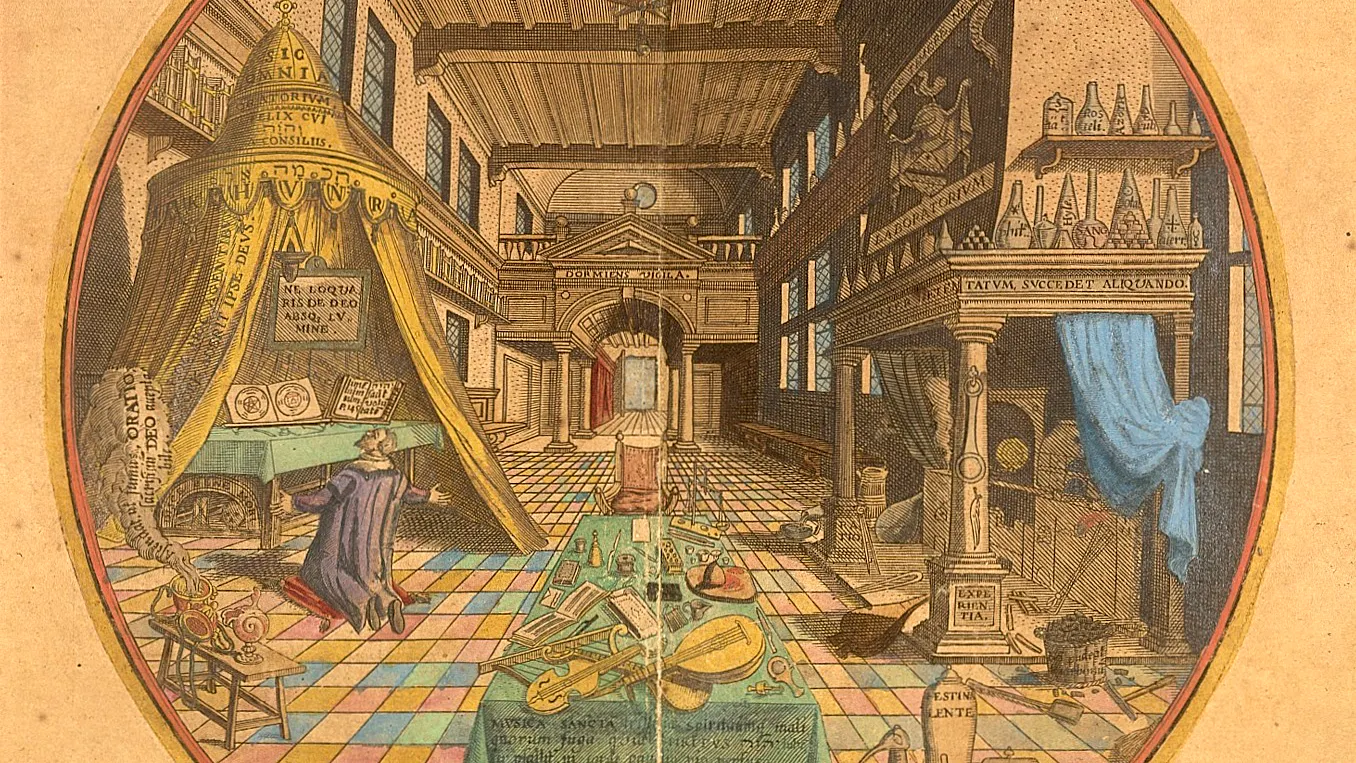
William Davidson — a Scot who made his career in Paris teaching chemical medicine to paying auditors — wrote Philosophia pyrotechnica, seu cursus chymiatricus to prove that work conducted with furnaces, retorts and hands was a demonstrative science and not a distiller's knack. His course defines chymistry as an art created by the Most High and instituted in nature, traces the impurity of matter to the stain of original sin, and concludes that a physician who fails to separate the poison from the remedy is not merely incompetent but impious. The result is a book in which Euclidean propositions borrowed from Proclus stand beside weighed distillations of ebony and cork, and a turpentine retort crowded with miniature fir trees is offered as a public fact attested by five hundred witnesses.
ExLatinis · August 22, 2026
Galen's Enormous Dragon: Johann Ewich's The Duty of a Faithful and Prudent Magistrate to Preserve and Deliver the Commonwealth from Contagion in Time of Pestilence
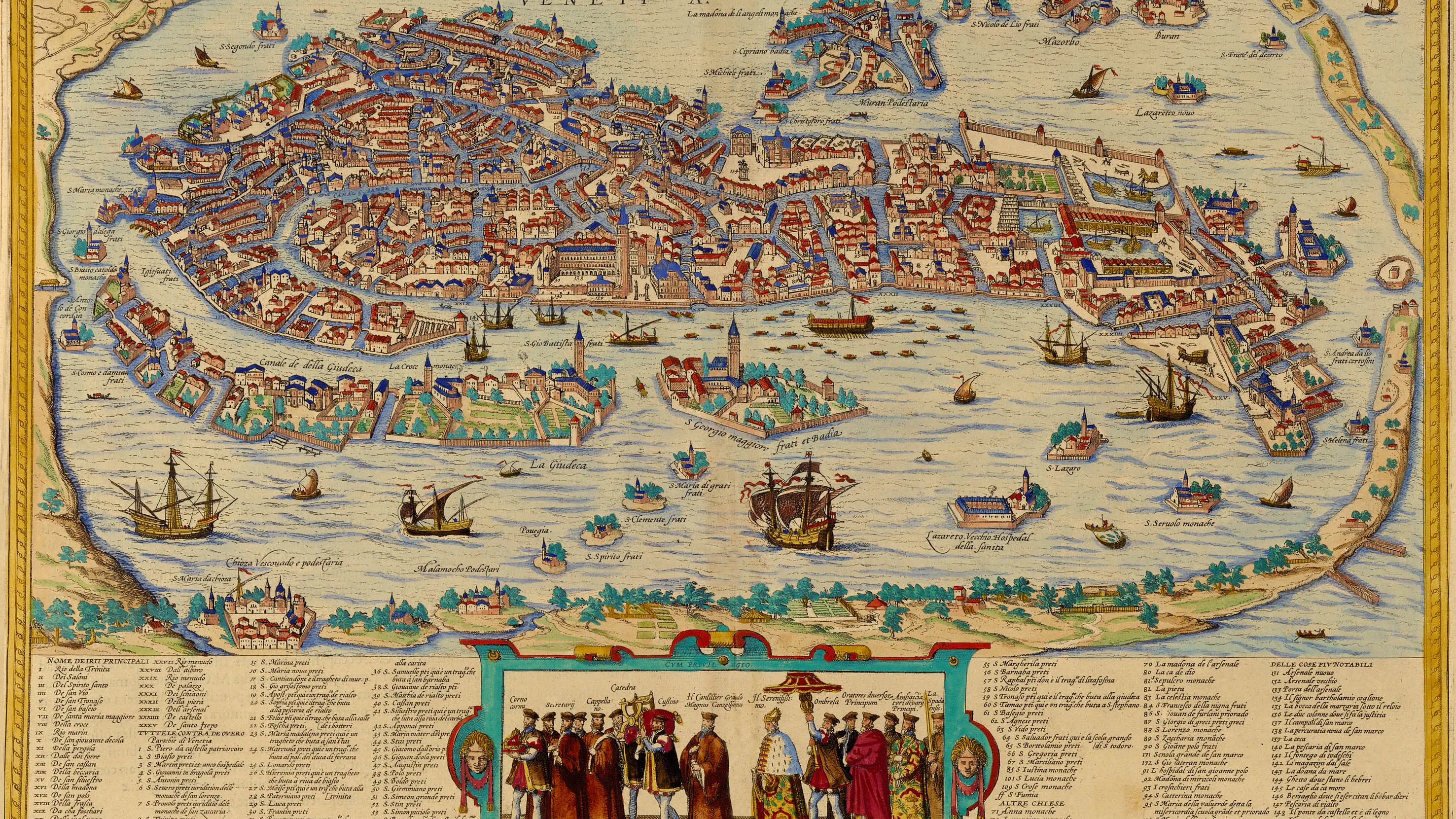
Johann Ewich, salaried physician to the city of Bremen, published De officio fidelis et prudentis magistratus tempore pestilentiae rempub. a contagio praeseruandi liberandique libri duo in 1582 to tell town councils something they had not been told at book length before: that epidemic disease was their business, not merely God's. Out of a threefold division of plague into the divine, the natural, and the contagious he built an entire municipal apparatus — health conservators modelled on Venice, sealed health passes at the gates, marked and sealed houses, extramural graveyards, licensed physicians sworn not to flee — and closed it with a penal schedule under which contempt of medicine counted as heresy and the claim that all plague is God's immediate stroke as blasphemy. Translated into English within a year, it is one of the sharpest surviving statements of how sixteenth-century Protestant civic authority learned to treat a disease as an enemy at the walls.
ExLatinis · August 21, 2026
Protasius's Hundred and Nineteen Years: Filippo Ferrari's The Catalogue of the Saints of Italy, Distributed through Twelve Months
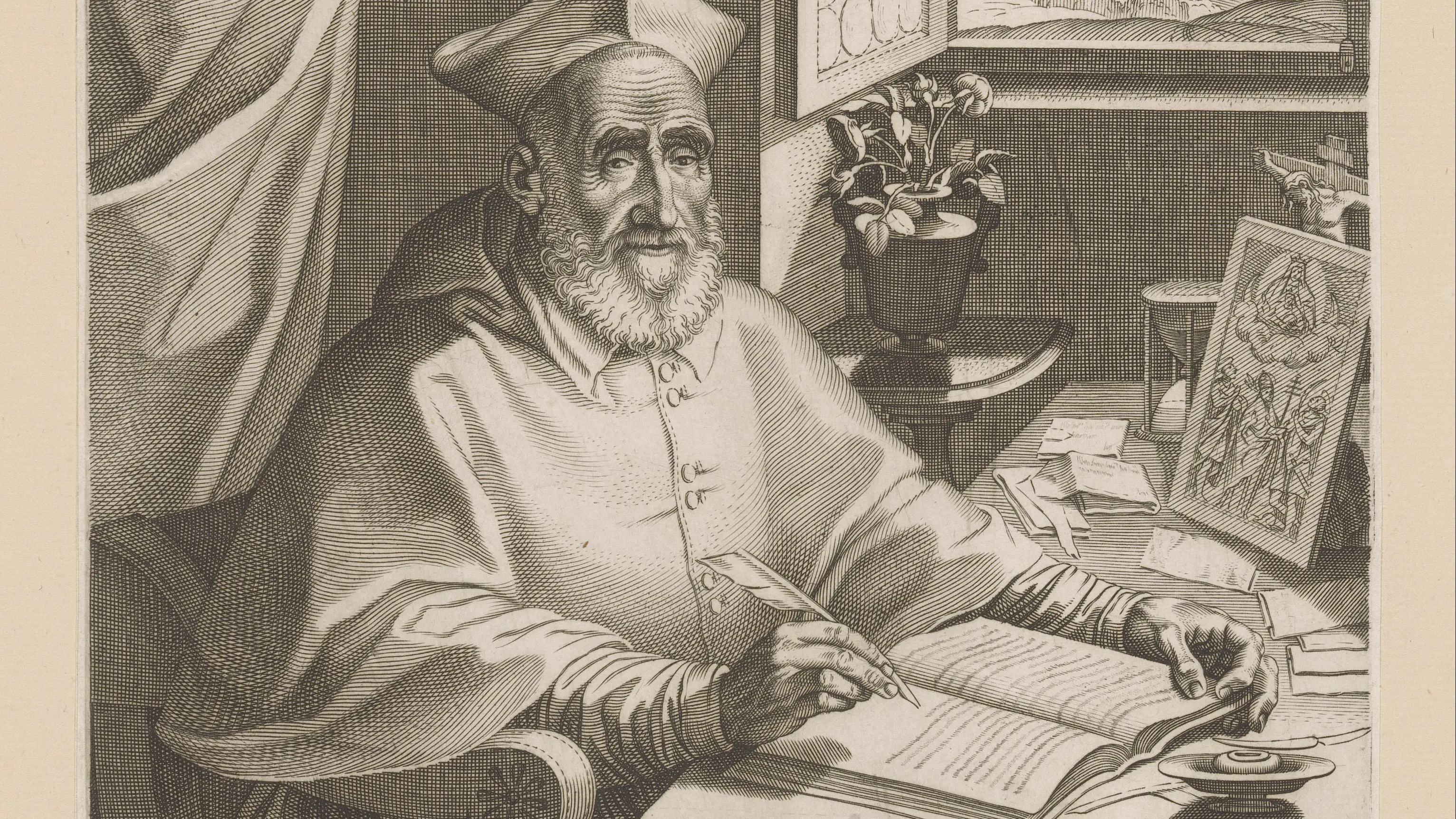
Filippo Ferrari, a Servite friar who taught mathematics at Pavia and mapped the world for a living, spent the years before 1613 sorting the saints of Italy into a twelve-month calendar — and then printing beneath each life a short note asking whether the story could be true. His Catalogus Sanctorum Italiae in menses duodecim distributus, issued at Milan by Girolamo Bordone, reports legends it does not credit, marks their acts as wanting, corrupt or frankly fabulous, and dismantles a metropolitan see's episcopal records with arithmetic showing that its bishop would have had to sit for more than 119 years. It is a devotional calendar doing double duty as a manual of source criticism, assembled a generation before the Bollandists undertook the same labour on a European scale.
ExLatinis · August 20, 2026
Both to Me and to Peter: Johann Funck's Chronologia
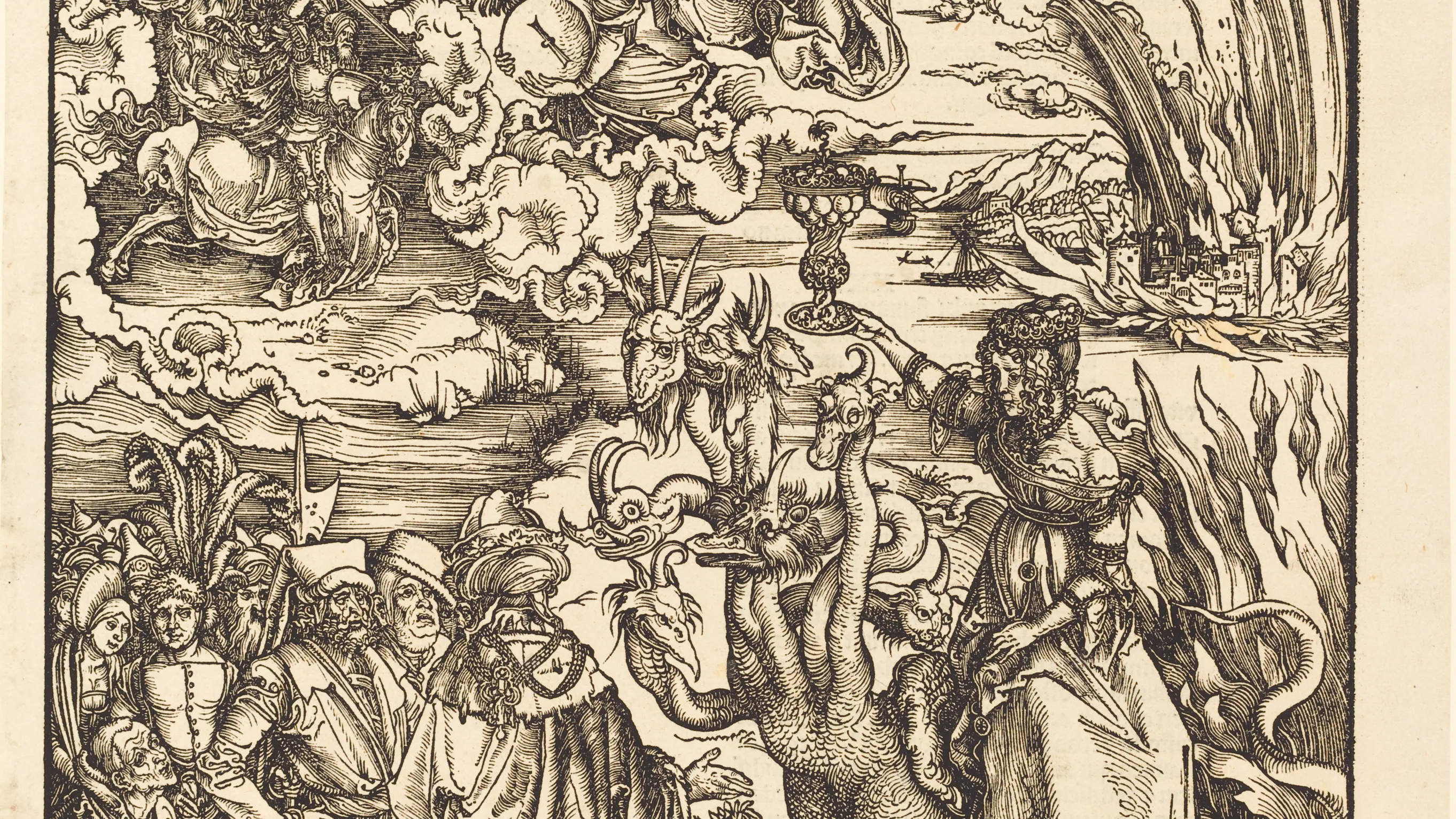
Johann Funck was executed at Königsberg in 1566, but the Latin chronicle he left behind — the Chronologia, a synchronistic register in which Romans, Jews, Franks, Goths, Saracens, Poles, Britons and the Teutonic Order run side by side down a single ruled column of years — carried on without him, extended by anonymous hands to 1578 and then to 1601. Its wager is that fixing a date is already an act of doctrine: the Roman monarchy is made to begin with Julius Caesar rather than Augustus, papal primacy becomes a grant obtained from a parricide emperor, and the 1,260 years of Antichrist are counted out to 1521, the year Luther stood before the Diet at Worms. For anyone curious about how sixteenth-century scholars turned arithmetic into argument, this is the machinery laid bare.
ExLatinis · August 19, 2026
Ships, Cities Amid the Waves: Giannettasio's Naval Warfare, or On Naval Warfare in Five Books
In 1715, in the year of his death, the Neapolitan Jesuit mathematician Niccolò Partenio Giannettasio published Nicolai Parthenii Giannettasii Neapolitani E Societate Jesu Naumachica: Seu De Bello Navali Libri V, five books of Latin hexameters that teach a fleet commander how to read the wind, order a line of battle, discipline a crew, and site a powder magazine. The compass appears in the verse as a pyxis and in the footnote as La Bussola; fireships are condemned as an invention of heresy on one page and deployed as tactics on the next. It is a working naval manual written in the idiom of Virgil, and the friction between those two purposes is what makes it worth reading.
ExLatinis · August 16, 2026
Fohi is Adam: Georg Horn's Noah's Ark, or a History of Empires and Kingdoms from the Creation of the World to Our Own Times
Georg Horn's Arca Noae, sive Historia imperiorum et regnorum a condito orbe ad nostra tempora, printed at Leiden and Rotterdam in 1666, attempts what no modern historian would risk: fitting every empire, kingdom, and people on earth — Chinese, Assyrian, Ottoman, Mexican — into one unbroken line of descent from the survivors of the Flood. To make the scheme hold, Horn shortens Chinese antiquity to fit Ussher's arithmetic, identifies the emperor Fohi with Adam, sends Alexander the Great into Sichuan, and prints a Hoorn shipwright's 1647 letter on whether a hull built to Mosaic proportions would actually sail. The book closes by casting Dutch fleets as a second ark, re-gathering by commerce the world that the first one's passengers had scattered.

ExLatinis · August 15, 2026
Salt, Sulphur, or Something Out of These: William Johnson's A Chymical Lexicon
William Johnson, who called himself on his title page nothing more elaborate than Gulielmus Johnsonus chymicus, published at London in the 1650s a Lexicon chymicum. Cum obscuriorum verborum et rerum hermeticarum, tum phrasium Paracelsicarum ... explicationem continens — an alphabetical attempt to bind every veiled Arabic synonym, Paracelsian coinage, furnace operation, and cryptic siglum to a stated referent. It is a book about what a name secures, and it survives in digital catalogues shelved behind a 1667 Wittenberg-associated dissertation on the universality of Noah's Flood, its own name attached to the wrong thing. Read it and the supposed border between "alchemy" and "chemistry" dissolves: salt is the body of all things, precipitation is prized because its calces dissolve better in medicine, and the last word in the alphabet matches one spelling of ginger to another.
ExLatinis · August 14, 2026
Stirring Camarina: Georg Caspar Kirchmaier's On the Universality of Noah's Flood: A Preliminary Dissertation
Nobody, the author of this 1667 Geneva quarto complains, had ever argued the point ex professo: whether the Flood of Noah drowned the entire globe or only one inhabited corner of it. De diluvii universalitate dissertatio prolusoria measures the water a global inundation would require — ten oceans and more — refuses in turn every reservoir the schools had invented to supply the deficit, and then re-reads the Mosaic "whole earth" as hyperbole for an Asia walled in by seas. The conclusion is materially radical and its packaging impeccably obedient: a conjecture submitted to what its author calls the Senate of the Learned, by a man who declares he wishes to die an exterminator of new dogmas.

ExLatinis · August 12, 2026
Ashes Instead of Coals: Johann Lange's A Miscellany of Medical Letters
Johann Lange, physician to five successive Counts Palatine of the Rhine, spent four decades of stolen hours assembling eighty-three Latin letters — Medicinalium epistolarum miscellanea, printed at Basel by Oporinus in 1554 — that argue a single case: who may be trusted to practise medicine, and on what proof. His targets are the uroscopist reading a disease from a glass like a crone with a crystal, the silk-robed impostor with rings and a red cap, the apothecary's unpronounceable compound and the almanac that fixes the day for bleeding; his instruments are philologically restored Greek texts and tested experience. What survives that double tribunal — sympathy as a property of substance, contagion carried by seedbeds, distillation without gold-making — he keeps, and the remainder he reassigns to fraud, to corrupt translation, or to superstition.
ExLatinis · August 10, 2026
Saffron, Nearly Triangular: Giovanni Manardo's Eighteen Books of Medical Epistles, with Annotations and Censures on Mesue; and Niccolò Massa's Treatise on Pestilential Fever
Giovanni Manardo of Ferrara spent the last fifteen years of his life converting his medical correspondence into a printed book, the Epistolarum medicinalium libri duodeviginti, in which a consultation on gout or plague stands beside a collation of Greek codices as though the two were one job — which, for him, they were. A Greek superlative turned into a positive by a careless translator is a dose silently altered, and an apothecary's adulterated camphor is as dangerous as an interpolated word printed under an ancient name. What emerges is a physician who ranks his authorities out loud, prints the sigla by which a reader can audit him, and tells his students to credit no one, living or dead, above reasons and the truth.
Read the article