Salt, Sulphur, or Something Out of These: William Johnson's A Chymical Lexicon
William Johnson, who called himself on his title page nothing more elaborate than Gulielmus Johnsonus chymicus, published at London in the 1650s a Lexicon chymicum. Cum obscuriorum verborum et rerum hermeticarum, tum phrasium Paracelsicarum ... explicationem continens — an alphabetical attempt to bind every veiled Arabic synonym, Paracelsian coinage, furnace operation, and cryptic siglum to a stated referent. It is a book about what a name secures, and it survives in digital catalogues shelved behind a 1667 Wittenberg-associated dissertation on the universality of Noah's Flood, its own name attached to the wrong thing. Read it and the supposed border between "alchemy" and "chemistry" dissolves: salt is the body of all things, precipitation is prized because its calces dissolve better in medicine, and the last word in the alphabet matches one spelling of ginger to another.
ExLatinis
August 15, 2026

Contents
William Johnson, who called himself on his title page nothing more elaborate than Gulielmus Johnsonus chymicus, published at London in the 1650s a Lexicon chymicum. Cum obscuriorum verborum et rerum hermeticarum, tum phrasium Paracelsicarum ... explicationem continens — an alphabetical attempt to bind every veiled Arabic synonym, Paracelsian coinage, furnace operation, and cryptic siglum to a stated referent. It is a book about what a name secures, and it survives in digital catalogues shelved behind a 1667 Wittenberg-associated dissertation on the universality of Noah's Flood, its own name attached to the wrong thing. Read it and the supposed border between "alchemy" and "chemistry" dissolves: salt is the body of all things, precipitation is prized because its calces dissolve better in medicine, and the last word in the alphabet matches one spelling of ginger to another.
Two Latin texts of very different character have travelled together under a single catalogue identity, and the first task any reader faces is to prise them apart. The one is an academic exercise of 1667, De diluvii universalitate dissertatio prolusoria — a preliminary dissertation on the universality of the Flood — associated in the surviving records with Georg Caspar Kirchmaier (born at Uffenheim in 1635, died at Wittenberg in 1700, and known as a Wittenberg professor of eloquence with a substantial output in metallurgy and natural philosophy) and with Abraham van der Myle, issued apud Petrum Columesium. The other, and the text that fills the running pages, is a chymical dictionary: the Lexicon chymicum of William Johnson, who names himself on the title page simply as Gulielmus Johnsonus chymicus, printed at London in the 1650s — a witness of 1652 in two octavo parts, and a further witness of 1657 bearing the imprint "Excudebat G. D." at the expense of the bookseller William Nealand. The conflation is itself instructive, but it is a conflation: the securely documented composite in the Columesius orbit joins Kirchmaier's dissertation to Van der Myle's De origine animalium, not to Johnson's lexicon.

The 1657 title page of Johnson's Lexicon chymicum separates this London dictionary from the Wittenberg-associated Flood dissertation: Johnson appears as “Gulielmus Johnsonus chymicus,” with G. D. printing at William Nealand's expense. It promises a lexicon of obscure Hermetic words and Paracelsian phrases — naming as method, not ornament. Source ↗.
What Johnson's book confronts is a disorder of names. Chymical knowledge in the mid-seventeenth century lay scattered across Arabic and Greek synonyms, vernacular workshop words, Paracelsian coinages, deliberately veiled Decknamen, and cryptic sigla, with the consequence that a reader could not reliably tell which substance, vessel, or operation a given term denoted — nor whether two terms named one thing or one term two. The answer offered is lexicographic reduction, applied uniformly and in alphabetical order: every obscure word is bound to a stated referent, either by a bare synonym-equation that resolves a veiled or foreign name into a Latin substance, or by an expanded article that defines an apparatus, an operation, a mineral, or a doctrinal principle. The expanded articles characteristically carry an etymology, a naming authority — Paracelsus, Martin Ruland, Johann Baptist van Helmont, Hermes — and, at intervals, a registered dissent where a word is judged to have been abused. Naming, in this book, is not ornament but method.
The commitments that organize the definitions are Paracelsian rather than Aristotelian, and they are stated as working doctrine rather than defended by argument. Salt, sulphur, and mercury are the tria prima, distributed as body, soul, and spirit, without which nothing in the nature of things can subsist; salt in particular is the principle of fixity and preservation, the balsam of nature. Beneath the metals lie a first matter and a primum ens, the one glossed as the mercury of metals, the other as the true essence and summit of each thing. Physics itself is defined as the perfected art of nature and as the science of what lies hidden in the centre of bodies — a definition that makes concealment the normal condition of matter and disclosure the proper business of the practitioner, who is expressly nature's servant and not her master. Because bodies hide their virtues, art must draw them out: separation and precipitation, sublimation and reverberation, putrefaction and projection, the hermetic sealing of a glass vessel so that no spirit escapes, the extraction of quintessences purged of all impurity. The dictionary supplies the vocabulary by which those procedures can be identified, taught, and transmitted, and it closes as such a book should, with addenda of words previously omitted and tables of chymical characters and metallic signs.

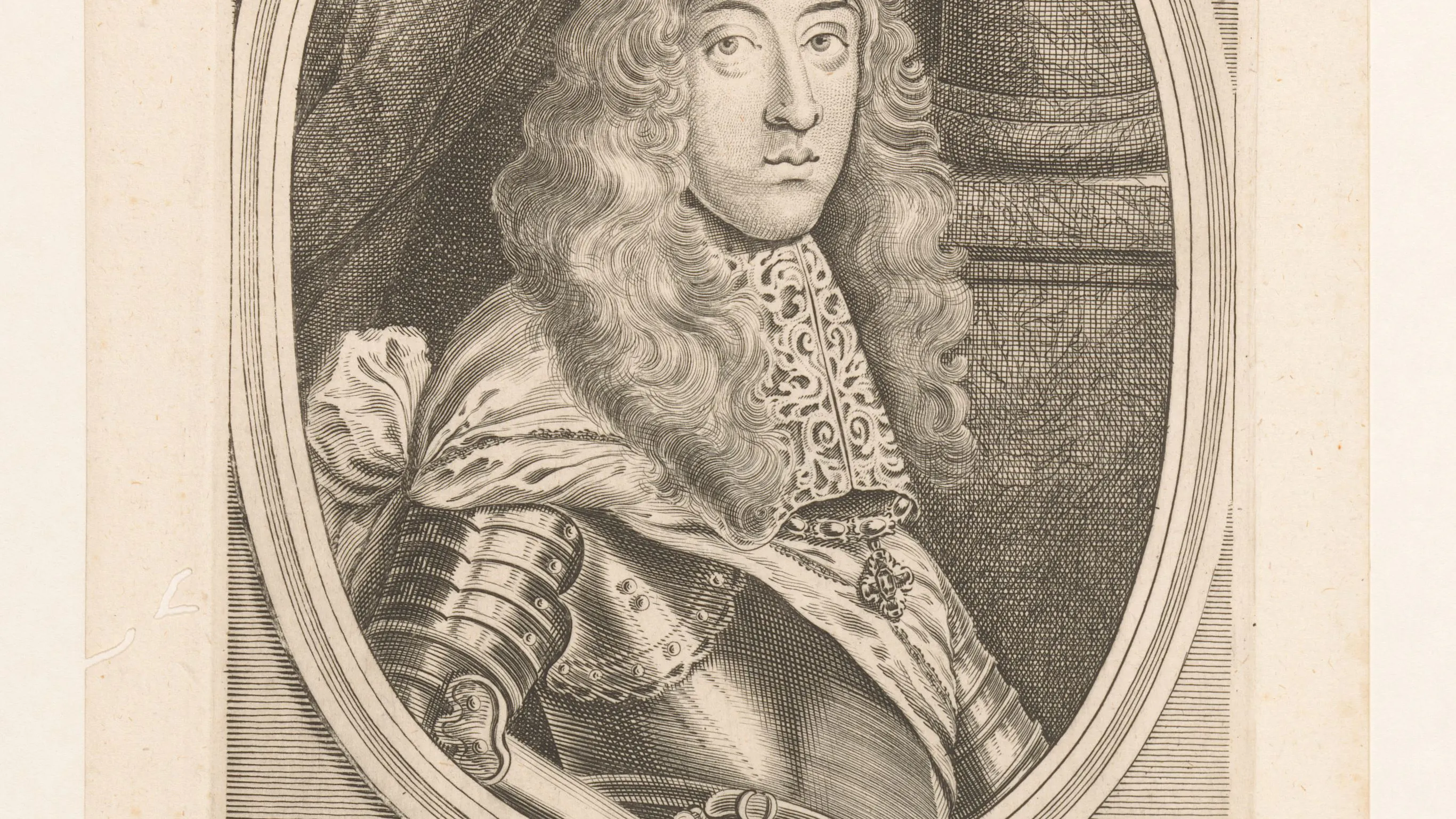
A mid-seventeenth-century engraving of Paracelsus, named in its printed caption as a most celebrated physician. His authority stands behind the definitions gathered here: the tria prima, the hidden virtues locked in bodies, and the practitioner as nature's minister rather than her master. Source ↗.
The historiographical stakes are considerable, and they cut against a familiar retrospective division. The critique advanced by William R. Newman and Lawrence M. Principe of the imposed opposition between "alchemy" and "chemistry" finds a ready test case here: Johnson's articles move without apology among mineralogy, metallurgy, medicine, cosmology, biblical and classical authority, Paracelsian doctrine, and workshop practice, and they nowhere partition the "scientific" from the "occult." Physiognomy is extended by natural and astral seals from human faces to plants and minerals; odour is described as the spirit of all things, a middle nature between body and spirit; regeneration is at once a chymical and a therapeutic term, invoked for deliverance from leprosy, gout, and dropsy. To read such a book as an imperfect approximation of a later chemistry is to miss the coherence it actually possesses. The Flood strand carries stakes of its own — the seventeenth century argued scriptural chronology, natural history, and the geographical reading of Genesis together, and Isaac Vossius's chronological intervention of 1659 and Martin Schoock's Diluvium Noachi of 1662 mark the controversy's near horizon — but the accessible witness does not reveal whether Kirchmaier defended a geographically universal deluge, answered a local-Flood position, or presided over a disputational exercise; nor does any surviving evidence show him naming or answering Vossius, Schoock, Georg Horn, or Athanasius Kircher. The association of the 1667 item with Wittenberg remains academic and bibliographical rather than a confirmed place of printing.
The particulars are what a first-time reader will remember. Spagyria is unpacked from the Greek verbs for drawing out and gathering together, so that the art's very name encodes the separation of pure from impure. Paracelsus is said to be so called not because he surpassed Celsus but on account of his paradoxes, a small philological correction with large polemical resonance. The seal of Hermes is reduced to a plain operation — the closing of a glass mouth by fire. Precipitation is prized, the entry notes, because it yields calces that dissolve more readily and serve better in medicine. And running through the whole is a single preoccupation that also, unexpectedly, governs the book's own afterlife: things are known by the names bound to them, and names both hide and reveal. A lexicon devoted to fixing referents has itself been transmitted under a title that fixes the wrong one, its London chymical vocabulary shelved behind a Wittenberg-associated dissertation on Noah's deluge; the doctrinal vocabulary, the production history, and the internal architecture of the work all turn on the same question of what a name secures.

Stradanus and Galle's Distillatio sets a scholar reading at the edge of a busy laboratory where assistants tend furnaces and glass vessels — the world of seals, pelicans, sublimations, and controlled heat that Johnson's vocabulary sets out to stabilize. Book learning and bench work in one frame. Source ↗.
Read the full text and English translation on Leo
This text was transcribed and translated as part of the ExLatinis project, an effort by Leo to make free English translations of every text published in Latin in early modern Europe (1450–1750) available online. The complete transcription and English translation of this work can be read free of charge:
→ Read the original Latin text and full English translation on Leo
You can save a copy of this document into your Leo account to run deep text searches, conduct further analysis, or cross-reference it with your own research.
Titling a Composite: Johnson's Lexicon chymicum Beside Kirchmaier's Flood Dissertation
Editorial title supplied for convenience: The Universality of the Flood and the Chymical Lexicon: Two Early Modern Texts in Composite Transmission. No established English title for the combined object was located. The first strand is conventionally rendered A Preliminary Dissertation on the Universality of the Flood (De diluvii universalitate dissertatio prolusoria). The second is A Chymical Lexicon Containing a Plain Explanation of Obscure Words and Hermetic Things, and of Paracelsian Phrases (Lexicon chymicum. Cum obscuriorum verborum et rerum hermeticarum, tum phrasium Paracelsicarum ... explicationem continens). Its title page names Gulielmus Johnsonus chymicus. The two titles should not be treated as the work of one author: the 1667 catalogue record associates Kirchmaier and Abraham van der Myle, whereas the lexicon belongs to Johnson's London printing tradition. The philological difficulty of the composite is thus of a piece with the difficulty the lexicon itself was written to address — the insecure attachment of names to things.
The title's universalitas denotes the claimed scope of the diluvium, but the accessible witness does not expose enough of the dissertation's argument to decide whether Kirchmaier defended a geographically universal Flood, answered a local-Flood position, or rehearsed a disputational exercise without committing the presiding professor to every proposition. That uncertainty is material: prolusoria signals a preliminary academic performance, not by itself a completed monograph or a settled institutional doctrine.
In Johnson's lexicon, spagyria appears as an operational term: substances may be changed by arte Spagyrica, and the results of analysis spagyrica may be detected. The word therefore belongs to a practical language of separation, transformation, and the recovery of hidden properties, rather than functioning as a modern disciplinary label. The lexicon makes that operational sense explicit under its own headword, defining spagyria as the art of separating the pure from the impure, also called chymia, the word being compounded from σπάω, "I draw," and ἀγείρω, "I gather," Spagyria, est ars separandi purum ab impuro, quæ & Chymia dicitur. Vox est composita ex σπάω traho, & ἀγείρω congrego, so that the discipline's very name is presented as a compressed description of its characteristic operation. The same etymological habit governs the entry for the doctrine's chief modern authority, where Paracelsus is said to be so named not because he surpassed Celsus but on account of his paradoxes, others calling him Theophrastus, Paracelsus, dictus Paracelsus, non quod Cellum superavit, sed quia paradoxa ejus, alias Theophrastum vocant. — a correction that positions the lexicon as arbiter of a contested naming tradition rather than as its passive transmitter.
Quinta essentia is defined as a mystery exalted to the likeness and powers of ethereal nature; it is called heaven or celestial substance and is separately extracted from vegetables, animals, and minerals. The definition preserves the older sense of a purified, subtle substance while making it an object of chymical procedure. The surviving text also carries a compact formulation of the same term as a medicine drawn out of things and purged of all impurities, which the chymists call a substance separated from all the elements — divine, pure, subtle, immortal, Quintessentia, est medicina quæ ex rebus extrahitur, & ab omnibus impuritatibus repurgata, quam Chymici, substantiam separatam ab omnibus elementis, di-vinum vocant, purum, subtile, immortale, quale non, the sentence continuing past the words quoted here into a specification of what the quintessence is not. Both formulations are governed by the verb of extraction: the quintessence is defined by the operation that yields it.
The lexicon also distinguishes a primum ens from ordinary finished matter. It is an extract from minerals that have not reached their final perfection and therefore retain especially fertile seminal potential; the entry then extends the search for a first being to minerals and, analogically, to plants. Alongside that account the text carries a general definition of the term as, properly, the first matter of all things, from which whatever exists began, and the summit and true essence of each thing, Primum ens, est proprie prima materia rerum om-nium, à qua quæcunque sunt inceperunt, & est cujus-que rei summum, & vera essentia. Prima materia is multiple in sense: the text calls the universal substance of all things the material basis in which Iliastes subsists, and it describes the raw Ilech as a composition of the three first principles; a further entry reduces the term to its metallurgical application, first matter being that from which the rest are made, as the mercury of metals, Prima materia, est ex qua cætera fiunt, ut mercurius metallorum. Those principles are explicitly Mercury, Salt, and Sulphur, and the lexicon assigns each a rank in a tripartite anthropology of matter, salt being on Paracelsus's authority the body of all things, sulphur the soul, and mercury the spirit, without which three nothing can subsist in the nature of things, Sal, ait Paracelsus, est corpus rerum omnium; Sulphur verò anima; Mercurius autem spiritus. Sine his tribus nihil in rerum natura consistere potest. The wording is Paracelsian and Helmontian in its working ontology; the contrast with an Aristotelian account is an interpretive conclusion from the vocabulary, not a claim that the accessible pages set out a systematic refutation of Aristotle.
The related terms balsamus naturae, signatura, physica, spectra, phantasmata, pyromancy, and praxidiuraia were not securely located in the accessible Johnson transcript and should not be attributed to this witness without renewed page-level checking. Several of them, however, are legible in the surviving text under their own headwords, and the divergence should be recorded rather than smoothed over. Salt is defined as one of Paracelsus's three principles, in which consists the firmness of bodies and their preservation from putrefaction, for it is the balsam of nature, Sal, est unum ex tribus principiis Paracelsi, in quo consistit corporum firmitas, & à putredine conservatio: est enim balsamus naturæ — the phrase balsamus naturae thus functioning as a doctrinal gloss on fixity rather than as a floating Paracelsian tag. Physica likewise carries a formal definition, the text opening the entry with physics as the perfected art of nature, Physica, est ars perfecta naturæ. Vel est physica, and completing it in a second clause that specifies a subtle science of hidden nature, not only of external and apparent bodies but of those things that lie concealed in their centre, whence it is named general philosophy, subtilis, occultæ naturæ scientia, non tantum externo-rum apparentiumq[ue] corporum, sed etiam eorum quæ in illorum centro delitescunt: ideo generalis nomina-tur philosophia. The doctrine of signs is present in the same register, physiognomy being extended by the seals impressed on things by nature and the stars more widely than to men alone, since knowledge is likewise signed in vegetables and minerals, Ex sigillis, quæ à natura & astris rebus impressa sunt, latius extenditur physiognomia, quam quod cir-ca solos homines occupetur, cum de vegetabilibus si-militer, & mineralibus scientia sit signata — a passage that makes the reading of impressed marks continuous with the reading of names, and so continuous with the lexicon's own enterprise. Spectra, phantasmata, pyromancy, and praxidiuraia remain unverified for this witness and still require page-level checking before being attributed to it.
Separating Kirchmaier's 1667 Dissertation from Johnson's London Lexicon
The material is best understood as two Latin printed texts whose catalogue and binding histories have been conflated. De diluvii universalitate dissertatio prolusoria is a 1667 academic dissertation associated in Google Books with Georg Caspar Kirchmaier and Abraham van der Myle, apud Petrum Columesium, in a 109-page record originating from Ghent. The CCFr record for Van der Myle's separate De origine animalium, et migratione populorum gives Geneva, apud Petrum Columesium, 1667, 68 pages, in-12, signatures A–C12 with the final two leaves blank, and states that it is often bound after Kirchmaier's dissertation, printed by the same printer in the same format and year. Thus the securely documented composite is a Columesius-related Kirchmaier–Van der Myle transmission, not a Kirchmaier–Johnson authorship. The location "Wittenberg" remains an academic and cataloguing association rather than a confirmed imprint for the 1667 item.
A dissertatio prolusoria belongs to the culture of public university disputation. Its normal apparatus could distinguish a praeses or presider from a respondens, but the accessible title and catalogue records do not identify those roles for this item, do not establish the occasion, and do not show whether Kirchmaier was presiding, responding, or being credited as author of propositions defended by another student. "Kirchmaier" is securely associated with Georg Caspar Kirchmaier/Kirchmayer, born at Uffenheim in 1635 and deceased at Wittenberg in 1700; the biographical record identifies him as a Wittenberg professor of eloquence and records his metallurgical and natural-philosophical publications.
The running text is a reference work, not a Flood dissertation. Johnson's Lexicon chymicum is alphabetically arranged and interleaves short synonymic equations with longer articles on substances, apparatus, operations, minerals, and doctrines. The two registers are readily distinguished in practice: against the bare equations that resolve an Arabic or veiled name into a Latin referent stand articles that reduce a mystified procedure to a describable act, as when the seal of Hermes is defined as the closing of the mouth of a glass vessel by fire, so that no spirits can exhale, Sigillum Hermetis, est vasis vitrei orificii per ignem clausura, ita ut nihil spirituum exhalare possit., and articles that record why an operation matters to practitioners, precipitation being prized among chymists because thus limes are drawn from dissolved bodies, which of their own nature dissolve more readily and prove more useful in medicine, In pretio est Chymicis, quia sic ex solutis calces educuntur, quæ suapte natura promptius solvuntur, & in medicina utiliores existunt. The 1657 witness identifies Gulielmus Johnsonus chymicus and gives the London imprint "Excudebat G. D." at William Nealand's expense. It cites Ruland and Johann Baptist van Helmont, contains FINIS and Conclusio Operis, and its contents record an addendum entitled "Vocabula aliqua chymica in hoc lexico ante omissa." The accessible text is Latin, with Greek, Arabic-derived, and Paracelsian vocabulary; the alleged English headword rundlet was not found in the accessible transcript and therefore is not yet verified.

Display heading, woodcut headpiece, and ornamental initial mark the threshold of Johnson's alphabetical Lexicon chymicum. Its first entry, “Alces,” runs from Greek etymology through zoological description to a cited use against epilepsy — natural history, authority, and medical practice treated as continuous. Source ↗.
No English translation of Kirchmaier's Flood dissertation was located. Edmund Goldsmid's Un-Natural History, or Myths of Ancient Science (Edinburgh, 1886) is a separate English rendering of zoological disputations: its contents concern the basilisk, unicorn, phoenix, behemoth or Leviathan, dragon, giant spider, tarantula, chameleons, satyrs, and related marvels, and identify the first six tracts with Kirchmaier's Hexas disputationum zoologicarum. Nothing in the verified contents connects that translation with the Flood dissertation.
Why Johnson's Lexicon Undoes the Alchemy–Chemistry Divide
The chief significance lies in the collision of bibliographical identity and intellectual history. A title-level record can make a Flood dissertation, a university disputation, and a chymical lexicon appear to be one textual object; the surviving catalogue evidence instead separates at least two production histories. That distinction matters because the dissertation belongs to the institutional economy of Lutheran university disputation, while Johnson's lexicon belongs to the London and continental circulation of Paracelsian and Helmontian technical vocabulary. The object is consequently evidence for the movement of books and categories, but not evidence that Kirchmaier authored Johnson's lexicon.
The Flood strand belongs to a period in which scriptural chronology, natural history, and the geographical interpretation of Genesis were argued together. The surrounding controversy includes Isaac Vossius's 1659 chronological intervention, whose arguments connected the Septuagint, astronomical records, and reports of Chinese antiquity, and Martin Schoock's 1662 Diluvium Noachi title defending the universal-deluge side of the debate. Georg Horn, Athanasius Kircher, Edward Stillingfleet, and the later writers Burnet, Woodward, Ray, and Steno form relevant comparative nodes. Yet no accessible primary witness establishes that Kirchmaier names or answers Vossius, Schoock, Horn, or Kircher. The dissertation should therefore not be presented as a direct reply to any one of them. Nor should its pre-geological importance be made teleological: later histories of geohistory can illuminate the questions, but they do not turn a 1667 disputation into an anticipation of modern geology.
The strongest accessible historiographical argument for the lexicon comes from William R. Newman and Lawrence M. Principe's critique of the retrospective opposition between "alchemy" and "chemistry." Newman states that late-seventeenth-century textbook authors generally made no strict demarcation between the two and that the modern binary was substantially imposed by later historiography. Johnson's entries support that caution: they combine mineralogy, metallurgy, medicine, cosmology, biblical and classical authorities, Paracelsian doctrine, and practical operations without separating "scientific" from "occult" compartments. The office assigned to the practitioner is the hinge of that integration, the lexicon stating flatly that the natural philosopher is nature's servant and not her master, Physicus, est naturæ minister & non magister. — a formula that makes disclosure, not mastery, the aim of art, and that follows directly from the definition of physics as a science of what lies concealed in the centre of bodies. Curative and chymical vocabulary are correspondingly continuous: Paracelsus is reported as calling it regeneration when we are wholly freed from some disease, as leprosy, gout, dropsy and other chronic or incurable maladies of that kind, by a most solid cure with some medicine of most hidden virtue in the world, Regenerationem Paracelsus vocat quum de morbo aliquo omninò liberamur, ut à Lepra, Podagra, hydrope, & id genus aliis diuturnis morbis, aut incurabilibus, per solidissimam curationem, cum aliqua occultissimæ virtutis in mundo medicina. The lexicon's attempt to explain obscure names does not erase secrecy; it makes Decknamen, Arabic-derived terms, Greek synonymy, and inherited authorities available in print while retaining their historical density. The entry on philosophical sulphur is exemplary in this respect, warning that the sulphur of the philosophers is not the common kind but the gold of the philosophers, or the red tincture, Sulphur philosophorum, non est vulgare, sed est aurum philosophorum, sive tinctura rubea.: the veil is identified as a veil and its referent named, yet the referent itself remains a term of art internal to the tradition.
Antonio Clericuzio's work on the transmission of Helmontian chemical and medical theories and Georgiana Hedesan's textual work on Paracelsian attribution offer useful correctives to simple diffusion narratives. Hedesan's method is especially relevant: anonymous or composite texts must be compared with an author's known vocabulary and doctrines, and attribution remains probabilistic when external evidence is thin. Bruce Moran, Charles Webster, Allen Debus, Didier Kahn, and Antonio Clericuzio represent complementary emphases on courtly practice, Paracelsian medicine, chemical philosophy, transmission, and matter theory. The important disagreement is methodological: older "chemical philosophy" narratives can describe a coherent alternative to Galenism and Aristotelian natural philosophy, whereas newer work asks how stable that coherence was in particular books, laboratories, and genres. Johnson's lexicon should be treated as a situated compilation rather than as a transparent statement of one pure doctrine.
The accessible pages do not confirm that the lexicon contains the full cluster of signatura, pyromancy, spectra, and phantasmata material attributed to the digitized object; of that group, only the extension of physiognomy to vegetables and minerals through impressed natural and astral seals is securely legible in the surviving text, the remaining three items still awaiting verification. Those themes remain relevant to the period's mixture of exacting natural description, astrology, occult qualities, and demonological discrimination, but they cannot serve as evidence for this copy until the missing leaves or a complete scan are checked. The lexicon's willingness to argue speculative natural philosophy under a headword is nonetheless plain elsewhere, as in the entry defining odour as the spirit of all things, since nothing of the thing is lost by its expenditure, Odor est spiritus rerum omnium, quia rei nihil de-perit ejus jactura — a doctrine of a middle nature between body and spirit that a dictionary of names had no obligation to advance, and that shows the genre carrying doctrinal weight rather than merely registering usage. Similarly, Abraham Calov's Wittenberg orthodoxy supplies historical context, not proof of a direct Calovian program in Kirchmaier's Flood text.
Tracing the Imprints: Columesius, the London Printings, and the Composite Binding
The 1667 Flood record is bibliographically unstable. Google Books records the title De diluvii universalitate dissertatio prolusoria, authors Georg Caspar Kirchmaier and Abraham van der Myle, publisher apud Petrum Columesium, 1667, 109 pages, and an original copy from Ghent University. The companion CCFr record is more materially descriptive: Van der Myle's De origine animalium, et migratione populorum is in Latin, 68 pages, in-12, with the false address Geneva and an imprint naming Petrus Columesius; the catalogue suspects production in the Spanish Netherlands from typographical usage. It records sig. A–C12, with C11 and C12 blank, and notes that the item is often bound after Kirchmaier's dissertation, printed by the same printer, in the same format and year. This is strong evidence for a two-part Columesius-related transmission, but not proof that every digital copy containing the dissertation also contains Johnson's lexicon.
No VD17 number for the Kirchmaier title was located in the accessible searches. No ESTC or USTC identifier for the Johnson imprints was securely recovered either; those identifiers should be left blank rather than guessed. The Johnson London witness of 1652 is catalogued as two parts in octavo; its second part has a separate title page with "London: G.D. for L. Sadler, 1653." A HathiTrust record gives the 1652 item as Latin, 250 pages, 15 cm, with OCLC 74273173, while the Wellcome/Internet Archive digital object is `b30329449_0002`. A separate 1657 London witness is represented by the HAB and BIU digital records: its title page names Johnson, gives "Londini," "Excudebat G. D.," William Nealand, and 1657. Catalogue contents place omitted chymical vocabulary at page 215 and Conclusio operis at page 225. Searches also returned later 1660 and 1678 witnesses, but their exact issue relationships and ESTC/USTC numbers remain unverified.

Braun and Hogenberg's engraved view of London evokes the metropolis named in Johnson's imprints — “Londini,” G. D., L. Sadler, William Nealand — rather than the Lexicon itself. The panorama supplies the setting for the catalogued 1652/1653 and 1657 witnesses that root the lexicon in the capital's book trade. Source ↗.
The 1657 page text is decisive for the lexicon's attribution. It names Gulielmus Johnsonus Chymicus, cites "Rulandus" with page references, names Johann Baptist van Helmont, and ends with FINIS and Conclusio Operis. The catalogue's omitted-vocabulary entry reads "Vocabula aliqua chymica in hoc lexico ante omissa, ad finem hujus libri adjunxi." The accessible transcript did not show rundlet, Characteres vocabulorum chymicorum, or Notae metallorum. The work's own design nonetheless calls for such terminal matter — addenda of words previously omitted, followed by tables of chymical characters and metallic signs, the sigla being precisely the class of notation that an explanatory dictionary of names would be expected to resolve — and the vernacular vessel-name rundlet belongs to the same apparatus vocabulary as the pellicanus, the rosa, and the vas Hermetis; but none of the three items was recovered in the transcript consulted, and their presence in the inspected witness remains unverified. The presence of the first group of fingerprints makes Johnson the strongest identification; the absence of the latter items prevents a claim that the inspected witness is identical in every respect to the reported digitized object.
The discontinuous signature sequences reported in the images, including L3–P5 and G–G4, are compatible with separate gatherings or separately signed parts, but no complete collation was recovered. If those sequences belong to one binding, they support a composite object biography; they do not by themselves establish that the components were printed together. The only explicit catalogue binding note located concerns Van der Myle after Kirchmaier, not Johnson after Kirchmaier. No privilege, censorship record, price, marketing notice, or stable dedicatee/patron record was located.
Kirchmaier's surrounding bibliography is better attested than the Flood title's immediate reception. The biographical record lists Philosophia metallica, Institutiones metallicae, work on phosphors and light, the edition of Sperling's Anthropologia, Zoologia et Carpologia physica, and appendices including De Dracone and De Basilisci existentia; his works were collected by his son in 1703. Goldsmid's 1886 translation confirms the zoological-disputation strand but not the Flood tract. No reliable evidence was recovered for a reply by Kirchmaier, a named dedicatee, censorship, or a direct engagement with Vossius, Schoock, Horn, or Kircher. The claimed institutional description of William Johnson as an operator to the Royal College of Physicians was not independently confirmed; the secure evidence identifies him as the chymicus named on the lexicon title page — an attribution resting, fittingly for this book, on a single self-applied name.
Inside the Alphabet: Definitions, Sigla, and Terminal Tables in the Lexicon chymicum
Two registers in the letters O and P
The stretch of the alphabet that runs from the O entries to the closing Z shows the lexicon working in two registers at once, and shows how thoroughly the bare synonym-equation and the expanded article depend on each other. The equations arrive in dense files — Ozanna resolved to orpiment, Ozus to iron, Osdibec to pot-ash, Ovum given three distinct referents in three consecutive lines — and then the sequence halts for an article that supplies a genus, a division, and a manner of production. Oil is defined as a fat and unctuous flow prepared by art out of any liquid whatsoever, or else brought forth by nature, Oleum, est fluor pinguis, unctuosusq[ue] ex quocunq[ue] liquore per artem paratus, vel per naturam prognatus. The formula is worth pausing over, because the disjunction per artem … vel per naturam is stated without hierarchy: an oil is no less an oil for having been pressed, roasted, boiled, or distilled than for having been generated in the thing itself, and the article proceeds at once to that fourfold division of species. Art and nature furnish parallel routes to the same definiendum, which is exactly the premise required by a book whose entries move from the bench to the mineral vein and back.
The article on odour goes further, converting a headword into the occasion for adjudicating a disputed doctrine. Having declared odour the spirit of all things and a nature standing between body and spirit, the entry turns to those who would make it the seat of life: there are some who hold that in odour there consists a nearly animate life, since it is absent from dead things and present in living ones, yet they do not observe this one point, that dead things taken from living ones retain the same odour as before, from which it is concluded that after death the life of things still remains in them, and so on this very argument they attribute life to odour, Sunt qui statuunt in odore vitam consistere ferme animatam, quia mortuis rebus desit, & viventibus insit; hoc unum nihilominus non observant, quod ex vivis mortua etiam idem cum priore odorem retineant, ex quo con-cluditur post mortem rerum vitam remanere adhuc in eis: ideo vitam odori pariter attribuunt hoc argu-mento. The dialectical shape here is that of the schools — an opinion attributed to unnamed qui, an overlooked instance, an inference drawn from it — but the conclusion is not a refutation. The objection is made to strengthen the position it seemed to threaten, since if the odour of a thing survives its death, then something of its life survives too. A dictionary of words has quietly become a vehicle for a doctrine of residual vitality in matter, and the reader who came looking for a synonym leaves with an argument.
Two authorities under one headword
The same page-turn brings the two entries that most sharply expose the lexicon's awareness that a single word carries incompatible authorities. Phantasms, the article states, are malign spirits according to the Christian definition, but in Paracelsus spectres are either the likenesses of imaginings appearing in physical images, Phantasmata, sunt spiritus malignæ, secundum Christianam definitionem, sed apud Paracelsum spectra, sunt vel effigies imaginationum in imaginibus phy-sicis apparentes. Nothing is harmonized. The theological determination and the Paracelsian one are set side by side under one headword, each labelled with the tradition that warrants it, so that the word is shown to have two proper senses depending on whose usage governs. This is lexicography of a demanding kind: the compiler declines both to demonize the Paracelsian sense and to naturalize the Christian one, and the immediately preceding definition of phantasia as the act of a diseased mind and the foundation of the operations of the foolish keeps the pathological reading available as a third possibility. The neighbouring entry on physiognomy, which extends the reading of impressed marks beyond human faces, belongs to the same intellectual economy: signs and names alike require a stated authority before they can be read.
Practice and prognostication in the letter P
Within the P sequence the practical and the divinatory sit without embarrassment in one alphabetical file. Precipitation is subdivided into species by colour and agent, and the finest of them is described with unusual candour about the limits of technique: coralline precipitate is mercury precipitated into a coralline colour, and it is the best and most efficacious of the precipitates, not merely intensely red but endowed with the colour of coral, which demands the hand of a most expert artificer, since to many it appears well-nigh impossible, Præcipitatum corallinum, est mercurius præcipitatus in colorem corallinum: & est præcipitatorum optimum, maximeq[ue] efficax, & non solummodo intense rubeum, sed corallino colore præditum, quod artificis peritissimi manum requirit, cum multis fere impossibile appareat. Colour here is not decoration but the criterion of success, and the definition concedes that the criterion cannot be met by following the definition: the manus artificis is an ingredient no words supply. A few lines later, pyromancy is defined as the art of foretelling future and hidden things from fire, which the workers in fire use, as is the art of metals, and metallic art, Pyromantia, est ars ex igne futura, & occulta præsagiendi, qua utuntur Vulcani, ut est ars metallorum, &c. & metallica. The Vulcani are the furnace-men, and the entry makes their fire-craft and their prognostication one competence; a second, separately printed definition of the same word transfers it to the fiery signs displayed to men in the air, so that even here the lexicon prefers to register two usages rather than to choose. Read against the definition of physics as a science of what lies concealed in the centre of bodies, the pairing is coherent: to read fire for what is hidden is the same operation whether the hidden thing is a metal's constitution or a coming event.
Purification, sigla, and the vernacular
The refining entries then produce the most instructive internal collision in this part of the alphabet. Purification of metals occurs, one entry says, when their quantity remains entire and only those things that are not of the essence are separated off, Purgatio metallorum est cum eorum quantitas re-manet integra, & tantum quæ non sunt de essentia se-gregantur. The very next paragraph, under an almost identical lemma, asserts the contrary: purification of a metal occurs when that which comes under the name of substance and of quantity is transmuted into something else, and the things that are of the essence constitute the quantity, Purgatio metalli est cum id, quod substantiæ, & quantitatis nomine venit, in aliud transmutatur. Quæ sunt de essentia metalli, quantitatem constituunt. One definition makes purification a conservative removal of the inessential; the other makes it a transmutation of substance and quantity together. The contradiction is left standing, and it is a contradiction with consequences, since it decides whether refining discloses a metal already present or produces a different one. That the compilation reproduces both, in adjacent lines, indicates how such a book was assembled and used: as a register of what the authorities say, in which divergent doctrines are entered under their words rather than resolved into a system.
The alphabet's own machinery is thematized where the letters serve as sigla. Under Q the reader is told that in the monuments of the ancients it is sulphur, but in Theophrastus it is the sign for saltpetre, Q. In veterum monumentis est Sulphur. Sed in Theophrasto est Salpetræ signum., and the letter S is glossed with a frankness bordering on resignation as salt, sulphur, or something out of these, S Sal, Sulphur, aut aliquid ex his. A notation designed to conceal is here made to declare its own indeterminacy, and the dictionary's answer is not a single referent but a bounded field of candidates — precisely the honest limit of a reduction that cannot invent a certainty the sources withhold.

Where the alphabet has just conceded the instability of Q and S, the lexicon's final leaf attempts a stricter disclosure: a printed table aligning elemental, planetary-metal, and temporal characters with their Latin names. The FINIS beneath marks not an appendix but the completion of the design. Source ↗.
Vernacular workshop speech is admitted on the same footing as Greek etymology and Arabic synonym. The rundelettum is defined as a wine-vessel that holds wine to the middle part of its capacity, so called in English, from Rundlet, Rundelettum, est vas vinarium, quod media parte capacitatis suæ vinum contineat, sic Anglicè, à Rundlet. The Latinized headword is tied to an English cooper's term and marked as such, which places the vessel-name in the same explanatory series as the pellicanus, the rosa, and the vas Hermetis, all defined in these pages by their apertures, beaks, and receiving capacity. It is a small but decisive indication that the book's referents include the equipment of an actual London laboratory, and that its author was willing to name the language he was translating out of. The closing entries are equally unpretentious: after the sealed glass of Hermes, the three principles, and the sulphur of the philosophers, the alphabet ends with civet and with an equation that resolves one form of a spice-name into another, Zinziber, est gingiber. followed by FINIS. A work that has just distributed body, soul, and spirit among salt, sulphur, and mercury signs off by matching two spellings of ginger — the plainest possible demonstration that, for this compiler, doctrine and orthography are two aspects of one task, the binding of words to things.
Emblem, mine, and furnace: a second pass through the same letters
That FINIS is not, however, the last thing in the book, and the letters just traversed reward a closer second traverse before the terminal matter is reached. Followed again from the tail of the letter O to the end of the alphabet and on through the appended apparatus, the sequence displays at greater length the double register on which the whole compilation runs. On one side stand bare equations of a single line — an Arabic or veiled name resolved into a Latin referent, Pater into sulphur, Pegernus into mercury, Rebuna into mumia — a procedure so economical that even the art's supreme object can be delivered by it: common salt's metallic counterpart simply is the philosophers' stone, Sal metallorum, est lapis philosophorum, an identification reached by lexical fiat rather than by demonstration. On the other side stand fully worked articles in which a name is unfolded into its etymology, its emblematic warrant, and its use. The vessel-entries are the clearest specimens: the pelican is a circulatory vessel named from the figure of the pelican digging at its own breast with its beak to refill its young, with a broad belly tapering into a narrower neck whose bent and curved mouth is led back again into the belly, Pelecanus, est vas circulatorium, à figura Pelicani pectus suum rostro sodientis, pullos suos refarcientis nuncupatum, amplo ventre sensim in augustius collum vergente; quod retortum & curvatum os rursus in ventrem immittit. The devotional commonplace of the self-wounding bird is not decoration here but the operative description: the reader who knows the emblem knows the glassware, because the vessel's returning neck reproduces the bird's gesture of feeding itself from itself, which is precisely what circulation means in practice.
The metallurgical spine of the letter P is where the lexicon's cosmology becomes least separable from its mineralogy. Lead is assigned to Saturn and called by the planet's name, and its physical description — livid, earthy, heavy, sharing little whiteness — is followed by a generative narrative in which a menstruous mercurial mother is covered by a leprous sulphureous husband, so that the defect of the metal is an embryological failure rather than a mere proportion of ingredients: and thus that cold Saturnine son is born, whose name is lead; purity, fixation, colour, and ignition are wanting to him, & Saturninus ille frigidus nascitur filius, cui nomen est plumbum. Deficit illi puritas, fixatio, color, ignitio. The four deficits are not a poetic flourish; each names a testable property, and each corresponds to something the operator can attempt to supply. This is why the same stretch of the alphabet can carry, with no change of tone, the rigorous procedural definitions of præcipitatio, projectio, prolectatio, and two successive redactions of putrefactio — one physiological, one styled dry and philosophical — together with the smelting geography of pompholix and spodos keyed to Meissen and Mansfeld copper, and the six-species taxonomy of pyrites tied to Reichenstein, Rauris, and Aldenberg in Silesia. Defective generation in the mine and corrective operation at the furnace are two aspects of one doctrine.
That doctrine receives its most compressed statement in the same letter, in a formula that manages both a concession and a claim: these principles are other than Aristotle's, and are not understood as first of all things, Hæc principia alia sunt ab Aristotelis, & non prima omnium intelliguntur. The sentence is worth pressing, because it declines the maximal Paracelsian position even as it breaks with the Peripatetic one. Salt, sulphur, and mercury are declared first only within their several genera, and are located midway between the elements and the essences, founded partly in elemental and partly in celestial powers. The lexicon thereby purchases its independence from the four elements without claiming to have replaced first philosophy: the tria prima are operative principles, principles of what can be separated out and handled, not metaphysical ultimates. The corresponding entry under Q pushes in the opposite direction, toward the frankly theological, defining the quintessence as a mystery exalted to the purity of an ethereal nature and to the most excellent powers, usually called heaven and celestial substance, in which the purest and most sincere crasis inheres, and a substantial root, Quinta essentia, est mysterium, ad æthereæ naturæ paritatem virisque præstantissimas exaltatum. Solet appellari coelum, & coelestis substantia, in qua purissima, & syncerissima crasis hæret, & radix substantialis,. The continuation, which makes this celestial substance an outflow of the ether dispersed through sublunary things by the Creator's voice, shows how little the compiler feels the strain: the extractable heaven within a body is a laboratory product and an article of creation-doctrine at once.
The same letter houses the most openly partisan article of this portion of the book, on qualitas, which dismantles the four Galenic qualities as a labyrinth and closes with a formula that fuses medical and confessional dispute: so much has been said of the qualities, that the Reader may see that Paracelsus' mind concerning them is one thing, and the opinion of the unbelievers or the Greeks another, Hactenus de qualitatibus dictum, ut videat Lector aliam esse de his Paracelsi mentem, & infidelium vel Græcorum opinionem. The disjunction infidelium vel Græcorum does considerable work: it recodes a disagreement about the explanation of heat and cold as a division between fidelity and infidelity, so that adherence to the humoral qualities becomes a species of unbelief. A dictionary that had promised only to explain obscure words here declares an allegiance in the middle of its alphabetical sequence.
The letter S: parity of spirits, salts, and creed
The letter S, the longest of these sequences, exhibits the flat parity that alphabetical order imposes on radically unlike objects. Fire-spirits are entered exactly as minerals are — Sagani, sunt spiritus quatuor elementorum, the Sagani being the spirits of the four elements — and sit within a few leaves of some thirty salt-compounds, a Plinian and Dioscoridean treatise on salt-making at Halle, in Thuringia, near Lisbon and at Lake Tarentum, and a full gemmology. Within this sequence the article on the Scajolæ performs the boldest transposition in these pages. The four powers of the mind are first identified with the four wheels of the fiery chariot in which Elijah was caught up, wheels that take their origin from the mind of man and are reflected back into it; the entry then turns from psychology to creed, declaring these to be also and chiefly those four princely articles of our whole Christian faith — Baptism, true faith in Christ Jesus, the receiving of the Sacrament of the Lord's Supper, and charity toward one's neighbour, which yields the ripe fruits of faith, Sunt etiam & præcipue quatuor illi principes articuli totius nostræ fidei Christianæ, uti Baptismus, vera fides in Christo Iesu, Sumptio Sacramenti coenæ Domini, & charitas in proximum, quæ fidei fructus maturos exhibet. The move is doubly interesting: it confessionalises a technical term along recognisably Protestant lines, and it does so by way of Paracelsus' Eucharistic writings, cited immediately afterward, thereby answering in advance the charge that the Paracelsian corpus is impious. Polemic of the coarser sort follows a few entries later, where the Sophists are defined as our masters, who presume themselves the wisest of all men, to know and understand everything and to be ignorant of nothing, whereas the wisdom of those Greek Doctors is nothing but sheer stupidity, Sophistæ, sunt magistri nostri, quæ se præsumunt omnium sapientissimos, omnia scire ac intelligere, nihil etiam ignorare, cum nihil sit istorum Doctorum Græcorum sapientia, præter meram stultitiam,; the article ends by predicting that the whole Nimrodic tower of these giants collapses once their principles are denied, which converts a lexical entry into an anti-scholastic set piece.
Against that invective stands the most concentrated statement of the art's ethic in these pages, where the practitioner is defined not by what he possesses but by what he can distinguish: a spagyrist is whoever best knows how to discern true from false, to sequester evil from good, to separate the impure from the pure, and to cast away the binary, unity being preserved, Spagyrus, vel Spagyricus, dicitur quicunque novit optime discernere verum à falso, à bono sequestrare malum, & impurum à puro segregare, separare, & abjicere binarium, unitate servata. Three orders of discrimination — logical, moral, and material — are set in apposition as one competence, and the discarded binarium imports a Trithemian numerology that the lexicon invokes again under Unitas Trithemii. Separation at the furnace and judgement in the reader are made the same act; the sentence is thus also an implicit justification of lexicography as spagyric work.
After the alphabet: annexed dissent, addenda, and terminal tables
The most remarkable structural feature of this portion of the book is what happens after the alphabet closes. Under Z the compiler enters the arsenical plague-amulet in Helmontian terms, as a preservative that serves only to kill and annihilate the specific venom conceived both in the outward air and inwardly in the Archeus, by way of an antidote against a poison already received, Zenexton, præservativum contra pestem. Inservit duntaxat ut necet, & annihilet specificum virus quod tam in aëre externo, quam intus in Archeo est conceptum, per modum antidoti contra venenum receptum — a formulation in which virus specificum and the governing Archeus wholly displace humoral aetiology. He then appends, in that authority's own words, the contrary judgement of the London physician Francis Herring, together with Gerardus Columbus, Franciscus Alphanus of Salerno, and Matthaeus Hessus: my opinion is that these arsenic cakes, worn about the region of the heart, effect nothing less than the preservation of their wearers, and are indeed rather pernicious and harmful to those who wear them, Mea sententia est, has Arsenici placentas, circa regionem cordis gestatas, nihilominus efficiunt, quam preservationem gestatorum, imo potius pernitiosæ & nocivæ sunt gerentibus,. The dossier is buttressed with case-histories of syncope, malignant fevers, and foul perforations of the chest, all localised and attributed to named physicians. A dictionary is not obliged to publish evidence against its own headword; that this one does so, and marks the dissent as annexed testimony rather than absorbing it into the definition, shows the genre being used as a place to lodge unresolved dispute rather than to conceal it.
The separately headed addenda of words previously omitted then reopen the book's central problem of nomenclature at its most acute point. Several definitions of the alkahest are collated from Ruland, Toxites, Paracelsus, and van Helmont and reduced to a single referent — mercury prepared for the liver — while the substance itself is described in terms that distinguish chymical resolution from destruction: the liquor Alcahest of Paracelsus resolves every visible body into its first matter, the power of the seeds being preserved, and of it the chymists say that the vulgar burn by fire, we by water, Liquor Alcahest Paracelsi omne corpus visibile resolvit in sui primam materiam, servata seminum potestate; De hoc ajunt Chimici, vulgus cremat per ignem, nos per aquam,. The proviso servata seminum potestate is the doctrinal hinge: an analysis that annihilated the seminal power would be combustion, not resolution, and the school's self-definition against the vulgar rests on that distinction. Immediately after, the addenda define the very device by which such knowledge had been withheld: an enigma is an allegorical wrapping, a word or obscure speech covering with circumlocutions the whole thing it signifies, and the ancients were accustomed to cover their secrets under enigmas, hieroglyphics, and wrappings, so that none but the sons of the art should understand them, Ænigma, est Involucrum allegoricum verbum, seu oratio obscura rem totam quam significat ambagibus tegens. Antiqui solebant arcana sua, sub ænigmatibus, hierogliphycis, & involuctis tegere; ut nulli nisi filii artis ea intelligerent. The filii artis topos is acknowledged and then deliberately breached, since the entry proceeds to decode two prescriptions; the lexicon's whole rationale is stated in the act of violating the convention it describes.

The addenda open with a heading announcing chymical terms omitted from the main lexicon; beneath the headpiece, an ornamental initial begins the Alchahest entry, which collates Ruland, Toxites, Paracelsus, and van Helmont under one unstable name. The supplement reads less as an afterthought than as a test of Johnson's method. Source ↗.
The epilogue makes that rationale explicit as a method of compilation rather than of discovery: in this little bundle, the compiler writes, he has gathered whatever he could borrow from Paracelsus' writings or from other authors following his track, according to his slender span of time and meagre wit, so that one need not always run back to each of the author's books, Oc fasciculo quicquid de Paracelsi scriptis, vel ex aliis authoribus, ejus tramitem sectantibus, pro mei exigui temporis spatio, & exili ingenio, mutuo collexi, ut non semper opus sit ad quoslibet authoris libros recurrere, — a fasciculus whose value lies in placing scattered passages side by side so that each may explain the other. The defence of Paracelsus against impiety and heresy that follows, with its appeal to Gerard Dorn's De luce naturae and its mockery of those who swear by their masters' words, resolves into a single antithesis: in sum, the Greeks ascribed the whole task and office to themselves and nothing to nature, whereas Paracelsus attributes all of it to nature and makes the Physician her Minister, In summa, Græci sibi ipsis totum munus, & officium adscripserunt, naturæ nihil. Paracelsus verò hoc omne tribuit naturæ, & Medicum, hujus Ministrum facit,. Ministry, not mastery, is thus the office the book assigns to its user, and the claim is consistent with everything the alphabet has supplied: bodies hide their virtues, art elicits them, and the practitioner's dignity consists in obedient discrimination. The final separately signed gathering, headed as the characters of chymical words, Characters vocabulorum Chymicorum, completes the design by turning from words to sigla, listing the characters alphabetically before the notes of the elements, the metals, and the units of time — the last class of concealment a dictionary of names could undertake to open.
Frequently Asked Questions
What is William Johnson's A Chymical Lexicon?
It is an alphabetical dictionary of chymical terms, printed at London in the 1650s as Lexicon chymicum ("chymical lexicon"), which set out to bind every obscure word — veiled Arabic synonym, Paracelsian coinage, furnace operation, cryptic siglum — to a stated referent. It works in two registers: bare equations that resolve a foreign or hidden name into a Latin substance, and expanded articles supplying an etymology, a naming authority such as Paracelsus, Martin Ruland, Johann Baptist van Helmont, or Hermes, and at intervals a registered dissent. It ends with addenda of words previously omitted and tables of chymical characters and metallic signs.
Who was William Johnson, and where was his lexicon printed?
He identifies himself on his title page simply as Gulielmus Johnsonus chymicus, "William Johnson, chymist," and that self-applied name remains the securest evidence about him; a reported position as operator to the Royal College of Physicians has not been independently confirmed. The book appears in a London witness of 1652 in two octavo parts, with the second part dated 1653 for L. Sadler, and in a further London witness of 1657 bearing the imprint "Excudebat G. D." at the expense of the bookseller William Nealand. Johnson cites Ruland and Johann Baptist van Helmont, and defines English workshop terms such as the rundlet, a wine-vessel.
Why does Johnson's lexicon appear in catalogues behind a dissertation on Noah's Flood?
Because two unrelated Latin texts have travelled under one catalogue identity. The 1667 preliminary dissertation on the universality of the Flood is associated in surviving records with Georg Caspar Kirchmaier — born at Uffenheim in 1635, died at Wittenberg in 1700, and known as a Wittenberg professor of eloquence with metallurgical and natural-philosophical publications — and with Abraham van der Myle, issued apud Petrum Columesium. The securely documented composite joins Kirchmaier's dissertation to Van der Myle's treatise on the origin of animals, not to Johnson's lexicon, and the association with Wittenberg remains bibliographical rather than a confirmed place of printing.
What does the lexicon say about the arsenical plague amulet, the zenexton?
Under Z it defines the zenexton in Helmontian terms as a preservative that serves only to kill and annihilate the specific venom conceived both in the outward air and inwardly in the Archeus, by way of an antidote against a poison already received. The compiler then annexes, in their own words, the contrary judgement of the London physician Francis Herring together with Gerardus Columbus, Franciscus Alphanus of Salerno, and Matthaeus Hessus, who held that such arsenic cakes worn about the region of the heart preserve nothing and are rather pernicious to their wearers, supported by case histories of syncope, malignant fevers, and foul perforations of the chest.
Is there an English translation of Johnson's A Chymical Lexicon?
No modern English translation of Johnson's lexicon has been identified, and no English rendering of the 1667 Flood dissertation transmitted with it was located either; Edmund Goldsmid's Un-Natural History (Edinburgh, 1886) translates Kirchmaier's zoological disputations on the basilisk, unicorn, phoenix, and related subjects, not the Flood tract. Separately, the Leo edition presents the full Latin transcription together with a complete English translation, generated by AI, for the first time. Leo is an effort to make freely available online, at no cost, English translations of every text printed in Latin in early modern Europe between 1450 and 1750.
This report was generated by an advanced AI assistant that conducted deep research alongside an extensive interpretation of the transcribed original text. Every effort has been made to preserve fidelity to the source and to guard against inaccuracy, but corruption in the text recognition process and model hallucination may nonetheless have entered the text. Treat every claim, quotation, translation, and citation as provisional, and verify each against the original source before relying on or citing it.
Critical Further Reading on Chymistry, Paracelsianism, and the Noah Controversy
- Don Cameron Allen, The Legend of Noah: Renaissance Rationalism in Art, Science, and Letters: Allen maps the exegetical and historical arguments that accumulated around Noah, including the strain that chronology and natural knowledge placed on inherited readings of Genesis. It supplies the background against which a 1667 dissertation on the universalitas of the Flood can be situated without pretending that it was doing proto-geology.
- Antonio Clericuzio, "From van Helmont to Boyle: A Study of the Transmission of Helmontian Chemical and Medical Theories in Seventeenth-Century England," British Journal for the History of Science: Clericuzio traces how Helmontian doctrine actually moved into English medicine and matter theory, which is what one needs in order to judge whether Johnson is quoting van Helmont as authority, as ornament, or as working method. The article also shows why Helmontian terms carried anti-Aristotelian charge in precisely the decades of Johnson's printings.
- Eric Jorink and Dirk van Miert, eds., Isaac Vossius (1618–1689): Between Science and Scholarship: The essays, Anthony Grafton's chapter on Vossius as chronologer above all, reconstruct the storm over biblical chronology that the Flood dissertation's title brushes against. Useful chiefly as a control: it lets a reader test whether the 1667 item joins that controversy or merely shares its subject matter.
- William R. Newman, "From Alchemy to 'Chymistry,'" The Cambridge History of Science, vol. 3: Newman situates early modern alchemy within changing accounts of matter, medicine, and natural philosophy while insisting on continuity rather than rupture. That framework explains why Johnson's lexicon can move between Hermetic vocabulary, minerals, apparatus, and drugs without apology, and why its definition of preparation as the way to draw out what is hidden in a thing and to remove what is faulty, so that we may use it effectively in medicine, Præparatio, est via ad ea quæ occulta sunt in re quapiam, extrahenda & vitiosa auferenda, ut in medicina uti possimus efficaciter., welds matter theory to therapeutics in one clause.
- William R. Newman and Lawrence M. Principe, "Alchemy versus Chemistry: The Etymological Origins of a Historiographic Mistake," Early Science and Medicine: The article that made chymistry a usable scholarly term, and the reason no editor should carve Johnson's alphabet into respectable and disreputable halves. Read it before deciding what to make of a book in which an etymology, a furnace operation, and a doctrine of hidden virtues sit in the same alphabetical file.