Fohi is Adam: Georg Horn's Noah's Ark, or a History of Empires and Kingdoms from the Creation of the World to Our Own Times

Georg Horn's Arca Noae, sive Historia imperiorum et regnorum a condito orbe ad nostra tempora, printed at Leiden and Rotterdam in 1666, attempts what no modern historian would risk: fitting every empire, kingdom, and people on earth — Chinese, Assyrian, Ottoman, Mexican — into one unbroken line of descent from the survivors of the Flood. To make the scheme hold, Horn shortens Chinese antiquity to fit Ussher's arithmetic, identifies the emperor Fohi with Adam, sends Alexander the Great into Sichuan, and prints a Hoorn shipwright's 1647 letter on whether a hull built to Mosaic proportions would actually sail. The book closes by casting Dutch fleets as a second ark, re-gathering by commerce the world that the first one's passengers had scattered.

ExLatinis

August 16, 2026

Fohi is Adam: Georg Horn's Noah's Ark, or a History of Empires and Kingdoms from the Creation of the World to Our Own Times
Contents

Georg Horn's Arca Noae, sive Historia imperiorum et regnorum a condito orbe ad nostra tempora, printed at Leiden and Rotterdam in 1666, attempts what no modern historian would risk: fitting every empire, kingdom, and people on earth — Chinese, Assyrian, Ottoman, Mexican — into one unbroken line of descent from the survivors of the Flood. To make the scheme hold, Horn shortens Chinese antiquity to fit Ussher's arithmetic, identifies the emperor Fohi with Adam, sends Alexander the Great into Sichuan, and prints a Hoorn shipwright's 1647 letter on whether a hull built to Mosaic proportions would actually sail. The book closes by casting Dutch fleets as a second ark, re-gathering by commerce the world that the first one's passengers had scattered.

Georg Horn — in Latin Georgius Hornius, and in modern German usage Georg Horn — was a German-born historian and geographer who held the chair of history at Leiden from 1653 until his death, with life dates conventionally given as 1620–1670. In 1666 there issued from the Hackian office at Leiden and Rotterdam his Arca Noae, sive Historia imperiorum et regnorum a condito orbe ad nostra tempora — Noah's Ark, or a History of Empires and Kingdoms from the Creation of the World to Our Own Times. It is a Latin universal history, but not a narrative of campaigns: it is a chronological and comparative compendium of polities, tracing origins, growth, decline, union, division, and extinction from the world's foundation to the author's own decade, and it announces that programme in its first pages as a continuous series. Very little is securely known about how it was composed; the place and date of writing are not identified in the catalogues or in the accessible witnesses, and Leiden/Rotterdam is the place of production recorded in the imprint rather than a documented place of authorship.

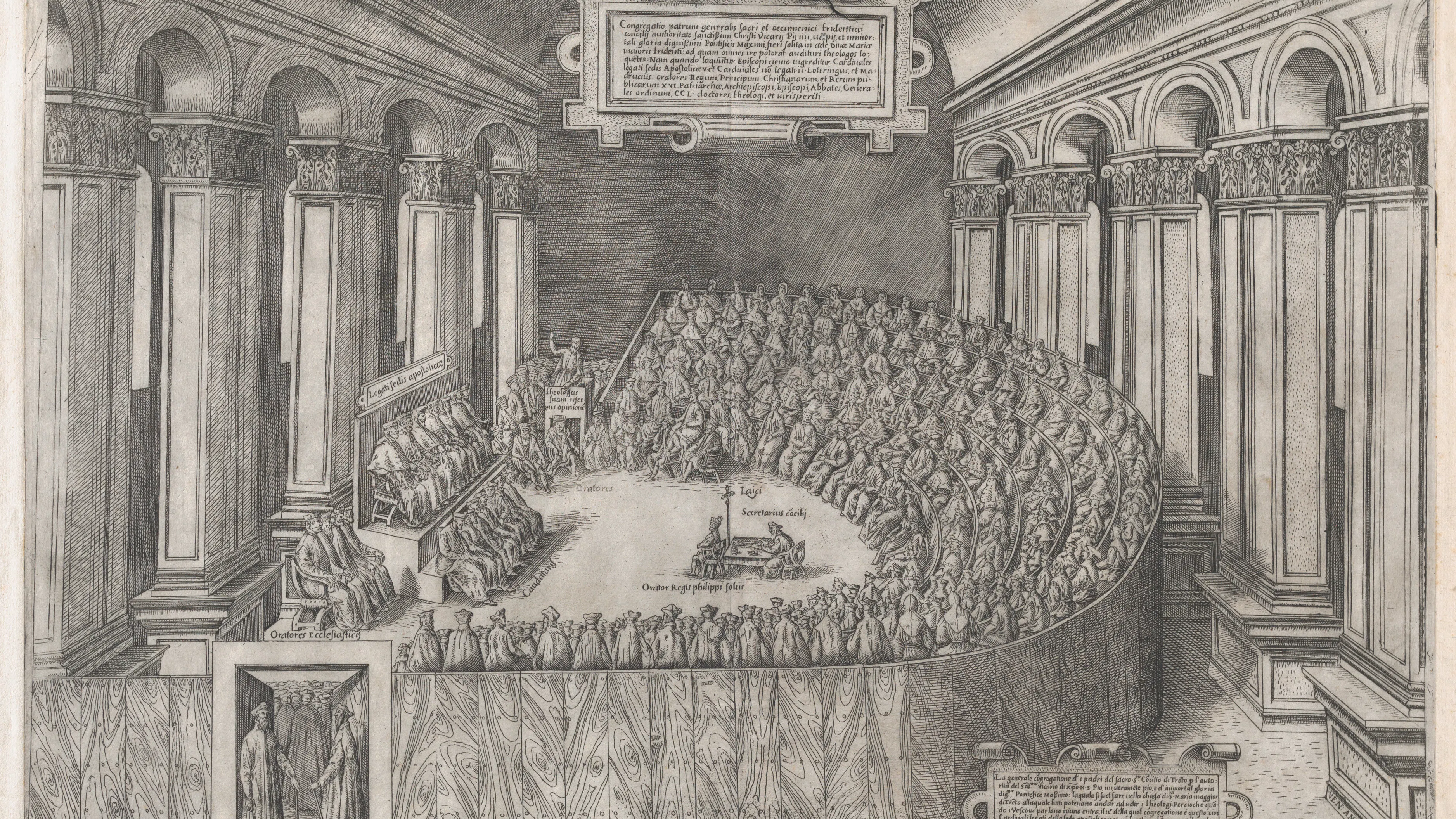
The engraved frontispiece to Horn's Arca Noae (Hackiana, 1666) casts the argument as allegory: beasts contend over a globe above stormy waters, a small vessel below giving form to the ark motif.

The engraved frontispiece to Horn's Arca Noae (Hackiana, 1666) casts the argument as allegory: beasts contend over a globe above stormy waters, a small vessel below giving form to the ark motif. Its cartouche announces a history of empires and kingdoms from the creation of the world. Source ↗.

The problem the work sets itself is a single one, and it governs everything from the title onwards: whether the entire political history of mankind — every empire, kingdom, and people, including those of Asia and the Americas newly and unevenly known to European learning — can be held within one unbroken chain of descent from the ark. The ark is thus both the point from which the peoples were dispersed and the figure of the vessel in which their histories are again gathered and ordered. The recurring move by which Horn addresses the problem is twofold. First, all rival chronologies are subordinated to what he holds to be the authentic Hebrew text and the Ussherian calculus derived from it, so that Chinese, Egyptian, and Assyrian antiquities are shortened, shown to rest on mutually contradictory witnesses, or diagnosed as later inventions. Second, whatever people, dynasty, or custom resists assimilation is recovered as a derivative of a Noachic line by philological, etymological, and comparative argument: Greek myth is read as sacred Hebrew history corrupted in transmission, Amerindian manners are read as displaced Scythian manners, and the titles of rulers — Chalifa, Chacan, Atabec, Korultai — are treated as constitutional evidence about the polities that used them.

The historical stakes of that undertaking were live and pressing in the 1660s. A scripturally grounded chronology remained the ordering frame of learned universal history at precisely the moment when Jesuit reports of Chinese annals, Egyptian king-lists recovered from Manetho and his rivals, Arabic and Persian histories read at Leiden, and accounts of American peoples and empires were making the traditional temporal synthesis harder to sustain. Horn's answer is neither the abandonment of the biblical frame nor a bare reassertion of it, but a sustained effort to make the frame absorb the new material by critical means — comparison of witnesses, weighing of proximity and priority among sources, etymological argument, and even astronomical retro-calculation used to expose a document as fabricated. The pre-Adamite question stands at the boundary of that world: the text brands the attempt to refute Moses from gentile histories as a passage into the impious camp of the Pre-Adamites, though whether Isaac La Peyrère is named and answered directly in a securely legible passage of the consulted witness has not been established.

Several particulars make the work memorable even at a distance of three and a half centuries. Providential interdependence among polities is figured as a horologe, in which the failure of one wheel makes the whole mechanism labour. The Chinese pre-Flood emperors are aligned one by one with the patriarchs, Fohi with Adam and Xinnungus with Cain, on the strength of both name-affinity and the shared attribute of husbandry. Alexander the Great is argued, as an avowedly unheard-of thesis, to have penetrated Sichuan. A Chinese fleet is proposed as the formative influence on Mexico and Peru, a hypothesis carried over from Horn's earlier De originibus Americanis. The Trojan War is denied outright on the authority of Dio Chrysostom. Prester John is dissolved into a philological error over the Nestorian Ungchan Iuhanna, and the Frankish descent of the Druzes is dismissed as a fable. Against these controversial reconstructions stand documents of a quite different order: a letter of 6 March 1647 from Pieter Reyniers of Hoorn, adduced as an experiment testing whether an ark of Mosaic proportions would sail, and the observation that the unarmed ships built on that model carried no artillery, after the likeness of an ark that was an emblem of peace and not of war.

The conceptual vocabulary, the circumstances of production, and the internal architecture of the work all converge on the same figure. Arca supplies the metaphor of containment; series supplies the claim that the contents are ordered by an intelligible and recoverable succession; and the graded political terms imperium, regnum, principatus, and respublica allow Assyrian, Persian, Chinese, European, American, and maritime polities to be compared without being flattened into identity. The book was dedicated to William III of Orange, then still a minor during the First Stadtholderless Period — an appeal to the Orange-Nassau house whose political valence is an inference from date and addressee rather than evidence of a documented commission — and it closes the figure it opened by casting Batavian commerce, navigation, religion, and justice as a new ark, re-gathering by fleets the world that the first ark's descendants had dispersed. Much about the man and the book remains thin: no sustained modern monograph on Georg Horn was located, no modern critical edition or annotated translation exists, no vernacular translation of the 1666 work was found, and a reliable account of his education, his reported English residence, and the circumstances of his death was not recovered. The surviving witnesses are digitizations of early printed copies, and a number of the sharper claims made about the book's polemical context still await confirmation against the page images.

Read the full text and English translation on Leo

This text was transcribed and translated as part of the ExLatinis project, an effort by Leo to make free English translations of every text published in Latin in early modern Europe (1450–1750) available online. The complete transcription and English translation of this work can be read free of charge:

Read the original Latin text and full English translation on Leo

You can save a copy of this document into your Leo account to run deep text searches, conduct further analysis, or cross-reference it with your own research.

Horn's Title Explained: The Ark as Container, the Series as Argument

Editorial English title supplied for convenience, not an established historical title: Noah's Ark, or a History of Empires and Kingdoms from the Creation of the World to Our Own Times. The Latin title is Arca Noae, sive Historia imperiorum et regnorum a condito orbe ad nostra tempora; catalogue records also preserve the form Arca Noæ. The work's own title-matter announces the Ark of Noah, or a History of Empires and Kingdoms from the founding of the world to our own times, at Leiden and Rotterdam, from the Hackian press, in 1666, [ARCANOÆ

Sive

HISTORIA

IMPERIORUM et REGNORUM

à Conditio orbe ad nostra

Tempora.

LUGD. BATAV.}

et ROTEROD.} Ex Officina HACKIANA 1666](https://tryleo.ai/share/acafcc20-4411-4bc9-bc49-fe465c426d02/?imageId=e8fd5611-ef45-4e26-bdd4-76f3424db436). Georg Horn appears in Latin as Georgius Hornius or Georg. Hornius, with Georg Horn as the modern German form. The title's arca is not merely a decorative biblical allusion. In the opening matter the work is described as a continuous series and succession of the empires and kingdoms of the whole world from its foundation, and the two terms are fused in a single defining formula, the Ark of Noah, that is, the perpetual series of all the empires and kingdoms of the whole world from the founding of the world down to our own times, [ARCAM NOÆ, id

est omnium à condito Mundo totius

orbis Imperiorum

regnorumque perpetuam ad

nostra usque tempora seriem,](https://tryleo.ai/share/acafcc20-4411-4bc9-bc49-fe465c426d02/?imageId=530b49a5-d844-4360-89df-ff9ff7d8fd27), while a later comparison invokes the arca Noachica. The ark thus supplies a figure of containment: dispersed peoples, dynasties, regions, and chronological testimonies are gathered into one ordered historical vessel. That metaphor should not be extended into a claim about a modern global system; its force is scriptural, providential, and historiographical within seventeenth-century Christian learning.

The noun series carries more than the weak sense of an unconnected sequence. Hornius joins it to successio, origines, growth, decline, division, and extinction. It consequently denotes an intelligible succession whose temporal relations have to be reconstructed and tested. The genus under which that succession is placed is defined with textbook economy — history is the narration of things done, [HISTORIA est rerum gestarum

narratio](https://tryleo.ai/share/acafcc20-4411-4bc9-bc49-fe465c426d02/?imageId=4acc89d5-525b-4da3-a765-14dc453b90bb) — but the differentia lies in the connectedness Hornius claims for his subject, figured in a simile drawn from clockwork: as in clocks the connection and mutual necessity of the several wheels and parts is such that if one fails or goes wrong the whole work labours at once, so in this frame of human affairs empires, kingdoms, principalities, republics, and societies are connected by so great and admirable a vicissitude of divine providence, [in horologiis singularum rotarum &

partium ea est connexio & mutua necessitas, ut si una cesset aut vitium faciat, totum simul opus laboret: ita in

hac rerum humanarum compage, Imperia, Regna, Principatus, Respublicæ,

Societates, tanta connectuntur divinæ

providentiæ admirabili vicissitudine](https://tryleo.ai/share/acafcc20-4411-4bc9-bc49-fe465c426d02/?imageId=2a8bdd20-b18b-4a6c-87c5-98482c9acdd2). The work's chronology is therefore an argument about order and authority, not merely a register of dates. Its insistence that the Hebrew codex is authenticus and originalis, and that the true series of things and times must be drawn from it rather than from corrupted or divergent Greek reckonings, gives series a confessional-philological edge: the sequence is only reliable when the textual foundation is judged reliable. The claim is made in the text without qualification — because it rests on the Hebrew Codex, from which alone, as authentic and original, the true series of events and likewise of times must be sought, and not from the corrupt Greek or Samaritan versions or copies, in which the reckoning of years is found shamefully confused, corrupted, and distorted, [Quia Codici Hebræo innititur: ex quo solo, tanquam Autenthico &

Originali, ut rerum, ita &

temporum vera series petenda est; non

vero ex corruptis Græcorum Samaritarum

ve versionibus aut Apographis, in quibus

ratio annorum turpiter confusa, corrupta

& distorta reperitur](https://tryleo.ai/share/acafcc20-4411-4bc9-bc49-fe465c426d02/?imageId=e43fb91e-b4e0-4830-ae42-2923297f4599) — so that the ark-figure of containment and the philological premise of the chronology are two aspects of one commitment.

The first page of Horn's body text makes a definition into a programme: HISTORIA est rerum gestarum narratio.

The first page of Horn's body text makes a definition into a programme: HISTORIA est rerum gestarum narratio. Its opening proposition compresses all time into four biblical epochs and then divides history into Divine and Mundane branches — the taxonomic grid by which disparate kingdoms are rendered commensurable. Source ↗.

Imperium is the work's broadest political term. It can designate a world-spanning monarchy, a regional dominion, or command over the sea, as in the discussion of Carthaginian maris imperium. It is not interchangeable with regnum, which identifies a kingdom, principatus, which can name a principality or ruling order, or respublica, which describes a commonwealth organized through laws and civic practice; the horologe simile quoted above sets all four side by side as distinct members of one providential mechanism, together with societates. Those gradations allow Hornius to compare Assyrian, Persian, Chinese, European, American, and maritime polities without making them formally identical. The same lexical care extends to non-European titulature, which is treated as constitutional evidence rather than as exotic nomenclature: Atabec is glossed as regni administrator, Chacan as Imperator, the Mongol Korultai as Comitia, and the Punic Suffetes as Iudices, while the caliphate is defined by the sacral character of its office — the Caliph was therefore priest, or commander of sacred things, Erat igitur Chalifa sacerdos vel imperator sacrorum, — a definition that separates sacral from temporal sovereignty and permits the sultanate to be described as a distinct order of power. The accessible text does not securely establish a sustained Horntian use of Tacitean dominatio, so that term should not be attributed to his argument without a verified passage.

What Arca Noae Sets Out to Do: Horn's Universal History in Summary

Arca Noae is a learned Latin universal history and chronological political-historical compendium by Georgius Hornius (Georg Horn), printed in 1666 by the Hackian office at Lugdunum Batavorum et Roterodamum—Leiden and Rotterdam. The place and date of composition are not identified in the catalogues or accessible witnesses; Leiden/Rotterdam is the place of production recorded in the imprint. Authority and catalogue records identify Horn as a German historian and geographer, professor of history at Leiden from 1653 until his death, with life dates conventionally given as 1620–1670; an authority record gives Kemnath as his birthplace and Leiden as the place of death, but a full, reliable biography of his education, English residence, relationship with Hendrik Bornius, or reported final mental collapse was not recovered.

The work presents itself as a synoptic history of the world's empires and kingdoms, their origins, succession, expansion, decline, division, and extinction, rather than as a continuous military narrative. That generic self-definition is explicit and polemical: there was no need to repeat the chances of battles, the sieges of cities, and the other matters recounted at great length by the writers themselves, since these exist everywhere in huge volumes and in compendium too, whereas the present work is plainly peculiar and new, showing the series of the whole political world connected in perpetual sequence, [Neque vero casus

præliorum, obsidiones urbium & alia quæ

prolixissimè ab ipsis scriptoribus commemorantur, repetere necesse fuit; illa

enim ingentibus voluminibus & compendio quoque passim extant: nostrum opus

peculiare plane & novum est, perpetua

serie connexam ostendens totius orbis

Politici seriem](https://tryleo.ai/share/acafcc20-4411-4bc9-bc49-fe465c426d02/?imageId=bd08f69f-2642-41f5-8532-9f42db61361c). Its opening scheme distinguishes the status of the world before the Flood, after the Flood, and from the emergence of postdiluvian history to the author's time. The genealogical and political material then proceeds through the lines of Ham, Shem, and Japheth; the Japhetic material is expressly divided into Eastern, Western, and Southern histories, with Eastern history including Scythian, Ethiopian, and Chinese matter, and the later books extend to Turkish, Tartar, Arabic, Ethiopian, Indian, and Chinese affairs before an American book and a series of appended dynastic chapters. The title-page and dedication are in Latin, and the book's prose is Latin.

The Latin Praefatio ad Lectorem, where Horn first states his method.

The Latin Praefatio ad Lectorem, where Horn first states his method: empires are to be entered under origins, successions, growths, declines, conjunctions, divisions, and ends. Its comparison of that ordering to the layout of geographical maps shows why Arca Noae names a programme of containment rather than an image of preservation. Source ↗.

The ark-figure that opens the work is also the figure on which its account of the present closes, and it is given a Batavian application. Ancient maritime glory is measured and found small — great among the ancients was the maritime glory of Tyre and Carthage, and the Romans too sailed from the Red Sea upon the Indian sea and reached Taprobane out of zeal for the silk trade, yet how slight these things are if set against the navigations of the Batavians, [Magna apud veteres

Tyri & Karthaginis maritimarum

rerum gloria fuit: navigarunt

etiam Romani ex

Sinu Rubro mare Indicum,

ac Taprobanam mercaturæ

Sericæ studio adierunt. Cæterum

quam illa sunt exigua

si Batavorum navigationibus

contendantur?](https://tryleo.ai/share/acafcc20-4411-4bc9-bc49-fe465c426d02/?imageId=8595eea7-fe74-43c3-8a69-4a6f692a69be) — and the purpose of those navigations is described as the re-gathering of a divided world: to share their goods with those remote nations and to receive theirs in turn, to join by fleets whatever ignorance and discord had hitherto torn asunder, and so to build as it were a new Ark of Noah, in which all the lands and seas should be enclosed, [bona

sua remotis illis gentibus

communicare: eorumque invicem

recipere; quicquid

hactenus ignorantia & dissidiis

avulsum, classibus conjungere,

atque ita novam

quasi ARCAM NOÆ construere,

in qua cuncta terrarum

mariumque concluderentur](https://tryleo.ai/share/acafcc20-4411-4bc9-bc49-fe465c426d02/?imageId=7ac10334-6434-469d-b1dc-cf4f876e1b4c). The vessel of the title is therefore not only the origin of the dispersal the book must trace but the emblem under which the book's own present is understood.

No Dutch, German, French, or English translation of this specific 1666 work was located, and no modern critical edition or annotated translation was located. The surviving digital witnesses are scans or facsimiles of early printed copies rather than a modern scholarly edition. Google Books records a 1666 copy under Arca Noae, attributed to Georg Horn, published by Hackiana, with 548 pages and an original copy from the Bavarian State Library. That page count is metadata for the digitized copy; it does not by itself establish the 1666 format or collation.

Situating Arca Noae in Debates over Chronology, China, and the Origins of the Americas

The importance of Arca Noae lies in the way it makes universal history a testing ground for textual criticism, chronology, ethnography, and the political comparison of states. The work retains a strong Hebrew-biblical chronological frame—its accessible text follows Ussher's calculation and calls the Hebrew codex the authentic and original basis for the true sequence of events—but it also has to accommodate Egyptian, Chinese, American, Arabic, Persian, and Turkish materials. It therefore documents a pressure point in seventeenth-century historical knowledge: the authority of a scriptural chronology remained central while newly available histories made the traditional temporal synthesis increasingly difficult to maintain. Anthony Grafton's account of Renaissance and Reformation chronology is directly relevant because it presents Scaligeran chronology as a philological reconstruction in which biblical and classical texts, gaps, witnesses, and learned conjecture had to be handled together. Grafton also notes the challenge posed by Martini and Vossius, who used Chinese and Egyptian evidence to question conventional limits on the age of the world. C. Philipp E. Nothaft's Dating the Passion and Paolo Rossi's The Dark Abyss of Time are broader studies of chronological technique and the expanding history of the earth and nations; neither should be represented as a monograph on Hornius.

The polemical edge of that chronological commitment is sharp in the text itself, where the appeal to gentile antiquity against Moses is treated as a confessional betrayal rather than a scholarly option: to wish to refute Moses from the fabulous histories of the gentiles is to go over into the impious camp of the Pre-Adamites and to abjure the faith, or to correct the Hebrew text from the annals of the Chinese and the Egyptians, [Velle enim ex fabulosis gentium

Historiis Mosen redarguere, est in Præadamitarum impia castra transire & fidem abnegare: aut ex Sinensium & Ægyptiorum

Anna](https://tryleo.ai/share/acafcc20-4411-4bc9-bc49-fe465c426d02/?imageId=d98ab6f2-62b7-4c06-aab9-7b328f0fbd50). The pre-Adamite controversy belongs to the surrounding intellectual field, especially through Richard H. Popkin's study of Isaac La Peyrère; the text as transmitted does condemn the Præadamitarum camp by name of party, but a securely legible passage in the consulted witness naming La Peyrère himself or mounting a sustained refutation of him was not recovered, and the two should not be conflated. The same caution applies to a fully reconstructed Horn–Vossius polemic, the Sabbatai Zevi affair of 1666, and the requested Kalmar Union date discrepancy: they remain questions for manuscript-level or page-level verification rather than established findings here. Samuel Bochart is securely present in the accessible text in connection with Japhet and Phaleg; Golius is securely present in the acknowledgment quoted below. The astronomical intervention attributed to Samuel Kechel, listed among the items requiring verification, does have a counterpart in the accessible text, where a document's authenticity is overturned by computation — indeed the distinguished astronomer Samuel Kechel found it false and fictitious by careful calculation, Quippe insignis Astronomus Samuel Kechelius curiosa supputatione falsam & fictam deprehendit — an instance of astronomy pressed into service as a critical instrument against a chronological record; the wider reconstruction of the episode nonetheless still awaits page-level confirmation.

The critical apparatus deployed against long chronologies is not confined to scriptural authority. Egyptian king-lists are dismantled by setting their witnesses against one another, and the Assyrian material is attacked on grounds of Mosaic silence and the improbability of transmission: since by everyone's admission Moses is the most ancient and first writer, and yet in him there exists no memory whatever of this Assyrian empire or of its kings, it is asked who then preserved that so prolix series of kings from the Flood onward and beyond, with monstrous names and years but with their deeds omitted, apart from Ninus and Semiramis, right down to the time of Africanus, that is through three thousand years, [Nam cum

omnium confessione antiquissimus & primus scriptor sit Moses: apud eum autem

nulla plane hujus Imperii Assyriaci Regumve ejus extet memoria, quæritur quis

ergo illam tam prolixam, inde usque à diluvio & quod excurrit Regum seriem,

monstrosa nomina, & annos, omisis tamen rebus gestis, si Ninum & Semiramidem excipias, usque ad Africani tempora, id est per tria millia annorum, conservaverit?](https://tryleo.ai/share/acafcc20-4411-4bc9-bc49-fe465c426d02/?imageId=514d71c3-2f13-4d2b-bd92-78c828ee69aa). Where witnesses conflict, an explicit criterion of proximity and priority is invoked — Herodotus first opens the most ancient beginnings of Assyrian power, and his authority, as one who lived in Asia and was the first of all the Greeks to write histories, is far to be preferred to more recent traditions, [Primus Herodotus una & antiquissima

Assyriorum potentiæ primordia pandit,

cujus auctoritas, ut qui in Asia vixerit

& omnium Græcorum primus Historias scripserit, recentioribus traditionibus

longe præferenda est](https://tryleo.ai/share/acafcc20-4411-4bc9-bc49-fe465c426d02/?imageId=1183bf03-6093-4783-8bd4-c88e99e8d884) — a rule of thumb that governs much of the source criticism and that sits alongside the demolition of Ctesias, the correction of Bochart, Leunclavius, and Bonfini, and the dismissal of Suffridus Petri.

The counterpart of that scepticism is a harmonizing diffusionism in which pagan traditions are not discarded but rewritten as derivative. Greek fable is treated as sacred history in corrupted transmission: it is to be observed in general that the Greeks transferred most things from the histories of the Hebrews into their own mythical history, and that whatever they record of Bacchus, of Hercules, of Agamemnon, Iphigenia, the expedition of the Argonauts, the Trojan and Theban war and the rest, was drawn from the limpid springs of Sacred History and corrupted by their own muddy fictions, [Id in universum observandum est,

pleraque Græcos ex Hebræorum Historiis

ad Mythicam suam transtulisse. Quicquid

de Baccho, de Hercule, Agamemnone, Iphigenia, Argonautarum expeditione, Trojano & Thebano Bello aliisque commemorant;

id ex Sacræ Historiæ limpidis fontibus

derivatum ipsi suis lutulentis commentis

depra](https://tryleo.ai/share/acafcc20-4411-4bc9-bc49-fe465c426d02/?imageId=2eb72a68-58e5-4fea-915f-7ef42eb602e2). The consequence is drawn without hesitation for the most celebrated of those narratives: before all things, with Dio Chrysostom, he assumes that there was no Trojan War, that Ilium was never destroyed by the Greeks, and still less that the whole of Greece took up arms by common consent over the rape of a single woman, [Ante omnia cum Dione

Chrysostomo præsumo nullum fuisse Bellum Trojanum, Ilium nunquam à Græcis

destructum, multominus totam Græciam

propter unius foeminæ raptum communi

consensu arma induisse](https://tryleo.ai/share/acafcc20-4411-4bc9-bc49-fe465c426d02/?imageId=641038c0-de13-4ff4-9c4d-1bb77711e183). The same procedure is applied at the far end of the world, where Chinese antiquity is folded into the patriarchal line by name-affinity and shared attribute: let it be, then, as has been said, that Fohi is Adam, and Xinnungus therefore will be Cain, for the affinity of the name is not wholly discordant and the agreement between Cain and Xin is no light one, and further Cain was a husbandman, the very thing the Chinese expressly profess of their Xinnungus, whom they relate to have first discovered the plough and other rustic implements, [Esto igitur, ut jam dictum,

Fohius Adam, Xinnungus igitur erit

Cain. Non omnino abludit affinitas nominis

& non levis sane inter Cain & Xin

convenientia. Deinde Cain agricola fuit.

Idem disertim de suo Xinnungo Sinenses

profitentur, quem aratrum & alia rustica

instrumenta primum reperisse tradunt](https://tryleo.ai/share/acafcc20-4411-4bc9-bc49-fe465c426d02/?imageId=cd8ba5d2-9581-4d3e-88d9-36830d760b4f). A comparable boldness attends the claim that Macedonian arms reached the Far East, announced as a novelty: this will seem new and unheard-of to many, which he has now undertaken to demonstrate, that Alexander the Great made an incursion into China itself and subdued by war its farthest province, Sichuan, XV. Novum hoc multis videbitur & inauditum quod nunc demonstrandum suscepi, Alexandrum Magnum in ipsam Sinam impressionem fecisse ejusque extremam Provinciam Suchuen bello subjugasse.

The Chinese material is especially significant. Thijs Weststeijn identifies the Dutch Republic as a fulcrum at which historiography, biblical criticism, Oriental learning, and information about East Asia met; he places Jacob Golius, Georg Hornius, and Isaac Vossius in a quarrel over China in relation to Egypt, Israel, and the Americas. The accessible text contains the important acknowledgment that Golius communicated material humaniter, in a formula that also advertises the novelty of the source: of the most ancient affairs of the Turks nothing is established for us except what Mīrkhwānd records in his fourth volume, a narrative hitherto unknown to Europeans, which Jacob Golius kindly communicated to us translated by himself from the Persian, and which it seemed good to insert here in compendium, II. De antiquissimis Turcarum rebus nihil nobis constat nisi quod Mirkond volumine IV. commemorat, quam narrationem hactenus Europæis incognitam, pro ut eam nobis ex lingua Persica à se translatam Iac. Golius humaniter communicavit, compendio hic inserere visum. A compendium from Golius's appendix to Martini's atlas was likewise inserted, and the wider Orientalist apparatus draws on Elmacinus (al-Makīn), Abul Pharagius (Bar Hebraeus) with Pococke, Abū l-Fidā, and Schickard. The text also contains a claim that a Chinese fleet may have reached Mexico and perhaps Peru, where it was mixed with indigenous populations and left institutions resembling Chinese forms. These passages make the work relevant to the history of comparative chronology and to the formation of early modern theories of American origins. D. E. Mungello's Curious Land illuminates the Jesuit accommodation that made European study of China possible, but the accessible evidence does not justify assigning every Chinese datum in Arca Noae to a particular Jesuit author; the text works instead by weighing Jesuit testimony, notably that of Álvaro Semedo, against its own chronological premises, shortening Chinese antiquity to a start within the Ussherian scheme and treating the earliest imperial dynasties as retrospective philosophical fabrication.

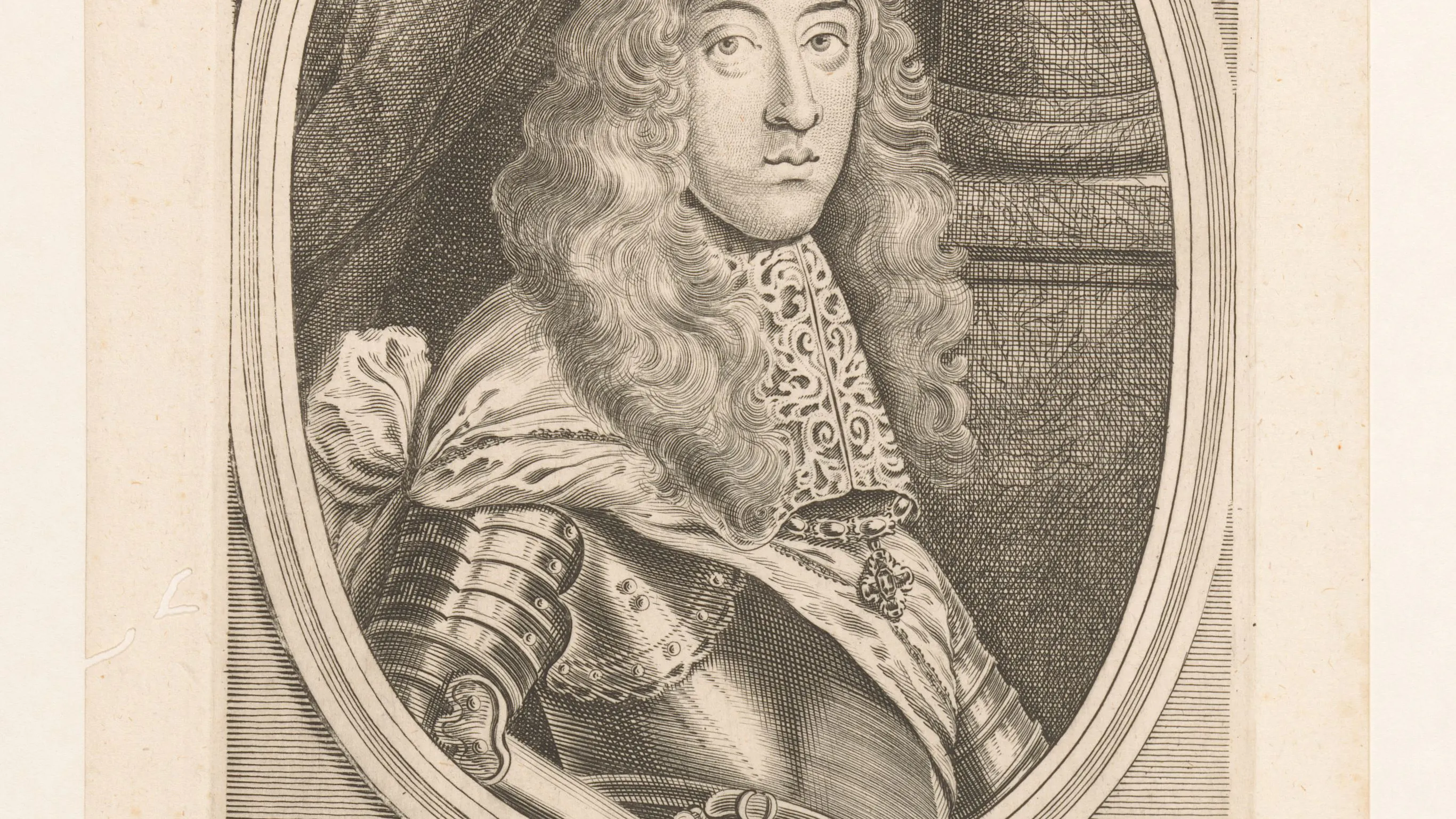
Traditionally identified as Martino Martini and attributed to Michaelina Wautier, this seventeenth-century portrait evokes the Jesuit intermediary through whom Chinese chronological evidence reached European learning.

Traditionally identified as Martino Martini and attributed to Michaelina Wautier, this seventeenth-century portrait evokes the Jesuit intermediary through whom Chinese chronological evidence reached European learning. Mediated by figures such as Golius and Horn, Martini's reports made China's claimed antiquity a pointed challenge to Ussherian reckoning. Source ↗.

Two further habits of the work deserve notice because they show its critical energies turned on European legends and on the physical plausibility of scripture alike. Fabulous genealogies are diagnosed and discarded — it is therefore a mere fable, what the Druzes, or Trusci, either boast of themselves or is believed of them by others, that they draw their origin from the remnants of the Franks who occupied Palestine, Mera ergo est fabula, quod de Drusis vel Truscis, ex Francorum, qui Palæstinam occuparunt, reliquiis originem trahentibus, vel jactant ipsi vel creditur ab aliis — and the most durable of medieval European fictions about Asia is resolved into a misconstrued title: in Scythia around Cathay there reigned for many centuries emperors of the Nestorians, called by the common name Ungchan Iuhanna, and by Europeans Prester John, I. In Scythia circa Cathayum regnarunt ante multa secula Imperatores Nestorianorum, dicti communi nomine Vngchan Iuhanna, ab Europæis Presbyteri Johannes. At the other pole stands an appeal to contemporary shipbuilding as evidence bearing on Genesis, in which the ark itself becomes a matter for testing: whether the ark such as Moses describes had the figure of a ship, or is suited to navigation, will now appear from the shrewd experiment of the Batavians, which — lest it perish, and lest those who communicated it be cheated of remembrance — he judges worth the trouble to record, Pieter Reyniers, a citizen of Hoorn, having replied by letter on 6 March 1647 when questioned about Noah's ark, [Navis

figuram habuerit, aut ad navigandum

commoda sit, qualem Moses describit, arca,

ex Batavorum nunc patebit sagaci

experimento, quod ne periret, & qui communicarunt,

memoria fraudarentur, equidem operæ pretium duco. Petrus Reinerus

Hornanus civis de arca Noæ interrogatus, Anno 1647. 6. Martii per literas ita

respondit](https://tryleo.ai/share/acafcc20-4411-4bc9-bc49-fe465c426d02/?imageId=88f93f63-31ed-43ba-8fc7-a82d9cc019b4). The vessels built on that Mosaic model are then given a moral as well as a technical significance, and the ark-figure of the title acquires an irenic charge: but they admit no use of artillery or arms of that kind, and this after the likeness of Noah's ark, which was an emblem of peace and not of war, and in which God himself, the God of peace, had then enclosed the whole world's safety and peace, the rebellious being shut out and drowned in the water, [Sed nullam

admittunt, tormentorum bellicorum & id

genus armorum usum, idque ad instar arca Noæ, quæ pacis non belli fuit insigne,

& in qua omnem totius mundi salutem &

pacem ipse Deus pacis, tum quidem, exclusis rebellibus & aqua stagnatis, concluderat](https://tryleo.ai/share/acafcc20-4411-4bc9-bc49-fe465c426d02/?imageId=007fc871-bd03-4802-8ae2-c239190d8dd8).

The Dutch Orientalist setting is nevertheless clear. Leiden's Arabic and Persian scholarship supplied Hornius with materials that could be placed beside biblical, classical, and European chronicles. The work's dedication to William III of Orange and its treatment of maritime dominion invite a political reading alongside scholarship on Dutch representations of the New World. Its American ethnography is organized by the same comparative and diffusionist logic that governs its treatment of Asia, grading American peoples into three orders and reading their customs as displaced Scythian usages — Scythian manners throughout all America: several wives to one man, eating enemies, fixing the heads of the slain on very long poles, painting themselves, their boats woven of sinews and withies, VI. Mores Scythici per omnem Americam; plures uni viro uxores, hostes comedere, cæsorum capita prælongis contis insigere, pingi, navigia ipsorum nervis atque viminibus contexta — while the Iberian legal framework for the conquest is registered in a single clause, thus Pope Alexander VI divided the globe between the kings of Castile and Portugal, [Ita Alexander Papa VI. Orbem terrarum

inter Reges Castiliæ & Portugalliæ

divisit,](https://tryleo.ai/share/acafcc20-4411-4bc9-bc49-fe465c426d02/?imageId=40c79095-c4e2-46af-9514-365b87438f7e). Benjamin Schmidt's Innocence Abroad is useful for that surrounding representational history, while Jonathan Israel, Simon Schama, Karel Davids, Alastair Hamilton, Arnoud Vrolijk, Richard van Leeuwen, Edwin Van Kley, Donald F. Lach, Nicolas Standaert, Lee Eldridge Huddleston, Giuliano Gliozzi, and Jorge Cañizares-Esguerra belong to adjacent historiographies whose relevance is contextual rather than evidence that they treated Hornius directly. The searches located no sustained modern monograph devoted to Georg Horn. He appears principally as a learned participant in studies of chronology, Dutch Orientalism, China, and the intellectual history of the Americas; the PRDL authority record is chiefly a catalogue of his primary works, listing thirty titles in forty volumes, not a modern biography or monograph.

Printing, Editions, and Catalogue Records of Arca Noae

The strongest catalogue identification for the first edition is WorldCat OCLC 1030789919: Georgi Horni Arca Noæ. Sive historia imperiorum et regnorum a condito orbe ad nostra tempora, Georgius Hornius, Latin, ex officina Hackiana, Lugd. Batav. et Roterod., 1666. The record names holdings at, among others, Utrecht University Library, Bibliotheek Rotterdam, Erasmus University Rotterdam, Tilburg, Radboud, Göttingen, Zürich, Osnabrück, and the Herzogin Anna Amalia Bibliothek in Weimar, but it does not supply copy-level shelfmarks or physical descriptions. A second, incomplete WorldCat record labels an undefined 1666 print book Arca Noae and gives no usable imprint or identifier beyond the record itself; it cannot be treated as an independent edition. Google Books record ID `fMEGAAAAcAAJ` supplies a full-view 1666 record attributed to Georg Horn, Hackiana, 1666, 548 pages, digitized from the Bavarian State Library. Other Google Books records reproduce the same bibliographical identity, but the accessible metadata does not establish a new issue or a complete collation.

The Internet Archive item `georgiihorniiarc00horn` is a different object: a Frankfurt/Leipzig witness dated 1674, held by the John Carter Brown Library, whose catalogue notes that it was originally published at Leyden and Rotterdam in 1666. Its record gives the signatures `a¹² (-a12) b⁶ A–Y¹² Z⁶`, with V8 mis-signed V6; it records an added engraved title page, an index, and the American section Occidentalis res Americae complectitur at pages 414–500. The JCB copy is identified by the call number `F674 .H813g`; its added engraved title page is lacking but available in facsimile. The same record warns of narrow-margin cropping and does not supply a table of contents or chapter divisions. These details describe the 1674 witness, not automatically the 1666 issue, and the 1674 dedication and title matter must not be substituted for the 1666 title page.

A later issue is securely represented by USTC 1813832: Gorinchem, ex officio Cornelis Lever, 1677, in 12°, with signatures `12 24 A–2A12 2B8`, STCN reference 830934472, and identified copies in Helsinki, Munich, Amsterdam, The Hague, Leiden, Tilburg, Oxford, and Kansas. No separate 1666 USTC record was located in the searches, and no VD17 German issue of the 1666 printing was established. The STCN is the correct national bibliography to prioritize for a Dutch imprint, but the exact 1666 STCN record and copy-level shelfmarks at the Koninklijke Bibliotheek, Leiden, or Utrecht were not retrieved. The 1677 STCN-linked record should not be used as evidence for the 1666 format.

The Hackian attribution is materially more secure than a complete reconstruction of the firm's ownership. The printer-device authority pages identify Petrus Hackius as active in Leiden from 1660 to 1677 and describe Officina Hackiana with Leiden and Rotterdam activity in the relevant seventeenth-century period, while assigning the device record's principal to Peter van Huisstede. Those date bands do not prove who physically supervised the 1666 printing, nor do they establish a fully documented succession from Franciscus Hackius to Petrus Hackius or the precise Rotterdam arrangements in that year. The 1666 imprint itself establishes the use of the Hackian office; the confessional-commercial profile and internal partnership structure remain underdocumented in the sources located.

The 1666 Google witness securely preserves the dedication formula to William III—`Guilielmo III ... Arausionum Supremo`—and the text's opening account of the three world states, the Hebrew textual claim, the Japhetic organization, and the Index rerum et verborum memorabilium. The dedication's political valence is an inference from its date and addressee: an appeal to the Orange-Nassau house during the First Stadtholderless Period, when William was still a minor, rather than evidence of a documented governmental commission. That inference is at least consonant with the constitutional self-narrative the text supplies for the Republic, in which the house of Orange is the hinge of the whole account: in 1581 the confederated Belgians, wearied of Spanish avarice, cruelty, and tyranny, solemnly renounced all faith and obedience to Philip II, a free Republic being instituted, and after a war continued for eighty years under the bravest Princes of Orange and Counts of Nassau, at last in 1648, peace having been made with the Spaniards, confirmed the liberty they had long since asserted both by the justice of their cause and by victorious arms, [Belgæ confederati pertæsi avaritiæ,

crudelitatis & Tyrannidis Hispanicæ, Philippo I I. solenniter omnem fidem ac

obedientiam renunciarunt, libera Republica instituta, ac bello sub fortissimis

Arausionum principibus & Nassoviæ Comitibus, per LXXX. annos continuato, tandem

A. cl[arissi]m[us] I[esu]c XLVIII. pace cum Hispanis facta, libertatem suam

dudum justitia causæ & victricibus armis assertam, confirmarunt](https://tryleo.ai/share/acafcc20-4411-4bc9-bc49-fe465c426d02/?imageId=51982d65-0c7e-4aaa-9d8b-dbd874d32bea). The same political self-understanding supplies the ethical terms in which the new ark of Dutch navigation is justified: they fixed the frozen ocean and the sandy deserts as the bounds of their empire and their navigation, not, like barbarians, by the destruction of peoples and the ruin of cities, but by commerce, by humanity, and, what is chief, by religion and justice, [Glacialem Oceanum & sabulosa deserta, terminos Imperii sui & navigationis statuerunt. Non, ut Barbari,

excidio populorum, destructione urbium: sed commerciis, humanitate, ac quod

præcipuum, Religione ac Justitia](https://tryleo.ai/share/acafcc20-4411-4bc9-bc49-fe465c426d02/?imageId=4b3ce0ec-e596-4032-9cfd-a6168c57df5d). The accessible records contain no privilege, approbation, censorship order, expurgation record, suppression proceeding, or evidence of loss. Absence of such a record is not proof that no scrutiny occurred. The consulted Acta Eruditorum page establishes only that the journal began at Leipzig in 1682; it does not record a review or response to Arca Noae. No direct contemporary refutation, defence, or translation chain was securely located.

The work explicitly cross-references Hornius's De originibus Americanis, and its American discussion links the earlier work to a hypothesis about Chinese voyagers and American polities; the cross-reference is made in the author's own voice, where in his Origines Americanae he proved by not a few conjectures that such a Chinese fleet reached Mexico itself and perhaps Peru and there, mixed with the natives, constituted those two empires on a Chinese model in most respects, chiefly in the structure of their cities and of their reckoning of time and in their laws, beyond the capacity of the barbarians of America, In Originibus Americanis haud nullis conjecturis probavimus, talem classem Sinenium in ipsam Mexicanam & forte Peruvian pervenisse ibique indigenis permixtam, duo illa Imperia ad Sinensem formam plurimis in rebus, præcipue civitatum temporumque structura & legibus, supra captum Barbarorum Americæ, constituisse — a self-citation that makes the 1666 volume the receptacle, in the ark's own logic of gathering, of an argument first mounted elsewhere. A bookseller record identifies Arca Mosis, sive Historia mundi as a 1668 work by Hornius and notes a frontispiece dated 1669, but it does not securely supply the place, printer, pagination, or relationship between the two works. The imprints and exact relationships of the other proposed companion titles—Historia philosophica, Orbis politicus, Historia ecclesiastica et politica, Rerum Britannicarum, and the chronological polemics—were not confirmed from the accessible evidence. Calling Arca Noae the political counterpart of a natural or sacred companion is therefore a plausible interpretive hypothesis, not an established bibliographical fact.

The proposed conflation with William Johnson's Lexicon chymicum cannot be assigned a documented point of origin. WorldCat records distinguish Johnson's Latin alchemical dictionary, printed in London in 1657 by or for William Nealand with the imprint `Excudebat G.D.`, from Hornius's Latin universal history, printed at Leiden and Rotterdam in 1666 by Hackiana. Google Books and HathiTrust-related records likewise identify Johnson as the author of Lexicon chymicum; no record examined supplies a chain showing that one title was transformed into the other through Google Books, HathiTrust, an older union catalogue, or a sale catalogue. The defensible finding is that the two works are bibliographically distinct and that the causal history of any reported metadata conflation remains undocumented.

Following Horn's Argument from the Dedication to the Index

The dedication: ark of dispersal, ark of reassembly

The dedication does not merely praise; it defines. Before the preface has begun its methodological work, Horn tells the young prince exactly what he is being given, in the defining formula already noticed above: the volume is itself the Ark of Noah, that is, the perpetual series of all the empires and kingdoms of the whole world from the founding of the world down to the present. What follows in the same period — origins, growths, declines, conjunctions, divisions, ends — is not decorative amplification but the grid of six headings under which every polity in the volume will subsequently be entered. The consequence for the reader is formal: the book is not a story with a beginning and an end but a matrix in which each imperium or regnum is asked the same set of questions, so that Assyria and Denmark, Carthage and the Mughal dominion, become commensurable answers. The title's vessel therefore does double service from the first page, naming both the historical point from which the peoples were scattered and the taxonomic container into which their histories are gathered.

That doubleness is made explicit when the dedication turns from genealogy to navigation, and the ark is inverted from a vehicle of dispersal into an instrument of reassembly. In the passage on the Batavian navigations discussed earlier — the sharing of goods with remote nations, the joining by fleets of what had been torn asunder, the construction of a new Ark of Noah enclosing all lands and seas — two causes of the world's division are named, one cognitive and one moral, ignorantia and dissidia, and both are answered by classibus, so that fleets repair a breach that was as much a failure of knowledge as of concord. The quasi of that second ark is doing careful theological work: it is a likeness, not a repetition, and the enclosure it effects is one of commerce and acquaintance rather than of salvation from judgement. Horn's own compendium, which encloses the same cuncta terrarum mariumque between covers, occupies precisely the same analogical register.

The dedication's meditation on the succession of powers supplies the reason why such an enclosure must take serial form. Empires are presented as intelligible only in their displacement of one another: the Persians, while they covet Europe, lose Asia, and Alexander's successors, turned from allies into enemies, become the barbarians' prey, [Persæ dum Europam appetunt,

Asiam amittunt. Alexandri

successores, ex sociis

hostes facti, Barbarorum

præda](https://tryleo.ai/share/acafcc20-4411-4bc9-bc49-fe465c426d02/?imageId=1f49fb89-9dd1-4154-ade3-693165c81d06). The asyndeton that continues from here — Parthians displaced by Persians, Persians by Saracens, these by Turks, Turks by Tartars, Tartars by Uzbeks — reduces political history to a chain of substitutions in which no term is stable and the linkage itself is the object of knowledge. The compression is not laziness but doctrine: if providence governs by vicissitudo, then the historian's proper unit is the joint between two dominions rather than the interior of either.

The preface: genre by exclusion and the Hebrew reckoning

From that premise the preface derives a generic self-definition by exclusion. The disavowal already registered above — that there was no need to repeat the outcomes of battles and the sieges of cities, since such matter exists everywhere in huge volumes and in compendium too, whereas his own work is peculiar and new in showing the whole political world connected in perpetual sequence — lodges the claim of novelty not in the discovery of facts but in the ordering of them, and the labour Horn claims for himself is the labour of finding an order. There is an evident strain here — the orbis Politicus is assembled almost entirely from other men's books, and the pages that follow are dense with the names of Bochart, Cluverius, Ubbo Emmius, Ricaut and Martini — but the strain is productive: it forces every borrowed datum to be re-entered under a heading, and it explains why so much of the volume reads as a lattice of numbered propositions rather than as prose narrative.

The order thus sought is temporal before it is anything else, and it rests on a textual judgement stated without hedging in the passage cited earlier: Ussher's computation is followed because it rests on the Hebrew codex, from which alone, as authentic and original, the true series of events and of times is to be sought, and not from the corrupt Greek or Samaritan versions and copies. The vocabulary is that of the scholarly collation of witnesses — versiones, apographa, authenticum, originale — but its function is to remove one whole class of chronological options from discussion in advance. The rhetorical charge carried by turpiter is worth noting: divergence in year-counts is not merely erroneous but shameful, a moral defect in the copy. The practical corollary governs everything that follows about Egypt, Assyria and China, since any system that lengthens the world's age can now be diagnosed as an effect of scribal corruption rather than argued against on its own evidential ground.

Accommodation and refusal: Chinese annals, a Batavian experiment, Assyrian king-lists

Within that closed temporal frame, foreign antiquity must be accommodated rather than admitted, and the technique is displayed on the Chinese annals transmitted by Martini in the identification, quoted above, of Fohi with Adam and of Xinnungus with Cain. The evidential threshold is expressly minimal, set by a litotes — non omnino abludit — that asks only that the identification not be positively discordant, and the argument proceeds by two independent weak indices, phonetic resemblance and shared attribute, the husbandry ascribed alike to Cain and to the Chinese inventor of the plough, whose conjunction is treated as cumulative proof. Horn concedes the conjectural status of the whole series, which is precisely what makes it usable: the annals are neither refuted nor accepted on their own terms but re-described as a corrupted memory of the patriarchal line, and the Chinese emperors thereby enter the ark as passengers rather than as rivals.

The same volume that thins gentile antiquity by conjecture is willing to thicken sacred history by experiment. The appeal to the shrewd experiment of the Batavians, and to the letter of 6 March 1647 in which Pieter Reyniers of Hoorn answered a question put to him about Noah's ark, has already been noticed; the passage is remarkable less for the shipwright's hulls than for the epistemic status accorded them. A named private citizen, a precise date, and a letter reproduced in the body of a universal history constitute a testimony of a wholly different order from Manetho or Ctesias, and the stated motive — that the report should not perish and its communicators not be defrauded of memory — makes preservation of a modern document part of the historian's office. The proportions of Mosaic description are thereby subjected to a test that neither Scripture nor the philologists can supply, and the ark ceases for a moment to be a figure and becomes a hull.

Against gentile king-lists the standard applied is severe in exactly the measure the Chinese conjecture was lenient. The challenge to the Assyrian succession quoted earlier fuses two distinct arguments: silence in the earliest witness, since by everyone's admission Moses is the most ancient and first writer and yet preserves no memory of that empire or its kings, and the improbability of a three-thousand-year chain of custody for a record that no institution is named as having kept. The decisive diagnostic, however, is omissis rebus gestis — names and regnal years without deeds are the signature of fabrication, since a genuine tradition would have transmitted actions along with numbers. The criterion cuts in an awkward direction, for Xinnungus was admitted on precisely one deed, the invention of the plough, supplied by the annals Horn elsewhere shortens; the asymmetry shows that the operative principle is not evidential weight as such but whether a given testimony can be lodged inside the Hebrew reckoning or must be excluded from it.

Names as documents: etymology, conquest, and the Ottoman order

Where testimony fails, language is made to bear the argumentative load, and etymology is treated as constitutional evidence: therefore instead of Elymaeans and Susians they were called Persians and Parthians from Paras, which among Hebrews, Arabs and Germans signifies a horse and a horseman, [Quapropter

pro Elymæis & Susiis dicti fuerunt Persæ

& Parthi à Paras, quod Hebræis, Arabibus

& Germanis equum & equitem significat](https://tryleo.ai/share/acafcc20-4411-4bc9-bc49-fe465c426d02/?imageId=3abc4100-91f9-47cc-b7c5-b03148380417). The reasoning is circular in a way that is structurally revealing rather than merely faulty: the comparison of Hebrew, Arabic and Germanic senses is possible only if the three tongues descend from a single postdiluvian stock, which is the very thesis the ark supplies. Philology and genealogy thus underwrite each other, and a change of ethnonym is made to record a change of military constitution — the conversion of Persian foot into horse — so that a name becomes a document of political transformation.

In the recent history, conquest is analysed in the same key, as the imposition of manners rather than the transfer of territory. Of William's settlement of England it is said that nothing was more pleasing to him than that the English be killed, that he counted the slaughter of the English a victory and spared his Normans most indulgently as the bulwarks of his new kingdom, and that it was disgraceful in that age to be called an Englishman or to seek a wife from that nation, [Nihil ipsi gratius quam Anglos

occidi: Anglorum cædem pro victoria

ducebat: Normannis suis velut novi regni

munimentis, indulgentissime parcebat.

Turpe eo ævo erat vocari Anglum vel

ex ea gente uxorem petere. Omnia debe](https://tryleo.ai/share/acafcc20-4411-4bc9-bc49-fe465c426d02/?imageId=44a81e44-900f-4152-a4bb-df097c54c9f9). The Normans are described in fortification terms, velut novi regni munimenta, so that a settled population functions as masonry; and the marks of subjection catalogued next — food, dress, speech, bodily bearing — belong to the same ethnographic vocabulary the volume applies to Scythian and American manners, here turned on a Christian European kingdom.

The Hunnic section extends this comparative discipline to the Islamic and Inner Asian polities, deriving the Turks from a Hunnic stock on the evidence of a shared tongue with the Hungarians, and taking from al-Makīn the distinction between the caliph as head of sacred things and the sultan as temporal ruler, an office fused in the Ottoman sovereign until Selim I's capture of the Egyptian sultan divided it into two orders. The account of Ottoman greatness that closes the Turkish chapters is causal rather than providential: thus the empire of the Turks extends most widely through Asia, Africa and Europe, resting chiefly on the size and ferocity of its soldiers, on long habituation to war, and on military discipline far more severe than among Christians, [Ita Turcarum Imperium

per Asiam, Africam & Europam

latissime patet, quod imprimis magnitudine

& ferocia militum ac diuturna belli

consuetudine, ac disciplina militari, longe

severiori quam apud Christianos, nititur](https://tryleo.ai/share/acafcc20-4411-4bc9-bc49-fe465c426d02/?imageId=222765fb-6e13-4ab5-99be-9e246a4e7895). The concession embedded in the comparative longe severiori quam apud Christianos is unforced and analytically serious: the polity that presses hardest on Christian Europe is explained by an institutional virtue that Christian arms lack, and the explanation is offered without recourse to divine chastisement. Dominion here is accounted for by consuetudo and disciplina, the same order of secondary causes by which Roman durability is credited to colonies and Persian power to cavalry — the providential mechanism of the whole work operating, as in the horologe, through wheels that can be described one by one.

Northern unions and the Turkish books

The European dynastic chapters that stand beside these eastern books close on a constitutional note rather than a narrative one. The union of Denmark, Norway and Sweden is presented not as the accident of a marriage and a captivity but as an instrument with articles: the most celebrated union of the three northern kingdoms took place under Margaret, who joined Norway to Denmark by her marriage with Olav and Sweden by the capture of Albert of Mecklenburg, by the treaty of Kalmar in 1394, whereby it was provided that Denmark and Sweden should alternately have the first vote in the creation of a king, I. Celeberrima Unio trium regnorum Septentrionalium accidit sub Margaretha, quæ conjugio Olavi Norwegiam & capto Alberto Megapolitano Sueciam cum Dania conjunxit, federe Calmarniensi A. cl[us] ccc xciv. quo cautum, ut Dania & Suecia alternis vicibus primum in creando Rege suffragium haberent. The clause singled out is the one that governs suffragium, and its selection is deliberate: by fixing attention on the elective mechanism rather than on the persons united, Hornius converts a union of crowns into a compact whose breach can be alleged, dated, and adjudicated, which is precisely how the subsequent Swedish secessions are narrated. The same interest in the exact grade of authority produces the notice that Sten Sture held power under the name not of king but of governor, Steno Sture, non Regis sub gubernatoris titulo — a distinction between regal and regential title that keeps the Scandinavian material inside the graded political vocabulary by which the whole work compares polities without flattening them.

The Turkish books open with an unusually explicit declaration of method and of scholarly dependence, in the acknowledgment of Golius's courtesy already cited: nothing is established about the most ancient affairs of the Turks except what Mīrkhwānd relates in his fourth volume, a narrative hitherto unknown to Europeans, which Golius kindly made available in his own Latin rendering from the Persian and which is here inserted in compendium. Three moves are compressed into one sentence. The admission that nihil nobis constat concedes that the Greek and Latin authorities so lavishly cited elsewhere fail entirely at this point; the phrase hactenus Europæis incognitam converts that failure into the warrant of the present compendium's value; and humaniter communicavit records the personal, unprinted channel — the courtesy of a Leiden orientalist making a Persian chronicle available in his own Latin — on which the novelty rests. The reader is thus asked to accept a chain of authority that terminates not in a printed book he might consult but in a colleague's manuscript rendering, and Hornius makes that chain visible rather than concealing it.

What he does with such material is comparative onomastics of a rigorously historicizing kind. Tribal names are treated as compressed records of institutions and deeds: Igur signifies helpers or confederates, because they had brought aid to Oghuz Khan in war, and Kaukali signifies wagon-men, because they first invented wagons, ficat adjutores vel confederatos, quod illi Oguk Chano auxilia in bello tulissent: Kaukali significat plaustrarios, quod primi plaustra invenissent. The etymology is not ornamental. Because the wagon-dwellers of Persian tradition can be matched with the Hamaxobii of Greek ethnography, a name preserved in one linguistic tradition becomes the hinge by which a people known to the ancients is identified with a people known to the orientalists — and identification of that sort is exactly what a single Noachic series requires if the steppe is not to remain an unassimilated remainder. The procedure carries an evident hazard, since the appellative sense of a name is made to bear the weight of an origin, but it is the same instrument that permits Hornius to hold Herodotean, Persian and Chinese testimony within one frame.

The Tartar books: law, enumeration, and subjection

Steppe polities are then described in the technical language of law and constitution rather than of custom. Chinggis Khan is credited with issuing imperial constitutions called the Iazak, constitutiones tulit Imperiales quæ Iazak Zingis Chan appellantur, and the term constitutiones ... Imperiales — the vocabulary of legislative enactment — dignifies the Yasa as founding law, the more so because its first article is monolatrous worship of the God of heaven. The Mongol order therefore enters the comparison not as barbarism but as an imperium with a religious premise and a promulgated code; the succession assemblies of the Mongols are likewise given the Latin name of European diets. Assimilation, however, does not soften the record of violence, which is admitted on eastern authority and with its evidentiary basis specified: Batu, having pitched camp on the bank of the river Atel and making incursions into those parts, killed some two hundred and seventy thousand men, which was established from the ears of the slain, which they had cut off in obedience to the Kaan's decree, qui castris ad ripam fluvii Ateli positis in partes illas incursiones faciens ad hominum ducenta & septuaginta millia occidit, quod constitit ex occisorum auribus, quas Kaani decreto morem gerentes præciderant. The clause quod constitit is the historian's own: the number is not merely reported but shown to rest on a method of enumeration internal to the army that produced it, and Bar Hebraeus is preferred here to the Latin chronicles precisely because he stands nearer the event.

Subjection, too, is analysed as a juridical relation with terms. The Tartar overlordship of Russia is set out as a set of conditions — these were the conditions of the Tartar servitude: that the Grand Duke be elected with the Khan's consent; that he receive the Tartar envoys before the city, on foot, bare-headed, carrying in his hand an urn full of mare's milk, and if a drop fell to the ground while they drank, he should lick it up, Servitutis Tartaricæ hæ fuerunt conditiones: Ut Magnus Dux consensu Chani eligeretur. Legatos Tartaricos ante urbem, pedes, capite nudo, manu urnam lacteplenam gerens exciperet, & si inter bibendum gutta in terram caderet, eam abliguriret. The humiliating ceremonial is not adduced for its picturesqueness: because the first condition concerns the validity of a ducal election, the whole sequence describes a defect in sovereignty, and the later Muscovite assumption of an imperial title can then be narrated as the removal of that defect rather than as mere aggrandizement.

The Mongol expansion also supplies the conduit for a claim that reverses the usual European reckoning of invention: since many Europeans were present at this conquest of China, on their return they propagated in the west the arts received from the Chinese — artillery, printing, and the use of the magnet, Cumque huic expugnationi Sinarum multi Europæi interessent, reduces tormenta bellica, Typographiam & magnetis usum, à Sinis acceptas artes, in occidente propagarunt. The assertion is made flatly, without the source-weighing lavished on chronological questions, and it is structurally consonant with the containing logic of the work: if all peoples descend from one stock, transmission rather than independent invention is the expected explanation of shared arts, and the empire that briefly joined east and west is the natural vehicle.

Africa, India, and the strain of the Chinese section

African and Indian materials are governed by the same suspicion of inflated report. Abyssinian greatness is deflated by enumeration: but already a century ago the power and greatness of the Abyssinians so declined that out of twenty-six kingdoms only four remained to them, Tigre, Abagamedri, Dambea and Goroma, IV. Sed jam ante seculum adeo decrevit potentia & magnitudo Abassinorum, ut ex Regnis XXVI, nonnisi quatuor ipsis remanserint, Tigris, Abagamediri, Dambea & Goroma. The rhetorical force lies in the arithmetic: a titulary list of twenty-six kingdoms, the sort of enumeration on which claims of imperial dignity rested, is set against four actually held, so that the European legend of a vast Christian emperor in the south collapses into a documented contraction — a result reinforced by the charge that the ambassadors who fed Damião de Góis had an interest in magnifying their own nation. Against such dissolutions stands an instance of genuine political novelty frankly registered, where a commonwealth, a language and a city are said to have been founded together: it pleased them to found a new commonwealth, language and city, which was called Malacca, the language compounded out of the others throughout India, in which there are very many Arabic and Persian words, placuit novam Rempublicam, lingua, urbem condere, quæ Malacca dicta. Lingua ex cæteris per Indiam conflata, in qua plurima Arabica & Persica vocabula. That a respublica and its speech could be deliberately compounded — and that the compound then serves the whole East as Latin serves Europe — supplies a mechanism of linguistic mixture that his own etymological arguments elsewhere presuppose.

The Chinese section shows the method under its greatest strain. Having taken from Semedo a Chinese antiquity that can be housed within the Ussherian reckoning, and having announced as an unheard-of thesis that Alexander penetrated Sichuan, Hornius must dispose of the silence of the Chinese records themselves, and does so by impugning their scope rather than their veracity: but the authority of the Chinese Annals is easily refuted, since they pursue nothing but their own affairs and stubbornly and deliberately abstain from foreign matters as barbarous and unworthy of record, Sed facile Sinensium Annalium authoritas refellitur, qui non nisi sua persequuntur: ab exteris tanquam barbaris & memoria indignis, pertinaciter ac consulto abstinent. The adverbs pertinaciter ac consulto do the work: absence of testimony is redescribed as a motivated exclusion, and a negative is thereby neutralized as evidence. The same instrument that shortens Chinese antiquity — the argument that records were destroyed and early emperors retrospectively invented — here protects a positive claim, which is the sharpest internal tension in the movement. Its terminus is deliberately recent, the dynasty's fall reported with domestic circumstance: Chongzhen, who in 1644, when Peking was taken, ran his marriageable daughter through with a sword and hanged himself from a plum tree, and imposed a mournful end upon the Ming family, chini. qui A. 1644. capta Pequingo filiam nubilem gladio transfixit & se de arbore pruno suspendit ac familiæ Taimingæ luctuosum finem imposuit. The series that began with patriarchs closes, in this quarter of the world, upon an event of the author's own decade, and upon the war through which, on his own account, eastern Tartary first became known to Europe at all.

From Cathay to the New World

The last movement of the eastern material is an act of nomenclatural hygiene performed on the sources themselves. Geographers, Hornius argues, had split one country into two by trusting a Tartar-imposed name, and the correction is made by emptying the phantom of content: today no cultivated Cathay is to be found there, but everything is Tartar and deserted of cities, hodie nulla ibi Kataia culta reperiatur, sed omnia sint Tartarica & ab urbibus deserta. The same operation is applied to a supposed dynast: Facfur, the name Marco Polo gives to the last Chinese king expelled in 1278, is referred to Saracen usage as a generic title of address rather than a personal name. Both corrections are negative work of the kind the whole enterprise requires before its positive register can be compiled, since a series of empires that admits duplicated realms and titles mistaken for persons is a series in which succession can no longer be traced. The critical apparatus that elsewhere shortens Egyptian and Assyrian king-lists is here turned on the European cartographic tradition, and the result is a smaller world rather than a larger one.

The passage from Asia to America is then made not by geography but by hypothesis. Hornius recalls, in the self-citation quoted above, the argument of his earlier Origines Americanae: that by not a few conjectures he had proved a Chinese fleet to have reached Mexico and perhaps Peru, and there, mixed with the natives, to have constituted those two empires on a Chinese model in most respects, chiefly in the structure of their cities and of their reckoning of time and in their laws. The American book is therefore entered through an Asian door, and the doorway is diffusionist: whatever in Mexico and Peru counts as civility — urbanism, calendrical order, law — is explained by transmission across the Pacific rather than by local invention, and the stipulation that such things lay supra captum Barbarorum Americæ makes the explanatory premise explicit, since the argument only works if native capacity is posited as insufficient. The self-citation matters as much as the thesis. It converts the universal history into the receptacle of a conjecture argued at length elsewhere, and it keeps the American continent inside a single chain of descent by supplying the vector that the ark's genealogy would otherwise lack.

Ortelius's Maris Pacifici (1589) makes visible the conjectural ocean crossing on which Horn's argument depends.

Ortelius's Maris Pacifici (1589) makes visible the conjectural ocean crossing on which Horn's argument depends: China, the Philippines, Mexico, Peru, and an imagined southern continent share one cartographic field. Its notice of Jesuit activity in China recalls the networks that supplied the chronologies Horn folded into a Noachic history. Source ↗.

The book proper opens with a dating clause that functions as an epoch marker for everything that follows: by Christopher Columbus, under the auspices of Ferdinand of Aragon and Isabella of Castile, Henry VII of England having spurned him out of avarice, a new world was discovered, which from Amerigo Vespucci we call America, and from its situation the West Indies, à Christophoro Columbo auspiciis Ferdinandi Aragoniæ & Isabella Castiliæ Regum spernente ob avaritiam Henrico VII. Rege Angliæ, novus orbus detectus fuit, quem ab America Vespatio Americam, & respectu situs Indiam Occidentalem nominamus. Two things are done at once. The barb at Henry VII's avaritia imports a note of dynastic judgement into what is formally a chronological formula; and the doubled nomenclature is registered as a European act rather than a property of the place, one name taken from a Florentine and the other from mere situation relative to Europe. The point recurs at the far end of the survey, where the imposition of the name "Peru" is likewise recorded as something done by the conquerors. Since the antiquity of these nations has left almost no written remains, the void of times and things is to be filled from the best writers' accounts of their manners — a methodological substitution of ethnography for annals that governs the next eighty pages and quietly concedes that for this quarter of the world the series cannot be built out of dynastic succession alone.

American typologies: manners, records, rites

The compensating structure is a typology of polities. American nations are graded into lawless wanderers, peoples possessing some species Reipublicæ, and, at the summit, those who are truly ruled as kingdoms, weighty in wealth and empire, proud in culture, laws and religion, such as the Mexicans and Peruvians were in each part, Tertium genus eorum est, qui jam vere regnantur, opibus & imperio graves, cultu, legibus, religione superbi; quales in utraque parte Mexicani & Peruani fuerunt. This is the graded political vocabulary of the work applied to a hemisphere whose polities have no place in classical or scriptural registers, and it is also a rule of proportion: the third order receives the extended constitutional anatomies, while the first is dispatched in clauses. The adverb jam vere is the load-bearing word, distinguishing genuine kingship from its semblance and thereby making American monarchy commensurable with Assyrian or Persian monarchy without collapsing the difference.

Against that vertical scale runs a horizontal thesis of continental uniformity, stated as a programme before it is documented — the catalogue of Scythian manners throughout all America quoted earlier, with its plural wives, its eating of enemies, its heads of the slain fixed on very long poles, its body-painting, its boats woven of sinews and withies. Each item in the list is then matched to an ancient authority — Herodotus's fourth book for scalping and for drinking from skulls, Strabo's eleventh for the Massagetae, Solinus, Ammianus, Virgil, Bede — so that texts written about the Pontic steppe are read as ethnographic evidence for Hurons and Floridians, and the identification is asserted as exact rather than analogical. The claim is pressed to its maximum, from farthest Quivira to the Straits of Magellan, with the Quivirans placed as the hinge between the continents because they follow the Hordenses Tatari in manners and in pasturing herds. The strain in the model is visible in the concession that American barbarity in fact exceeded the Scythian: if the manners are the same because the peoples are the same stock, the excess requires an explanation the comparative frame does not supply.

The evaluative vocabulary is likewise held open. Barbarism is not permitted to exhaust the description, since even amid so great a barbarity they are not destitute of outstanding virtues, Nec in tanta barbarie egregiis virtutibus destituuntur — a Tacitean topos of contempt for wealth, patience in adversity and hospitality, deployed against a purely pejorative reading of barbari and creating a register in which native institutions can be admired without being reclassified.

Where the survey reaches Mexico, the object that most arrests the historian is written record. The characters are not letters but figures, pictures, and entire orations of their ancestors were written out word for word in these figures, Characteres, non literæ, sed figuræ, picturæ. Integras majorum orationes de verbo ad verbum his figuris scribebant. The distinction is theoretically loaded and immediately qualified: pictography is denied the status of letters yet credited with verbatim fidelity, and with carrying laws, ritual and astronomy. For a universal history that grounds its chronology on the authenticity of a text, the existence of a non-alphabetic archive is precisely the difficult case, and the surrounding description of bark paper, boards and folded quires assimilates the artefact to the vocabulary of the European book so that it can be handled at all.

Mexican religion is handled by a different instrument, that of counterfeit. Cakes were set out in the shrine in great number from the same dough as the god, which the priests, having sanctified them, said were the flesh and bones of Huitzilopochtli, Appositæ in Idoleio placenta magno numero ex eadem, unde Deus, massa: quas sanctificatas sacerdotes carnem & ossa Vitziliputzli esse dicebant. The diction is deliberately sacramental — sanctificatas, the tithes rendered on the consumed god, the quadrennial coincidence of festivals at which there was a plenaria peccatorum Remissio in the vocabulary of canon law, the high priest styled Papa sive Topilzin — and the polemical charge of these renderings requires no gloss in a Leiden book of 1666. The procedure is nonetheless continuous with the treatment of Greek fable elsewhere in the work: alien rites are not left unintelligible but derived, as corruptions or diabolical imitations of a true original.

Peru draws admiration of a plainly administrative kind. At every league and a half, or topo, there were four chasquis or royal couriers, who carried commands most swiftly into all parts of the realm, covering fifty Spanish miles within twenty-four hours, Ad singula sesqui millaria sive Topo erant quatuor Chasquis sive cursores regii, qui mandata celerrime in omnes regni partes ferebant, confectis intra 24. horas, L. Hispanicis milliaribus. The measurement in Spanish miles is the tell: the Inca state is being made commensurable by quantification, as the knotted Quipes are made intelligible by being described as the accounting office of the realm and the Guacas by being given mitres and croziers. The third order of polity is thus documented, not merely asserted.

Two passages disturb the ethnographic serenity of the survey. Barbarism was born from the war with the Spaniards, for the Araucanians, pressed by hunger, began to taste human flesh, and thence the foul custom stuck, Barbaries ex bello cum Hispanis nata. Nam fame pressi Araucanj, carnem humanam gustare coeperunt. Atque hinc foedus mos hæsit — the signature vice of the American ethnography here given a datable European cause rather than a natural one, which sets a limit to the Scythian thesis at the very moment it is most needed. The dynastic chapters end on the same note: the last of the emperors was Motecuhzoma II, under whom Hernán Cortés, under the auspices of Charles V, seized the Mexican empire with an immense slaughter of the inhabitants, Ultimus Imperatorum fuit Motesuma II. sub quo Ferdinandus Cortesius auspiciis Caroli V. Imperium Mexicanum innumera incolarum strage edita occupavit. The succession of kings terminates not in extinction by decay but in conquest, and strage edita keeps a critical accent audible in a formula otherwise as neutral as any in the register.

Theodore de Bry's 1593 engraving of Tupinambá people preparing prisoners' flesh gave European readers the sensational topos of "eating enemies."

Theodore de Bry's 1593 engraving of Tupinambá people preparing prisoners' flesh gave European readers the sensational topos of "eating enemies." Such images help explain how Horn could enter American practices in a comparative genealogy of Scythian manners — even while tracing Araucanian cannibalism to famine caused by the Spanish war. Source ↗.

Limits of descent and the alphabetical series

The text proper closes with a people the genealogical frame cannot place. Borrowing from Istvánffy, it records that there followed the camp very many of those vagrants whom the common people call Cygani, a most vile and abject kind of men, of uncertain origin, accustomed in Transylvania and both Wallachias to ply the infamous trade of torturers, Secuti erant castra plurimi ex vagis illis, quos Cyganos vulgus appellat, vilissimum & abjectissimum genus hominum incertæque originis, in Transylvania ac utraque Valachia tortorum infamem operam exercere soliti. Incertæ originis is the residue the whole undertaking exists to eliminate, and its appearance in Europe, at the end of a book that has just traced Amerindian custom to the steppe, marks the practical limit of the descent-tracing method with the language of legal infamy standing in for a pedigree.

What follows is not narrative but apparatus. The alphabetical INDEX RERUM & VERBORUM MEMORABILIUM, an index of memorable things and words, re-sorts the whole by heading, so that the definition of history and its division into divine and mundane, the antediluvian, subdiluvian and postdiluvian scheme, and the Oriental, Occidental and Austral partition stand as entries alongside the American propositions, among them the note that America was discovered when and by whom, and called the West Indies with respect to its situation, America quando & à quo primum detecta. 455. respectu situs India Occidentalis dicta. ibid. The chronological series is thereby doubled by an alphabetical one, and the ethnographic matter that had to be gathered from travellers in default of annals is bound back, entry by entry, into the frame of the universal history.

Frequently Asked Questions

What is Georg Horn's Arca Noae (1666)?

Arca Noae, sive Historia imperiorum et regnorum a condito orbe ad nostra tempora is a Latin universal history printed by the Hackian office at Leiden and Rotterdam in 1666. It is not a narrative of campaigns but a comparative compendium of polities, entering every empire and kingdom under the same six headings — origins, growth, decline, union, division, extinction — from the world's foundation to the 1660s. The graded terms imperium, regnum, principatus and respublica allow Assyrian, Persian, Chinese, European and American polities to be compared without being made identical. The book closes by casting Batavian commerce and navigation as a new ark.

Who was Georg Horn (Georgius Hornius)?

A German-born historian and geographer who held the chair of history at Leiden from 1653 until his death, with life dates conventionally given as 1620–1670. He appears in Latin as Georgius Hornius and in modern German usage as Georg Horn. An authority record names Kemnath as his birthplace and Leiden as his place of death, but no reliable account of his education, his reported English residence, or the circumstances of his death has been recovered, and no sustained modern monograph on him has been located. He dedicated Arca Noae to William III of Orange, then still a minor.

How does Horn fit Chinese antiquity into biblical chronology?

By shortening it and then absorbing it. The Hebrew codex is declared authentic and original, the only source of a true sequence of events and years, with the Greek and Samaritan copies dismissed as shamefully confused; Ussher's computation follows from that judgement. Álvaro Semedo's testimony that the Chinese are no older than 3,700 years places the kingdom's beginning in the year of the world 1940, and the earliest dynasties are treated as later philosophical invention. The pre-Flood emperors are then aligned with the patriarchs — Fohi with Adam, Xinnungus with Cain — on name-affinity and the shared attribute of husbandry.

Why does a universal history print a 1647 letter from a shipwright of Hoorn?

Because Horn treats the ark's proportions as a testable question. Asked whether a vessel such as Moses describes has the figure of a ship and is suited to navigation, Pieter Reyniers, a citizen of Hoorn, replied by letter on 6 March 1647; the reply is adduced as the shrewd experiment of the Batavians, and preserved expressly so that the report should not perish and its communicators not be cheated of remembrance. Horn adds that ships built on that Mosaic model carried no artillery, after the likeness of an ark that was an emblem of peace and not of war.

Is there an English translation of Arca Noae?

No English translation of the 1666 work has been identified, nor any Dutch, German or French version, and no modern critical edition or annotated translation is known; the surviving witnesses are digitizations of early printed copies. Separately, the Leo edition presents the full transcription together with a complete English translation, generated by AI, for the first time. Leo is an effort to make freely available online, at no cost, English translations of every text printed in Latin in early modern Europe between 1450 and 1750.

This report was generated by an advanced AI assistant that conducted deep research alongside an extensive interpretation of the transcribed original text. Every effort has been made to preserve fidelity to the source and to guard against inaccuracy, but corruption in the text recognition process and model hallucination may nonetheless have entered the text. Treat every claim, quotation, translation, and citation as provisional, and verify each against the original source before relying on or citing it.

Further Reading on Horn, Chronology, and Dutch World History

  1. Anthony Grafton, "Dating History: The Renaissance & the Reformation of Chronology," Daedalus: Grafton's analysis of Scaligeran chronology, textual witnesses, historical gaps, and the authority of biblical and classical sources clarifies the learned procedures behind Hornius's insistence on a recoverable chronological series. It also helps situate the pressure placed on Ussherian chronology by Egyptian and Chinese materials without treating Hornius as a simple abandoner of biblical chronology. The technique Grafton describes is visible in the handling of the Egyptian king-lists, where the mutual inconsistency of the witnesses is turned against their common claim to priestly authority: since Herodotus and Diodorus and Eratosthenes, Manetho and Josephus all relate that they received their accounts of the names and years of Egypt's kings from the priests and the sacred monuments, it is asked how it comes about that they disagree in everything, Cum enim & Herodotus & Diodorus & Eratosthenes, Manethos & Josephus tradant suas se de nominibus, annis.
  2. D. E. Mungello, Curious Land: Jesuit Accommodation and the Origins of Modern Study of China in the West: Mungello's study explains the Jesuit accommodation and transmission processes through which Chinese historical knowledge entered European scholarship. It is essential for distinguishing Hornius's Reformed Dutch deployment of Chinese reports from the institutional and confessional settings in which those reports were produced — a distinction that matters because the text converts those reports into an argument for late unification and retrospective invention: from which it becomes manifest that China before Xius was not yet one empire but divided into many kingdoms and lords, and further that what is today handed down about those most ancient Chinese emperors was largely invented by philosophers after the Cina family was extinguished, Ex quo manifestum evadit Sinam ante Xium nondum fuisse unum Imperium, sed in multa regna & dominos divisum: deinde quæ de antiquissimis illis Sinarum Imperatoribus hodie traduntur, magnam partem à Philosophis conficta esse post extinctam familiam Cinam.
  3. Richard H. Popkin, Isaac La Peyrère (1596–1676): His Life, Work, and Influence: Popkin provides the principal modern intellectual history of the pre-Adamite controversy that forms an important boundary of Hornius's chronological world. The book should be used to reconstruct the controversy's stakes and circulation, while any direct claim that Hornius answered La Peyrère should await a verified passage in the primary text; what the accessible text securely supplies is the denunciation of the Præadamitæ as a party whose position amounts to abjuring the faith, quoted above, which marks the outer limit of the ark's containing series without yet documenting an engagement with La Peyrère's arguments in detail.
  4. Benjamin Schmidt, Innocence Abroad: The Dutch Imagination and the New World, 1570–1670: Schmidt's account of Dutch encounters with and representations of the New World supplies the political and ethnographic context for Hornius's American materials, including his effort to place American peoples and polities within a universal history rather than outside sacred and dynastic chronology. It also frames the Dutch rhetorical contrast between Spanish conquest and Batavian commerce that the text sets out in its own terms, and against which stands its flat record of the fate of Hispaniola: this whole island was utterly destroyed and drained of its inhabitants by the Spaniards, so that today scarcely any of the ancient stock survive, but all lies waste and desolate, Tota hæc insula penitus destructa & incolis exhausta fuit ab Hispanis, ut hodie vix ulli antiquæ stirpis supersint, sed vasta omnia & desolata jaceant.
  5. Thijs Weststeijn, "Saint Confucius, the Chinese Adam, and a Broken Mirror: Writing World History in the Seventeenth-Century Netherlands," History of Humanities: This is the most directly relevant modern study for Arca Noae: it places Golius, Hornius, and Vossius within Dutch disputes over China, Egypt, Israel, and the Americas, and supplies the intellectual setting for Hornius's use of Chinese chronology and American-origin hypotheses. Its value is sharpened by the way the text itself keeps Chinese antiquity inside the Ussherian frame on Jesuit authority — Álvaro Semedo testifies that the Chinese are not older than 3,700 years, and therefore the beginning of the Chinese kingdom falls in the year of the world 1940, I. Alvares Semedo testatur Sinenses non esse antiquiores annis 3700. Incidit ergo initium regni Sinensis in A. M. 1940 — so that the same missionary reports that pressed on European chronology are made to supply its containment.

Share this article

© 2026 Leo Technologies Limited. All rights reserved